


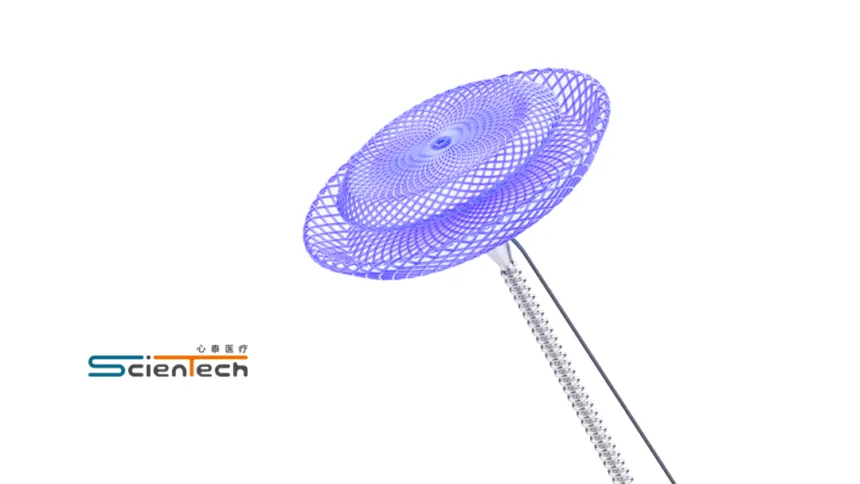
Lepu Scientech Medical Technology (HKG: 2291) announced that its MemoCarna oxide film single‑rivet patent foramen ovale (PFO) occluder, independently developed by the company, has been approved for market launch by China’s National Medical Products Administration (NMPA) – adding a differentiated structural heart device aimed at reducing post‑procedural residual shunts and improving surgical success rates in PFO closure.
Regulatory Milestone
| Item | Detail |
|---|---|
| Agency | NMPA (China) |
| Action | Market launch approval |
| Product | MemoCarna oxide film single‑rivet PFO occluder |
| Indication | Transcatheter closure of patent foramen ovale (PFO) |
| Announcement Date | 12 Oct 2026 |
| Developer | Lepu Scientech Medical Technology (HKG: 2291), independently developed |
| Specifications | Nine specifications covering diverse PFO anatomical variations |
Disease Background & Clinical Challenge
- PFO Presentation: Patent foramen ovale is usually asymptomatic; however, severe cases present with various clinical manifestations – most commonly unexplained stroke and migraines.
- Cryptogenic Stroke Link: PFO represents a significant cause of cryptogenic stroke, driving growing clinical recognition and closure demand.
- Standard Intervention: Transcatheter closure is the key therapeutic intervention for PFO – yet postoperative residual shunts remain a clinical challenge, motivating next‑generation device designs such as MemoCarna.
Device Profile & Design Innovation
- M+W Interlocking Recessed Disk Design: Interlocking recessed disks enhance occlusion stability and conform securely to the septal anatomy.
- Single‑Rivet Concave Structure: A single‑rivet, concave architecture minimizes device profile and reduces mechanical stress points versus multi‑rivet designs.
- Concealed Waist Architecture: The concealed waist design further improves stability and reduces the risk of device‑related erosion or interference.
- Three‑Layer Flow‑Blocking Membrane: A three‑layer membrane maximizes flow blockade, effectively reducing post‑procedural residual shunts.
- Oxide Film Surface: The oxide film finish reduces nickel ion release, addressing biocompatibility concerns associated with conventional nitinol occluders.
- Anatomical Versatility: Available in nine specifications, adapting to the diverse anatomical variations of PFO and improving procedural success across patient populations.
Market Impact & Outlook
- Residual Shunt Differentiation: By combining interlocking disks, a concealed waist and a three‑layer flow‑blocking membrane, MemoCarna directly targets the leading technical failure mode of PFO closure – residual shunting – a key purchasing criterion for structural heart centers.
- Biocompatibility Edge: Reduced nickel ion release via the oxide film addresses long‑term implant safety, an increasing consideration in younger cryptogenic stroke patients receiving permanent devices.
- Cryptogenic Stroke Market Growth: Rising stroke workup completeness and growing evidence supporting PFO closure in unexplained stroke are expanding the addressable patient pool in China – one of the world’s largest stroke populations.
- Lepu Scientech Portfolio Expansion: The approval extends Lepu Scientech’s (HKG: 2291) interventional cardiology franchise into the fast‑growing PFO closure segment, complementing its established structural heart and vascular device lines.
- Domestic Substitution Trend: An independently developed, specification‑rich occluder strengthens China’s homegrown alternatives to imported PFO devices amid volume‑based procurement and localization policies.
Forward‑Looking Statements
This brief contains forward‑looking statements regarding commercial launch, hospital adoption and market potential of the MemoCarna PFO occluder. Actual results may differ materially due to risks including clinical uptake, reimbursement and procurement policies, long‑term device performance data, and competitive dynamics in structural heart devices.-Fineline Info & Tech