


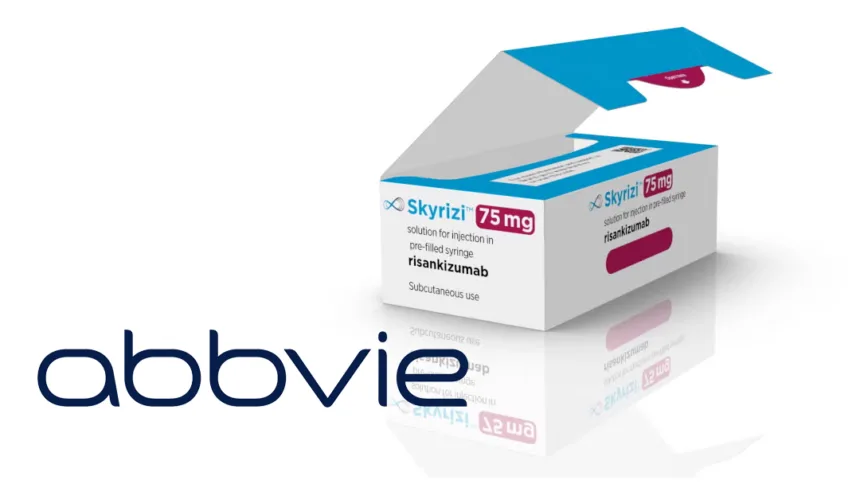
AbbVie Inc. (NYSE: ABBV) announced new findings from the Phase 3 AFFIRM study evaluating a new option for induction treatment with SKYRIZI (risankizumab‑rzaa) in adults with moderately to severely active Crohn’s disease (CD) – showing 35.8% of patients achieved endoscopic remission after treatment with the subcutaneous (SC) induction regimen, with even higher response rates among advanced therapy‑naïve patients.
Study Snapshot
| Item | Detail |
|---|---|
| Company | AbbVie Inc. (NYSE: ABBV) |
| Product | SKYRIZI (risankizumab‑rzaa), IL‑23 inhibitor |
| Study | AFFIRM – global, Phase 3, randomized, placebo‑controlled, double‑blind |
| Regimen | Risankizumab subcutaneous (SC) induction |
| Population | Adults with moderately to severely active Crohn’s disease |
| Objective | Evaluate efficacy and safety of SC induction treatment |
| Announcement Date | 13 Oct 2026 |
Clinical Evidence – Phase 3 AFFIRM Study
| Endpoint | Overall / Subgroup | Result |
|---|---|---|
| Endoscopic Remission (healing of intestinal lining, little to no visible inflammation) | Overall study population | 35.8% |
| Ulcer‑Free Endoscopy (complete absence of ulcers; patients with ulcers at baseline, after induction + maintenance) | Ulcer subgroup | 36.6% |
| Endoscopic Remission | Advanced therapy‑naïve patients | 45.1% |
| Ulcer‑Free Endoscopy | Advanced therapy‑naïve patients | 49.0% |
Among patients who had ulcers at the start of the study, 36.6% achieved ulcer‑free endoscopy – the complete absence of ulcers – after induction and maintenance treatment. Across subgroups, advanced therapy‑naïve patients showed the highest rates observed, with 45.1% achieving endoscopic remission and 49.0% achieving ulcer‑free endoscopy. Placebo‑comparator rates for these endpoints were not disclosed in the announcement.
Drug Profile & Mechanism of Action
- Molecule: Risankizumab‑rzaa (SKYRIZI), an interleukin‑23 (IL‑23) inhibitor – a monoclonal antibody that selectively targets IL‑23, a cytokine central to the chronic intestinal inflammation driving Crohn’s disease.
- Approved US Indications: Moderately to severely active ulcerative colitis, plaque psoriasis, psoriatic arthritis and Crohn’s disease, as approved by the U.S. Food and Drug Administration (FDA).
- New Option Evaluated: The AFFIRM findings support a new subcutaneous induction treatment option, offering a potential alternative route of administration to intravenous induction in Crohn’s disease.
- Endpoint Significance: Endoscopic remission – healing of the intestinal lining with little to no visible inflammation – is a rigorous, objective marker of mucosal healing associated with better long‑term disease control, beyond symptomatic response alone.
Disease Landscape – Crohn’s Disease
- Clinical Burden: Crohn’s disease is a chronic, relapsing immune‑mediated inflammatory bowel disease; moderately to severely active patients face progressive bowel damage, strictures and surgical risk without effective mucosal healing.
- Treatment‑Naïve Opportunity: The markedly higher remission rates in advanced therapy‑naïve patients (45.1% endoscopic remission; 49.0% ulcer‑free endoscopy) underscore the value of earlier intervention with effective biologic therapy, before the disease becomes refractory.
- Mucosal Healing Focus: Achieving an ulcer‑free endoscopy represents a deep level of disease control that has become a central treatment target in modern IBD management.
Market Impact & Outlook
- Franchise Expansion: The AFFIRM data add to the clinical dossier supporting SKYRIZI in Crohn’s disease, reinforcing one of AbbVie’s key immunology growth drivers as the company diversifies beyond legacy biologics.
- Route‑of‑Administration Advantage: A validated subcutaneous induction option could broaden patient and physician preference for SKYRIZI versus regimens requiring intravenous induction, potentially accelerating uptake in earlier lines of therapy.
- Competitive Positioning: Deep mucosal healing endpoints – particularly the ulcer‑free endoscopy data in therapy‑naïve patients – strengthen SKYRIZI’s differentiation in the competitive IL‑23 inhibitor class for IBD.
- Regulatory Path: Potential regulatory submissions based on the AFFIRM findings were not disclosed; any label changes remain subject to FDA review.
Forward‑Looking Statements
This brief contains forward‑looking statements regarding SKYRIZI (risankizumab‑rzaa) in Crohn’s disease, including the Phase 3 AFFIRM study findings, potential regulatory submissions, label expansions and commercial expectations. Actual results may differ materially due to risks including regulatory review outcomes, safety findings, competitive dynamics, pricing and market‑access pressures.-Fineline Info & Tech