


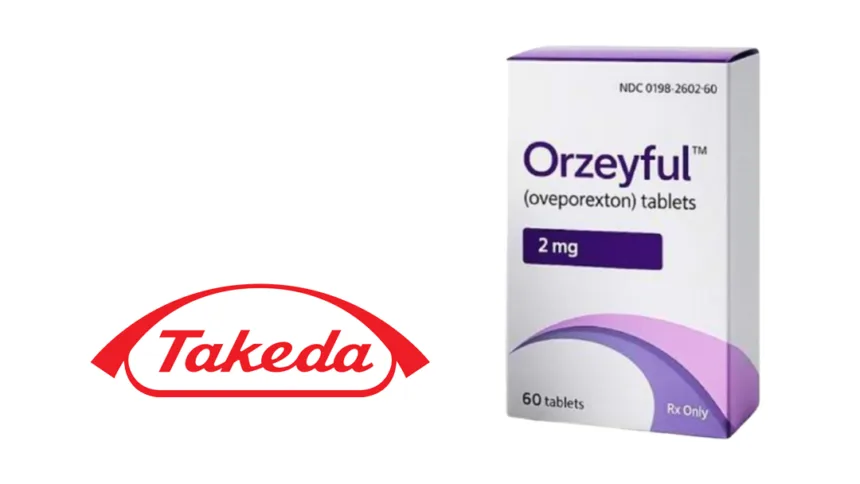
Takeda Pharmaceutical Company Limited (TYO: 4502; NYSE: TAK) announced the official commercial launch of oveporexton in Japan and China for the treatment of narcolepsy type 1 (NT1), marking the market debut of a first‑in‑category oral selective orexin receptor 2 (OX2R) agonist that directly targets the disorder’s underlying orexin deficiency.
Contents
Regulatory Milestone
| Item | Detail |
|---|---|
| Company | Takeda Pharmaceutical Company Limited (TYO: 4502; NYSE: TAK) |
| Product | Oveporexton tablets (oral) |
| Indication | Treatment of narcolepsy type 1 (NT1) |
| China Approval | 23 July 2026 – global first approval (NMPA) |
| Japan Approval | August 2026 (PMDA) |
| Commercial Launch | Japan and China, announced 15 October 2026 |
| Next Steps | Further regional filings – not disclosed |
Drug Profile & Mechanism of Action
- Molecule: Oral selective orexin receptor 2 (OX2R) agonist, administered as tablets.
- Target: OX2R – activated selectively to restore orexin signaling pathways lost in NT1.
- Mechanism: By stimulating OX2R, oveporexton is designed to promote wakefulness and reduce abnormal rapid eye movement (REM)‑sleep–like phenomena, including cataplexy attacks, addressing the core pathogenesis of NT1 – orexin deficiency – rather than symptoms alone.
- Symptom Coverage: Improves a range of daytime and nighttime symptoms evaluated in clinical trials, reflecting a disease‑modifying treatment concept.
- Dosing & Formulation Details: Not disclosed.
Disease Background & Unmet Need
- Narcolepsy type 1 is a chronic, debilitating neurological disorder caused by the loss of orexin (hypocretin)‑producing neurons, characterized by excessive daytime sleepiness, cataplexy, disrupted nighttime sleep, and other REM‑dysregulation phenomena.
- Historically, available therapies have been largely symptomatic – promoting wakefulness or suppressing cataplexy without addressing the underlying orexin deficit.
- An oral agent that restores orexin receptor signaling represents a differentiated therapeutic approach, with potential to improve both daytime and nighttime disease burden.
Market Impact & Outlook
- Dual‑Market Launch: Simultaneous commercialization in Japan and China positions Takeda in two of the largest Asia‑Pacific CNS markets from day one.
- Regulatory First‑Mover: Securing the global first approval in China (23 July 2026) underscores the strategic importance of the Chinese market in Takeda’s neuroscience portfolio and provides an early commercial foothold ahead of potential competitors.
- Competitive Edge: As a mechanism‑novel oral OX2R agonist targeting orexin deficiency, oveporexton differentiates from conventional wake‑promoting and anticataplectic agents, potentially reshaping NT1 treatment standards.
- Reimbursement & Pricing: Not disclosed.
- Global Expansion: Filings or launch plans in other regions were not disclosed in the announcement.
Forward‑Looking Statements
This brief contains forward‑looking statements regarding regulatory timelines, clinical outcomes, and commercial expectations for oveporexton. Actual results may differ materially due to risks including market adoption, reimbursement outcomes, competitive dynamics, and evolving regulatory requirements in Japan, China, and other jurisdictions.-Fineline Info & Tech