



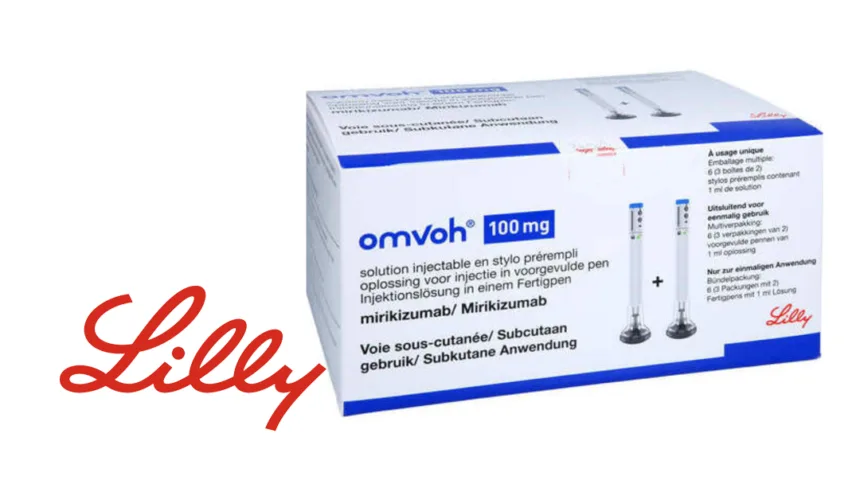
Eli Lilly and Company (NYSE: LLY) announced positive late‑breaking one‑year results from the Phase 3 SHINE‑2 study of Omvoh (mirikizumab‑mrkz) in pediatric patients ages 6 to 17 with moderately to severely active ulcerative colitis (UC), including clinical, symptomatic, and endoscopic outcomes. In the single‑arm, open‑label study, 81 % of patients achieved clinical response to Omvoh induction at Week 12, and among responders, 50 % achieved clinical remission at Week 52 — meeting the study’s primary endpoint. Omvoh is the first IL‑23p19 inhibitor to report one‑year Phase 3 results in pediatric UC, and Lilly plans to submit the data to global regulators to support a potential label expansion.
Study Snapshot
| Item | Detail |
|---|---|
| Sponsor | Eli Lilly and Company (NYSE: LLY) |
| Product | Omvoh (mirikizumab‑mrkz) – IL‑23p19 inhibitor |
| Study | SHINE‑2 – Phase 3, single‑arm, open‑label |
| Population | Pediatric patients ages 6–17 with moderately to severely active ulcerative colitis |
| Primary Endpoint | Clinical remission at Week 52 among Week 12 induction responders – met |
| Current Status | Approved for adults with moderately to severely active UC; pediatric safety and effectiveness under evaluation |
| Next Steps | Submission of data to global regulators to support potential pediatric label expansion |
Drug Profile & Mechanism of Action
- Molecule: Mirikizumab‑mrkz, marketed as Omvoh — a monoclonal antibody that selectively targets the p19 subunit of interleukin‑23 (IL‑23p19), a cytokine central to the inflammatory cascade in ulcerative colitis.
- Current Indication: Approved for adults with moderately to severely active UC; pediatric use is investigational, with safety and effectiveness currently being evaluated in clinical studies.
- First‑Mover Signal: Omvoh is the first IL‑23p19 inhibitor to report one‑year Phase 3 results in pediatric UC; if approved, it would also be the first IL‑23p19 inhibitor indicated for pediatric UC.
Clinical Evidence – SHINE‑2 Phase 3 Study
| Endpoint | Result |
|---|---|
| Clinical Response at Week 12 (induction) | 81 % of pediatric patients |
| Clinical Remission at Week 52 (primary endpoint, among Week 12 responders) | 50 % – met |
| Additional Outcomes Reported | Clinical, symptomatic, and endoscopic endpoints (detailed breakdowns not disclosed) |
| Study Design | Single‑arm, open‑label, Phase 3 |
The SHINE‑2 study enrolled children and adolescents ages 6 to 17 with moderately to severely active ulcerative colitis. After induction, 81 % of patients achieved clinical response at Week 12; among those responders, 50 % reached clinical remission at Week 52, satisfying the study’s primary endpoint and establishing one‑year efficacy in a population with limited advanced therapy options.
Market Impact & Outlook
- Pediatric UC Unmet Need: Treatment options for children with moderately to severely active UC are narrower than for adults; a selective IL‑23p19 inhibitor with one‑year remission data addresses a high‑need, high‑visibility segment.
- First‑in‑Indication Positioning: Being both the first IL‑23p19 inhibitor with one‑year pediatric UC Phase 3 data and — if approved — the first indicated for pediatric UC would give Lilly a differentiated launch position ahead of class competitors in this population.
- Label Expansion Pathway: Lilly plans to file the SHINE‑2 data with global regulators; approval would extend Omvoh’s addressable market from adults into ages 6–17, with submission timing and jurisdictional sequence not disclosed.
- Evidence Caveat: The single‑arm, open‑label design lacks an internal comparator, a consideration regulators will weigh alongside the symptomatic and endoscopic outcomes; comparative effect versus other advanced therapies was not disclosed.
Forward‑Looking Statements
This brief contains forward‑looking statements regarding Omvoh (mirikizumab‑mrkz) in pediatric ulcerative colitis, including planned regulatory submissions and the potential for label expansion. Omvoh’s safety and effectiveness in pediatric patients have not been established or approved by any regulatory authority. Actual outcomes may differ materially due to regulatory review, clinical data interpretation, and competitive dynamics.-Fineline Info & Tech