


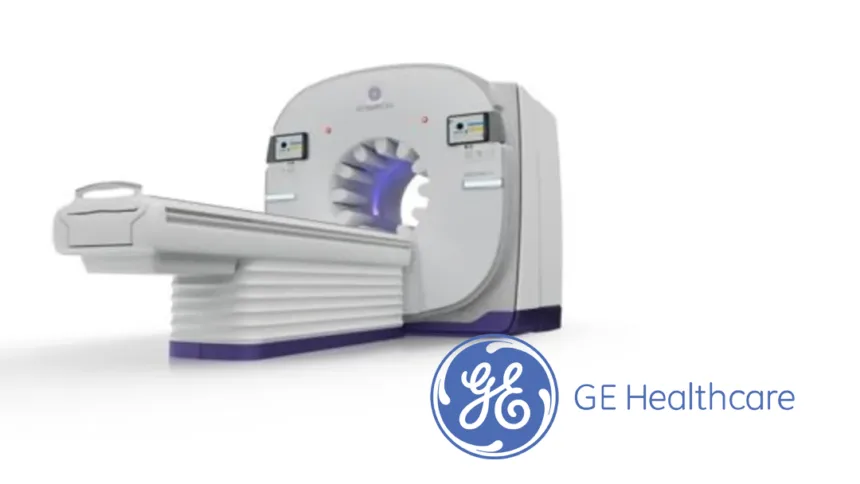
GE HealthCare (NASDAQ: GEHC) announced a global clinical evaluation program spanning three continents and five internationally recognized institutions to assess StarGuide GXi, its next‑generation digital 4D SPECT/CT system — a coordinated real‑world validation effort positioning the dsCZT‑based platform at the forefront of nuclear medicine imaging.
Clinical Evaluation Program
| Item | Detail |
|---|---|
| Company | GE HealthCare (NASDAQ: GEHC) |
| Product Under Evaluation | StarGuide GXi – next‑generation digital 4D SPECT/CT system |
| Program Scope | Three continents, five internationally recognized institutions |
| Participating Institutions | Hadassah Medical Center (Israel); Mayo Clinic (United States); Oncopole Claudius Regaud – Institut Universitaire du Cancer de Toulouse (France); Peking University First Hospital (China); Rambam Health Care Campus (Israel) |
| Precedent Installation | World’s first StarGuide GX system at University Hospital Essen, Germany – new Nuclear Medicine Center opened June 2026 |
| Endpoints / Timeline | Not disclosed |
Product Profile & Technology
- Platform: StarGuide GXi, a digital 4D SPECT/CT system combining single‑photon emission computed tomography with computed tomography for functional‑anatomic imaging.
- Detector Technology: Built on dual‑sided cadmium zinc telluride (dsCZT) detector technology — a semiconductor direct‑conversion architecture designed to support high‑sensitivity, high‑resolution imaging, quantitative imaging, and dynamic acquisitions.
- Patient‑Adaptive Geometry: The detector configuration allows detectors to move close to the patient during imaging, a design intended to enhance sensitivity and image quality across body habitus.
- Workflow Innovation: A patented dual‑collimator detector design is intended to eliminate the need for manual external collimator exchanges, streamlining imaging workflows and reducing operational friction in busy nuclear medicine departments.
- 4D Capability: Dynamic (4D) acquisition support extends the platform beyond static scans toward time‑resolved functional imaging — relevant to quantitative organ function assessment and theranostics workflows.
Institutional Network & Strategic Context
- Blue‑Chip Validation: The five‑site roster — anchored by Mayo Clinic, Peking University First Hospital, Hadassah Medical Center, Rambam Health Care Campus, and Oncopole Claudius Regaud — pairs North American, European, Middle Eastern and Chinese academic centers, underscoring the program’s global regulatory and commercial ambitions.
- Building on Essen: The initiative extends GE HealthCare’s collaboration with University Hospital Essen, whose newly opened Nuclear Medicine Center in June 2026 houses the world’s first StarGuide GX installation — providing an early clinical reference site for the dsCZT platform.
- Theranostics Tailwind: SPECT/CT remains a cornerstone of nuclear medicine, and the growth of radioligand therapy and theranostics is increasing demand for quantitative, high‑sensitivity imaging — the capabilities StarGuide GXi is designed to deliver.
- Competitive Landscape: Digital CZT‑based SPECT is a differentiating axis in nuclear imaging, where sensitivity, resolution and workflow efficiency drive purchasing decisions against legacy sodium‑iodide detector systems.
- Disclosures: Study endpoints, enrollment targets, data readouts, and regulatory submission timelines were not disclosed in the announcement.
Forward‑Looking Statements
This brief contains forward‑looking statements regarding the clinical evaluation, performance expectations, regulatory pathway, and commercial outlook for the StarGuide GXi SPECT/CT system. Actual results may differ materially due to risks including clinical findings, regulatory review outcomes, market adoption, and competitive dynamics. Announcement of an evaluation program does not guarantee subsequent approvals or commercial success.-Fineline Info & Tech