


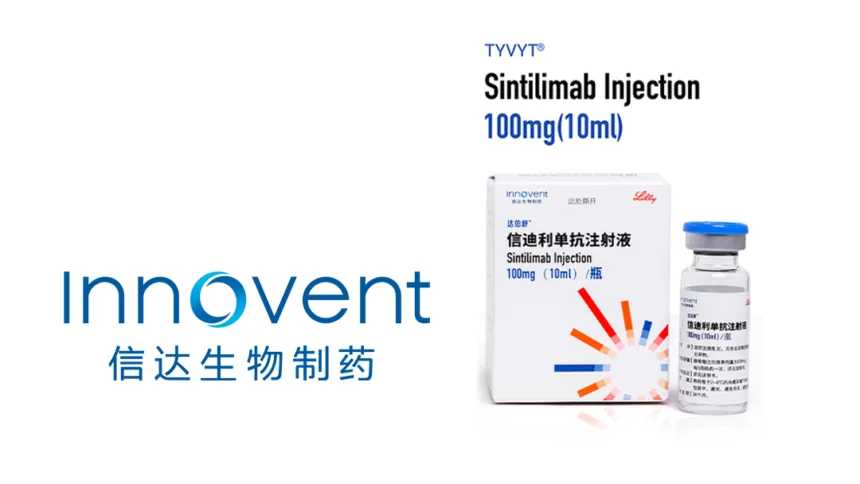
Innovent Biologics, Inc. (HKG: 1801) announced that the marketing application for a new indication of its PD‑1 inhibitor sintilimab (brand name: Tyvyt) has been accepted by China’s National Medical Products Administration (NMPA) — in combination with nogileucel injection (GC101) for patients with unresectable or metastatic melanoma who have failed at least two prior systemic therapies, including PD‑1 antibodies. The application is primarily based on the pivotal Phase II MIZAR‑003 study, whose primary endpoint was met as of May 12, 2026.
Regulatory Milestone
| Item | Detail |
|---|---|
| Agency | NMPA (China) |
| Milestone | Marketing application (NDA) accepted |
| Products | Sintilimab (Tyvyt, PD‑1 inhibitor) + nogileucel injection (GC101) |
| Indication Sought | Unresectable or metastatic melanoma after failure of ≥2 prior systemic therapies (incl. PD‑1 antibodies) |
| Pivotal Evidence | Phase II MIZAR‑003 study — primary endpoint met (data cutoff 12 May 2026) |
| Announcement Date | 26 Oct 2026 |
Drug Profile & Mechanism of Action
- Sintilimab (Tyvyt): Innovent’s fully human anti‑PD‑1 monoclonal antibody, an established immuno-oncology backbone across multiple approved indications in China.
- Nogileucel Injection (GC101): A patient-specific adoptive cell therapy product in Innovent’s pipeline, designed to deliver autologous tumor-directed T cells; combined with PD‑1 blockade, it aims to overcome resistance in heavily pretreated melanoma. (Detailed modality information beyond the announcement was not disclosed.)
- Target Population: Post‑PD‑1 failure advanced melanoma — a setting with historically poor outcomes and few effective options, where patients in MIZAR‑003 had received a median of 2 prior lines of systemic therapy.
Clinical Evidence – Phase II MIZAR‑003
| Endpoint | Sintilimab + Nogileucel | Chemotherapy Control | Relative Benefit |
|---|---|---|---|
| Median PFS | 4.3 months | 1.6 months | +2.7 months |
| Risk of Progression or Death | – | – | 57% reduction (HR 0.43; 95% CI: 0.26–0.68; P=0.0002) |
| Safety | Adverse reactions manageable; most patients recovered without additional intervention | – | Favorable tolerability profile |
In patients with advanced melanoma who had failed PD‑1 antibody therapy, the experimental combination significantly outperformed chemotherapy on the primary PFS endpoint, with a hazard ratio of 0.43 and high statistical significance (P=0.0002).
Market Impact & Outlook
- Refractory Melanoma Whitespace: For patients progressing on PD‑1 antibodies — a population with limited approved options in China — an effective combination could establish a new standard of care in third-line-plus disease.
- Cell Therapy + IO Combination: The pairing of an adoptive cell therapy with a checkpoint inhibitor reflects a broader oncology trend toward combinatorial immune activation; success would validate the approach in solid tumors.
- Sintilimab Lifecycle Management: A melanoma label extension broadens Tyvyt’s indication portfolio and commercial runway amid intensifying PD‑1 competition in China.
- Accelerated Pathway Potential: Acceptance based on a pivotal Phase II in a refractory setting suggests eligibility for expedited review mechanisms; approval timelines were not disclosed.
Forward‑Looking Statements
This brief contains forward‑looking statements regarding the sintilimab plus nogileucel (GC101) combination, the NMPA review of the marketing application, and potential commercialization in advanced melanoma. NDA acceptance does not guarantee approval; actual results may differ due to risks including regulatory review outcomes, confirmatory data requirements, manufacturing and delivery of cell therapies, and competitive dynamics.-Fineline Info & Tech