



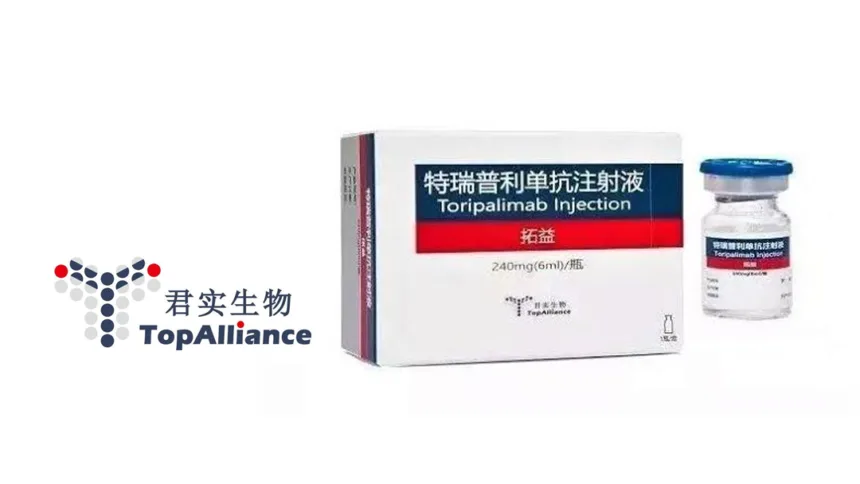
Shanghai Junshi Biosciences Co., Ltd. (HKG: 1877; SHA: 688180) announced a dual regulatory advance for its PD‑1 inhibitor toripalimab (brand name: Loqtorzi, product code: JS001): the indication for locally advanced or metastatic urothelial carcinoma that has failed platinum‑containing chemotherapy has been converted from conditional approval to full approval by China’s National Medical Products Administration (NMPA); simultaneously, the NMPA has accepted the marketing application for a new indication of toripalimab injection (subcutaneous) (JS001sc), in combination with disitamab vedotin, for the first‑line treatment of HER2‑expressing locally advanced or metastatic urothelial carcinoma.
Regulatory Milestone
| Item | Detail |
|---|---|
| Agency | NMPA (China) |
| Action 1 | Conditional → full approval for Loqtorzi (toripalimab IV) in locally advanced or metastatic urothelial carcinoma after platinum‑containing chemotherapy |
| Basis | RC48-C016 study (NCT05302284) |
| Action 2 | Marketing application accepted for JS001sc (subcutaneous toripalimab) + disitamab vedotin in first‑line HER2‑expressing locally advanced or metastatic urothelial carcinoma |
| Announcement Date | 29 Oct 2026 |
| Next Steps | NMPA review of the JS001sc application; timeline not disclosed |
Drug Profile & Mechanism of Action
- Molecule: Toripalimab (Loqtorzi / JS001) – a PD‑1 inhibitor developed by Junshi Biosciences, now approved for 13 indications in mainland China.
- Subcutaneous Formulation: JS001sc is developed on the basis of Loqtorzi, specified as 180 mg (1 mL)/vial (prefilled syringe) – and is the first domestic anti‑PD‑1 monoclonal antibody subcutaneous formulation to enter the marketing application stage in China.
- Bioequivalence Evidence: Phase III clinical studies confirmed that drug exposure of JS001sc is non‑inferior to JS001, with similar clinical efficacy and safety – supporting a convenient, shorter‑administration alternative to intravenous infusion.
- Broad Label Strategy: To date, marketing applications for JS001sc covering all 13 approved indications of Loqtorzi have been accepted by the NMPA.
Clinical Evidence – RC48-C016 (NCT05302284)
| Endpoint | Toripalimab + Disitamab Vedotin | Gemcitabine + Cisplatin/Carboplatin | Relative Benefit |
|---|---|---|---|
| Median Progression‑Free Survival (mPFS) | 13.1 months | 6.5 months | ≈ 2× longer |
| Median Overall Survival (mOS) | 31.5 months | 16.9 months | ≈ 14.6 months longer |
| Endpoints Met | Dual endpoint positivity (PFS and OS) | – | Basis for conditional‑to‑full conversion |
The trial compared the efficacy and safety of toripalimab in combination with disitamab vedotin versus gemcitabine in combination with cisplatin/carboplatin in patients with HER2‑expressing locally advanced or metastatic urothelial carcinoma who had not previously received systemic antitumor therapy. Results showed the primary endpoints of progression‑free survival (mPFS: 13.1 vs. 6.5 months) and overall survival (mOS: 31.5 vs. 16.9 months) achieved dual endpoint positivity.
Market Impact & Outlook
- Label Strengthening: Converting the urothelial carcinoma indication from conditional to full approval removes regulatory overhang and strengthens prescriber confidence in one of Loqtorzi’s flagship solid‑tumor labels.
- First‑Line Repositioning: The JS001sc + disitamab vedotin application targets the first‑line HER2‑expressing setting, where RC48-C016 showed near‑doubling of mPFS and mOS versus platinum chemotherapy – a potential new standard of care if approved.
- Subcutaneous Differentiation: As the first domestic anti‑PD‑1 subcutaneous formulation at the marketing application stage, JS001sc could reduce infusion‑center burden and improve patient convenience across all 13 Loqtorzi indications.
- Risk Factors: The JS001sc application remains under NMPA review; approval timing and final label scope were not disclosed.
Forward‑Looking Statements
This brief contains forward‑looking statements regarding regulatory timelines, clinical outcomes, and commercial expectations for toripalimab and JS001sc. Actual results may differ due to risks including NMPA review requirements, safety findings, market adoption, and competitive dynamics in immuno‑oncology.-Fineline Info & Tech