


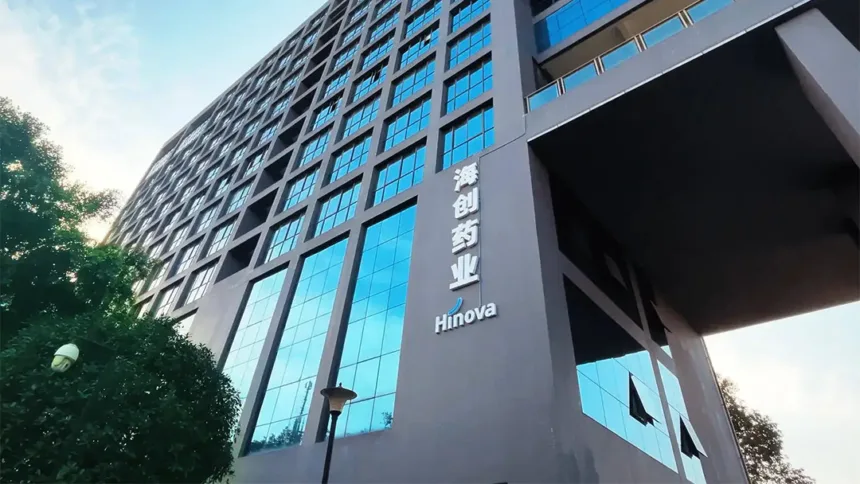
Hinova Pharmaceuticals Inc. (SHA: 688302) announced that its self‑developed investigational drug HP570 received formal Investigational New Drug (IND) clearance from the U.S. Food and Drug Administration (FDA) for the treatment of rheumatoid arthritis (RA) on 4 Nov 2026 – and on 5 Nov entered an exclusive license agreement with Evommune granting worldwide rights outside Greater China, including a USD 30 million upfront payment and up to approximately USD 1.07 billion in milestone payments.
Regulatory Milestone & Licensing Deal
| Item | Detail |
|---|---|
| Regulatory Event | FDA IND clearance for HP570 (4 Nov 2026) |
| Indication (IND) | Rheumatoid arthritis |
| Licensee | Evommune |
| Territory | Worldwide outside Greater China (Mainland China, Hong Kong SAR, Macao SAR, and Taiwan retained by Hinova) |
| Rights Granted | Exclusive development, manufacturing, and commercialization |
| Upfront Payment | USD 30 million |
| Milestone Payments | Up to ~USD 1.07 billion (development, regulatory registration, and commercial milestones) |
| Royalties | Tiered royalties on net sales in the licensed territory, plus extra sublicensing revenue shares under specified terms |
Drug Profile & Mechanism of Action
- Molecule: HP570, a proprietary oral small‑molecule candidate –Hinova’s self‑developed asset.
- Modality: VAV1 molecular glue degrader – recruits the target into proximity with cellular degradation machinery to eliminate it, rather than merely inhibiting its activity.
- Target: VAV1, a guanine nucleotide exchange factor primarily expressed in immune cells that mediates T‑cell and B‑cell activation – a critical node in autoimmune disease.
- Mechanism Rationale: Positioned as an upstream signaling hub in both T‑cell receptor (TCR) and B‑cell receptor (BCR) pathways, abnormal VAV1 activation is closely linked to the pathogenesis and progression of various autoimmune diseases. HP570 selectively degrades VAV1 to suppress aberrant immune activation, demonstrating therapeutic potential across multiple autoimmune conditions beyond RA.
- Undruggable to Druggable: VAV1 was historically considered “undruggable” due to the lack of a conventional small‑molecule binding pocket; molecular glue degradation technology now provides a viable development path – placing HP570 among a new wave of degrader therapeutics tackling previously inaccessible targets.
Clinical Status
- Stage: IND‑enabling program cleared to begin clinical development in the US; the FDA IND covers rheumatoid arthritis. Clinical trial phase, dosing, site plans, and enrollment timeline were not disclosed in the announcement.
- Data: No human efficacy or safety data have been reported to date; program status reflects preclinical and regulatory milestones only (data not yet disclosed).
Market Impact & Outlook
- Deal Structure: A total package approaching USD 1.1 billion – USD 30 million upfront plus up to ~USD 1.07 billion in milestones with tiered royalties and sublicensing revenue shares – underscores Evommune’s conviction in the VAV1 degrader concept and delivers immediate non‑dilutive capital to Hinova.
- Geographic Split: Hinova retains Greater China rights, allowing the company to capture value directly in its home autoimmune market while leveraging Evommune’s infrastructure for US, EU, and rest‑of‑world development and commercialization.
- Autoimmune Opportunity: RA anchors a large chronic autoimmune market; a first‑of‑kind oral VAV1 degrader acting upstream of both TCR and BCR signaling could differentiate against existing biologics, JAK inhibitors, and BTK‑pathway agents if safety and efficacy are established in humans.
- Platform Validation: The partnership validates molecular glue degradation as a route to historically undruggable intracellular immune targets – with Hinova signaling therapeutic potential across multiple autoimmune indications, offering pipeline expansion optionality beyond the RA lead program.
Forward‑Looking Statements
This brief contains forward‑looking statements regarding HP570’s clinical development, the Hinova–Evommune license agreement (including milestone achievements and royalty payments), regulatory timelines, and commercial expectations. Actual results may differ materially due to risks including early‑stage clinical uncertainty, safety outcomes in first‑in‑human studies, regulatory decisions, milestone timing, and competitive dynamics in the autoimmune market.-Fineline Info & Tech