


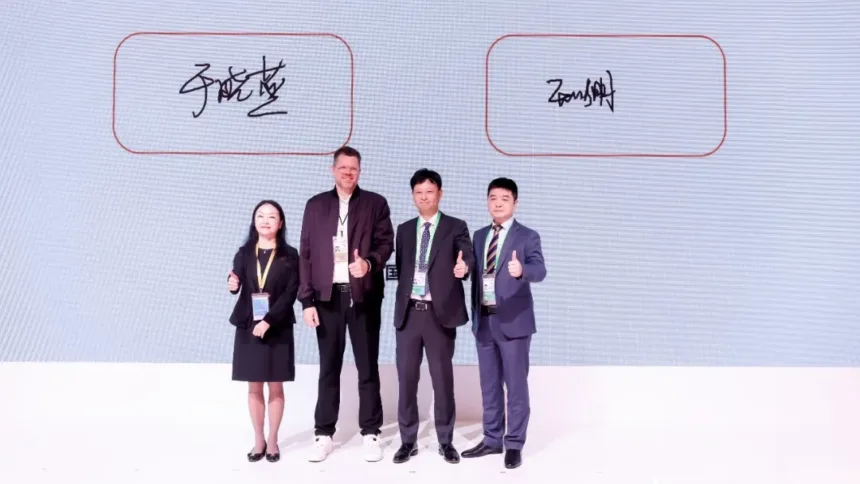
Eisai Co., Ltd. (TYO: 4523) and Siemens Healthineers AG (ETR: SHL) officially signed a strategic cooperation agreement during the 9th China International Import Expo (CIIE). The two parties announced that they will focus on the diagnosis and treatment of Alzheimer’s disease, leveraging Eisai’s accumulated expertise in innovative neuroscience therapies and Siemens Healthineers’ technological strengths in diagnostic imaging, to carry out in‑depth cooperation centering on the accessibility and standardized clinical application of amyloid‑beta positron emission tomography (Aβ‑PET) and brain magnetic resonance imaging (MRI), with the aim of enhancing precision diagnosis and standardized diagnosis and treatment capabilities for Alzheimer’s disease.
Agreement Milestone
| Item | Detail |
|---|---|
| Parties | Eisai Co., Ltd. (TYO: 4523) and Siemens Healthineers AG (ETR: SHL) |
| Agreement Type | Strategic cooperation agreement |
| Signing Venue | 9th China International Import Expo (CIIE), Shanghai |
| Announcement Date | 7 Nov 2026 |
| Therapeutic Focus | Alzheimer’s disease – diagnosis and treatment |
| Core Modalities | Amyloid‑beta PET (Aβ‑PET) and brain MRI |
| Financial Terms | Not disclosed |
Collaboration Profile & Key Workstreams
- Bridging Detection and Intervention: The signing aims to bridge the critical gap between “early detection” and “early intervention,” improve the early diagnosis and standardized management of Alzheimer’s disease, and contribute to the development of an Alzheimer’s disease prevention and treatment system.
- Clinical Application & Quality Management: The parties will jointly advance the clinical application and quality management of Aβ‑PET and brain MRI in Alzheimer’s diagnosis and treatment.
- Cross‑Department Coordination: The collaboration will promote coordination among clinical departments, nuclear medicine departments, and radiology departments.
- Academic Exchange & Education: The partners will deepen academic exchanges and professional education, focusing on the value of imaging diagnosis and treatment for Alzheimer’s disease.
- Evidence Accumulation: The two parties will explore the accumulation of clinical evidence to provide evidence‑based support for the implementation of standardized diagnosis and treatment.
Disease Context – Imaging in Alzheimer’s Disease
- Aβ‑PET: Amyloid‑beta PET imaging enables in‑vivo detection of amyloid pathology in the brain, a core biomarker in the diagnostic workup of Alzheimer’s disease.
- Brain MRI: Magnetic resonance imaging supports structural assessment, differential diagnosis, and disease monitoring in memory‑disorder patients.
- Diagnostic Gap: As disease‑modifying therapies enter clinical use, standardized imaging pathways that connect early detection to early intervention are becoming critical infrastructure for Alzheimer’s care systems.
Market Impact & Outlook
- Therapy–Diagnostics Pairing: The alliance pairs Eisai’s neuroscience therapeutics franchise with Siemens Healthineers’ imaging leadership, addressing the diagnostic bottleneck that accompanies the rollout of Alzheimer’s disease‑modifying treatments.
- China Care System Building: Signing at CIIE signals both companies’ commitment to supporting China’s emerging Alzheimer’s disease prevention and treatment system, from public awareness to standardized clinical pathways.
- Accessibility Focus: Emphasis on improving the accessibility of Aβ‑PET and brain MRI addresses a key constraint on early diagnosis, potentially expanding the eligible patient pool for precision care.
- Financial Impact: No immediate revenue contribution was disclosed; the agreement is a strategic, ecosystem‑building collaboration.
Forward‑Looking Statements
This brief contains forward‑looking statements regarding the implementation of the Eisai–Siemens Healthineers cooperation agreement, including standardized clinical application of Aβ‑PET and brain MRI, cross‑department collaboration, clinical evidence generation, and the development of Alzheimer’s disease care systems. Actual results may differ due to risks including healthcare policy and reimbursement developments, clinical adoption of imaging standards, medical device regulation, and the pace of evidence accumulation.-Fineline Info & Tech