


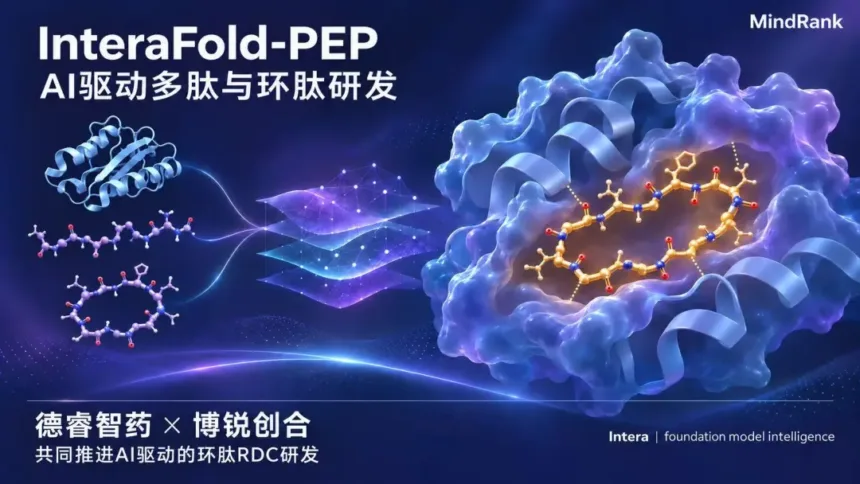
Hangzhou MindRank Technology Co., Ltd. and Suzhou BoomRay Pharma Co., Ltd. announced a strategic collaboration to jointly develop AI‑driven radioligand conjugate (RDC) drugs that use cyclic peptides as targeting ligands, addressing unmet needs in precision oncology diagnostics and therapeutics and advancing innovative candidates with first‑in‑class (FIC) potential.
Collaboration Snapshot
| Item | Detail |
|---|---|
| Partners | Hangzhou MindRank Technology Co., Ltd. (AI drug discovery) × Suzhou BoomRay Pharma Co., Ltd. (radiopharmaceuticals) |
| Deal Type | Strategic research collaboration |
| Modality | Radioligand conjugates (RDCs) with cyclic peptide targeting ligands |
| Therapeutic Focus | Precision oncology – diagnostics and therapeutics |
| Ambition | Discover and co‑develop first‑in‑class (FIC) innovative drug candidates |
| Financial Terms | Not disclosed |
| Announcement Date | November 2026 |
Technology & Platform Profile
- MindRank’s Role: Deployment of its AI drug discovery platform and Intera, the company’s life science foundation model system, spanning molecular design, screening and optimization of cyclic peptides.
- InteraFold‑PEP: MindRank’s specialized model for predicting binding modes between cyclic peptides and target proteins — the structural engine for rationally designing ligands with high affinity and high selectivity.
- BoomRay’s Role: Deep expertise in radiopharmaceutical development, radiolabeling, and clinical translation, converting AI‑designed peptide ligands into developable RDC assets.
- Discovery Engine: An iterative “AI design → experimental validation → feedback” loop, in which BoomRay’s wet‑lab and radiolabeling data continuously refine MindRank’s computational models.
- Ligand Criteria: Cyclic peptide targeting ligands with high affinity, high selectivity, and favorable developability — attributes critical for RDCs, where ligand quality governs tumor uptake, normal‑tissue sparing and radiopharmaceutical manufacturing feasibility.
Scientific Rationale – Cyclic Peptide RDCs
- Why RDCs: Radioligand therapy is a clinically validated modality in oncology, with approved radioligands demonstrating that precise tumor‑targeted radiation delivery can produce meaningful responses in refractory disease; the field now anchors some of the largest dealmaking activity in biopharma.
- Why Cyclic Peptides: Compared with full antibodies, cyclic peptides offer smaller molecular size, faster tumor penetration, tunable clearance and cost‑effective synthesis, while ring constraints can deliver antibody‑like affinity and selectivity.
- Why AI: Cyclic peptide chemical space is vast and non‑intuitive; foundation models such as InteraFold‑PEP enable systematic exploration of sequence, conformation and target‑binding relationships that traditional screening cannot cover.
- Unmet Need: Precision oncology still lacks targeted diagnostic and therapeutic options for many tumor types — the collaboration explicitly targets indications where current radioligands and targeted therapies fall short.
Market Impact & Outlook
- AI × Radiopharma Convergence: The alliance pairs a Chinese AI drug discovery platform with domestic radiopharmaceutical execution capability, reflecting the broader industry shift toward computationally designed radioligands as next‑generation RDC assets.
- Theranostics Potential: A shared focus on diagnostics and therapeutics positions future candidates for theranostic development — the same targeting ligand powering both imaging and treatment, a hallmark of modern radioligand programs.
- Pipeline Milestones: Specific targets, lead programs and development timelines – not disclosed; value creation will hinge on the speed of the AI‑design/validation cycles and progression of early candidates.
- Strategic Signal: For both companies, the deal strengthens their positions in two of the hottest frontiers of drug discovery — AI‑enabled molecular design and targeted radiopharmaceuticals — with FIC potential as the stated objective.
Forward‑Looking Statements
This brief contains forward‑looking statements regarding research collaboration outcomes, discovery timelines, and development plans for prospective RDC candidates. No product candidates have been nominated or disclosed; actual results may differ materially due to risks inherent in early‑stage AI‑driven drug discovery, radiopharmaceutical development, preclinical and clinical validation, and future regulatory requirements.-Fineline Info & Tech