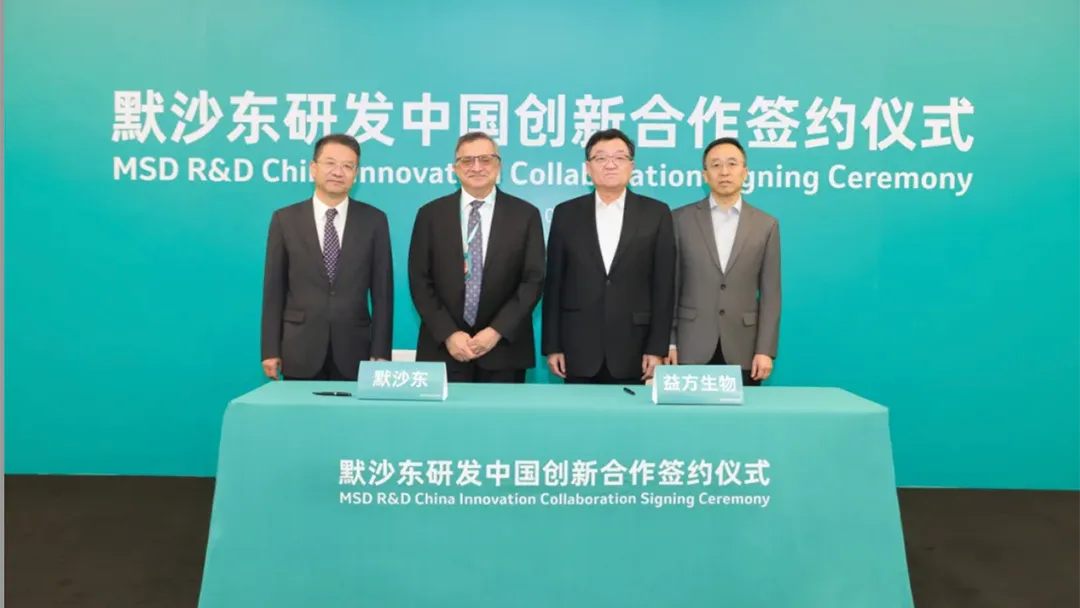
Merck & Co., Inc. (MSD; NYSE: MRK) has established separate strategic partnerships with four leading Chinese biotechnology companies—Hangzhou Medimscience Biomedical Technology Co., Ltd., Degron Therapeutics Co., Ltd., Suzhou Zelgen Biopharmaceuticals Co., Ltd., and Inventisbio (Shanghai) Co., Ltd.—to accelerate clinical development across autoimmune and oncology therapeutic areas.
Partnership Portfolio Overview
| Chinese Partner | Therapeutic Focus | Modality | Development Stage |
|---|---|---|---|
| Hangzhou Medimscience Biomedical | Autoimmune diseases | Therapeutic antibodies | Clinical development |
| Degron Therapeutics | Oncology | Molecular glue degraders | Clinical development |
| Suzhou Zelgen Biopharmaceuticals | Oncology | Trispecific antibodies | Clinical development |
| Inventisbio (Shanghai) | Undisclosed (MCICC collaboration) | Undisclosed | Early R&D |
MSD China Innovation Collaboration Center (MCICC) Framework
Strategic Platform Establishment
The MSD R&D China Innovation Collaboration Center (MCICC), officially launched in 2024, serves as the operational backbone for these partnerships:
- Mission: Build an open, agile, and efficient innovation collaboration platform
- Focus: High-potential projects in early research and development stages
- Integration model: Combine MSD’s global research resources with China’s local innovation ecosystem advantages
- Global ambition: Advance more “Created in China” achievements to benefit patients worldwide
Partnership Rationale
Each collaboration leverages complementary strengths between MSD’s global development expertise and Chinese partners’ innovative platforms:
| Partnership Element | MSD Contribution | Chinese Partner Contribution |
|---|---|---|
| Global development infrastructure | Regulatory expertise, international trial networks, commercial scale | Novel target identification, innovative modalities, local market insights |
| Resource integration | Funding, manufacturing capabilities, global distribution | Proprietary technology platforms, speed of execution, cost efficiency |
| Risk sharing | Development milestone payments, shared investment | Technology licensing, intellectual property contribution |
Therapeutic Area Specialization
Autoimmune Disease Antibodies (Medimscience Bio)
- Target focus: Novel autoimmune disease targets with high unmet medical need
- Antibody engineering: Leveraging Chinese partner’s proprietary antibody discovery platforms
- Market opportunity: Global autoimmune therapeutics market exceeding $150 billion annually
Oncology Molecular Glue Degraders (Degron Therapeutics)
- Technology innovation: Molecular glue technology represents next-generation targeted protein degradation
- Mechanism advantage: Potential to address “undruggable” targets through induced protein-protein interactions
- Competitive differentiation: Emerging modality with significant first-mover potential
Oncology Trispecific Antibodies (Zelgen Bio)
- Format complexity: Trispecific antibodies enable simultaneous targeting of three distinct epitopes
- Therapeutic rationale: Enhanced tumor selectivity and immune cell engagement compared to bispecific formats
- Platform validation: Success would validate trispecific approach for broader oncology applications
Strategic Market Implications
For Merck & Co.
- Pipeline diversification: Access to novel modalities and targets beyond internal discovery efforts
- China market positioning: Strengthened presence in rapidly growing Chinese biopharmaceutical market
- Innovation sourcing: Establishes systematic approach to identify and partner with Chinese innovation leaders
- Global competitiveness: Accelerates development timelines through parallel development strategies
For Chinese Biotech Ecosystem
- International validation: Partnerships with global pharma leader validate Chinese innovation quality
- Resource access: Gain access to MSD’s global development infrastructure and regulatory expertise
- Commercial pathway: Clear route to international markets through established pharmaceutical partner
- Ecosystem maturation: Represents evolution from generic manufacturing to innovative drug discovery
Industry Context & Competitive Landscape
China’s Biotech Evolution
- Innovation shift: Chinese companies transitioning from biosimilars to novel therapeutic modalities
- Platform sophistication: Development of complex technologies like molecular glues and trispecific antibodies
- Global ambition: Increasing focus on international partnerships and global market access
- Investment momentum: Strong venture capital support for next-generation biotechnology platforms
Big Pharma China Strategy
- Partnership proliferation: Major pharmaceutical companies increasingly establishing China-focused innovation centers
- Local-global integration: Recognition that Chinese innovation can contribute meaningfully to global pipelines
- Risk mitigation: Collaborative approach reduces development risk while maintaining access to breakthrough innovations
- Speed advantage: Chinese partners often demonstrate faster execution timelines for early-stage development
The establishment of these four partnerships through the MCICC platform represents a strategic commitment by Merck to systematically integrate Chinese innovation into its global R&D pipeline, while providing Chinese biotech companies with a clear pathway to international development and commercialization.
Forward-Looking Statements
This brief contains forward-looking statements regarding partnership implementation, clinical development, and commercial potential. Actual results may differ due to risks including regulatory decisions, clinical trial outcomes, and competitive dynamics.-Fineline Info & Tech