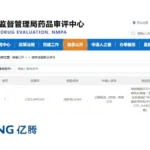



Hengrui Pharmaceuticals (SHA: 600276; HKG: 1276) announced that China’s National Medical Products Administration (NMPA) has accepted its marketing application for a new indication of Trastuzumab rezetecan and granted Priority Review designation. The proposed indication targets adult patients with unresectable or metastatic HER2-low breast cancer (IHC 1+ or IHC 2+/ISH-), representing the drug’s third approved indication in China following prior approvals in HER2-positive breast cancer and HER2-mutant non-small cell lung cancer (NSCLC).
Regulatory Milestone
| Item | Detail |
|---|---|
| Agency | National Medical Products Administration (NMPA) |
| Application Status | Accepted with Priority Review designation |
| Product | Trastuzumab rezetecan – antibody-drug conjugate (ADC) |
| New Indication | Unresectable or metastatic HER2-low breast cancer (IHC 1+ or IHC 2+/ISH-) |
| Target Population | Patients with/without first-line metastatic chemotherapy; or relapsed during/within 6 months of adjuvant chemotherapy |
| Application Date | 2 July 2026 |
Drug Mechanism & Therapeutic Innovation
- Mechanism of Action: Antibody-drug conjugate (ADC) that binds to HER2-expressing tumor cells
- Cellular Process: Undergoes endocytosis → lysosomal cleavage by proteases → releases cytotoxic payload
- Therapeutic Effect: Induces cell cycle arrest and triggers tumor cell apoptosis (programmed cell death)
- Target Expansion: Extends from HER2-positive/mutant to HER2-low expression populations
- Clinical Significance: Addresses substantial unmet need in HER2-low breast cancer, representing ~50% of all breast cancer cases
Existing Approved Indications in China
| Indication | Patient Population | Prior Therapy Requirement |
|---|---|---|
| NSCLC | Unresectable, locally advanced, or metastatic NSCLC with HER2 (ERBB2) activating mutations | At least one prior systemic therapy |
| HER2-Positive Breast Cancer | Locally advanced or metastatic HER2-positive breast cancer | One or more prior anti-HER2 therapies |
| HER2-Low Breast Cancer | Unresectable or metastatic HER2-low breast cancer (pending approval) | Variable prior therapy status |
Market Opportunity & Strategic Impact
| Aspect | Details |
|---|---|
| HER2-Low Breast Cancer Prevalence | Represents approximately 50% of all breast cancer cases globally |
| Current Treatment Landscape | Limited targeted options; primarily treated with chemotherapy or endocrine therapy |
| Competitive Advantage | First ADC specifically targeting HER2-low population in Chinese market |
| Commercial Potential | Significant expansion of addressable patient population beyond existing indications |
| Strategic Positioning | Reinforces Hengrui’s leadership in HER2-targeted therapies across multiple tumor types |
Forward Outlook
The Priority Review designation reflects the NMPA’s recognition of Trastuzumab rezetecan’s potential to address critical unmet needs in HER2-low breast cancer, a historically underserved patient population. With accelerated review timelines, Hengrui anticipates potential approval within 6–8 months, enabling rapid commercial launch through its established oncology sales infrastructure.
This expanded indication would position Trastuzumab rezetecan as a comprehensive HER2-targeted therapy spanning the full spectrum of HER2 expression levels—from high to low—across multiple tumor types. The company plans to leverage real-world evidence from its existing indications to support rapid adoption among Chinese oncologists treating breast cancer patients.
The approval would also strengthen Hengrui’s competitive moat in the rapidly evolving ADC market, where HER2 remains one of the most validated and commercially successful targets. This milestone underscores the company’s strategic focus on maximizing the therapeutic potential of its lead assets through indication expansion and precision medicine approaches.
Forward-Looking Statements
This brief contains forward-looking statements regarding regulatory approvals, clinical development, and commercial expectations for Trastuzumab rezetecan. Actual results may differ due to risks including regulatory decisions, competitive dynamics, market acceptance, and clinical outcomes in the HER2-low breast cancer population.-Fineline Info & Tech