



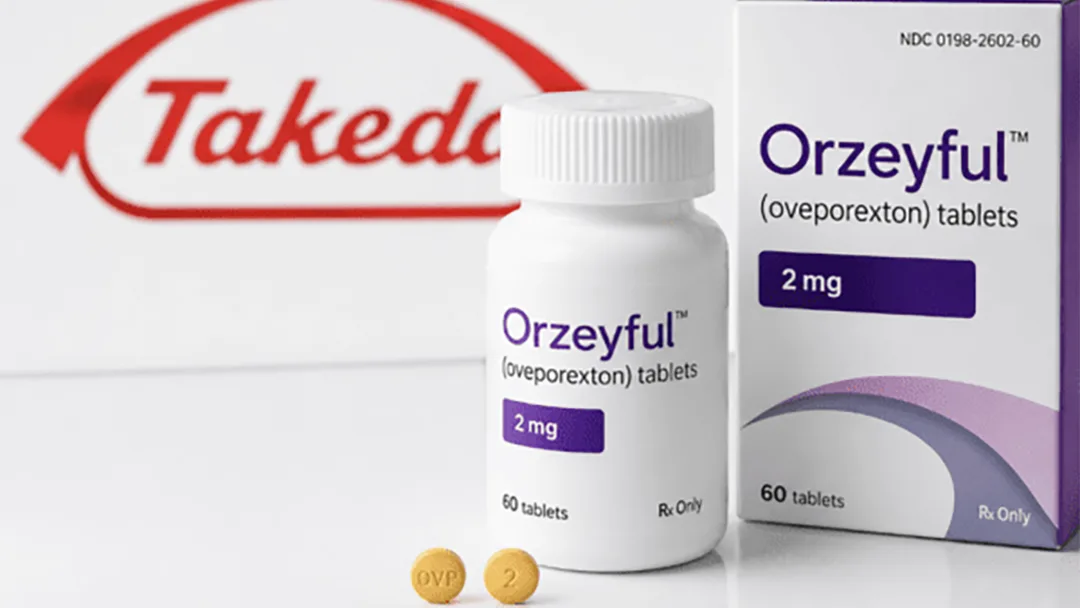
Takeda Pharmaceutical Company Limited (TYO: 4502; NYSE: TAK) announced that the U.S. Food and Drug Administration (FDA) has approved ORZEYFUL (oveporexton) for the treatment of narcolepsy type 1 (NT1, narcolepsy with cataplexy) in adults. The approval marks a significant advancement in narcolepsy treatment, as ORZEYFUL is an oral orexin receptor 2 (OX2R) agonist that selectively activates OX2R to restore signaling, directly addressing the underlying orexin deficiency associated with NT1. The drug was previously approved for marketing in China.
Regulatory Milestone | ORZEYFUL (oveporexton)
| Parameter | Detail |
|---|---|
| Drug Name | ORZEYFUL (oveporexton) |
| Drug Class | Oral orexin receptor 2 (OX2R) agonist |
| Mechanism | Selective OX2R activation to restore orexin signaling |
| Indication | Narcolepsy type 1 (NT1) with cataplexy in adults |
| Approval Authority | U.S. FDA (05 Aug 2026) |
| Previous Approval | China (prior to US approval) |
| Therapeutic Approach | Addresses root cause (orexin deficiency) vs. symptomatic treatment |
Mechanism of Action & Clinical Benefits
- Target Specificity: Selective OX2R agonist that restores deficient orexin signaling in NT1 patients
- Wakefulness Promotion: Activates OX2R to promote sustained wakefulness during daytime hours
- Cataplexy Reduction: Reduces abnormal REM-sleep like phenomena, including cataplexy (sudden, temporary loss of muscle tone)
- Comprehensive Symptom Control: Addresses range of daytime and nighttime symptoms as demonstrated in clinical studies
- Pathophysiological Alignment: First therapy to directly target the underlying orexin deficiency rather than masking symptoms
Therapeutic Innovation & Market Significance
First-in-Class Potential
- Novel Mechanism: Represents first oral OX2R agonist approved for narcolepsy, offering mechanistic differentiation from existing stimulants and sodium oxybate
- Root Cause Treatment: Unlike current therapies that manage symptoms, ORZEYFUL addresses the fundamental neurochemical deficiency in NT1
- Selectivity Advantage: OX2R selectivity may provide improved safety profile compared to dual orexin receptor approaches
Narcolepsy Type 1 Market Dynamics
- Patient Population: Estimated 20,000-30,000 NT1 patients in the United States with significant unmet needs
- Current Therapies: Limited to stimulants (modafinil, amphetamines) and sodium oxybate, which have tolerability, abuse potential, or dosing challenges
- Treatment Gap: No existing therapies directly address orexin deficiency; ORZEYFUL fills this critical therapeutic void
- Premium Positioning: First-in-class mechanism supports premium pricing and rapid market adoption
Strategic Implications
For Takeda
- Neuroscience Leadership: Strengthens Takeda’s position in rare neurological disorders following success with other CNS assets
- Global Commercial Platform: Leverages existing neuroscience commercial infrastructure in both US and China
- Pipeline Validation: Demonstrates successful execution of Takeda’s strategy to develop innovative mechanisms for rare diseases
- Revenue Diversification: Adds high-value orphan drug to Takeda’s portfolio with strong margin potential
For Narcolepsy Treatment Landscape
- Paradigm Shift: Moves treatment approach from symptomatic management to disease-modifying therapy
- Standard of Care Evolution: Potential to become first-line therapy for NT1 given superior mechanistic rationale
- Patient Outcomes: Expected to significantly improve quality of life through comprehensive symptom control
- Diagnostic Impact: May increase NT1 diagnosis rates as physicians seek targeted therapies for orexin-deficient patients
The FDA approval of ORZEYFUL represents a transformative moment in narcolepsy treatment, offering the first therapy that directly addresses the underlying pathophysiology of the disease rather than merely managing its symptoms.
Forward‑Looking Statements
This brief contains forward-looking statements regarding regulatory approvals, commercial potential, and market impact. Actual results may differ materially due to market adoption rates, competitive dynamics, reimbursement decisions, and post-marketing safety surveillance.-Fineline Info & Tech