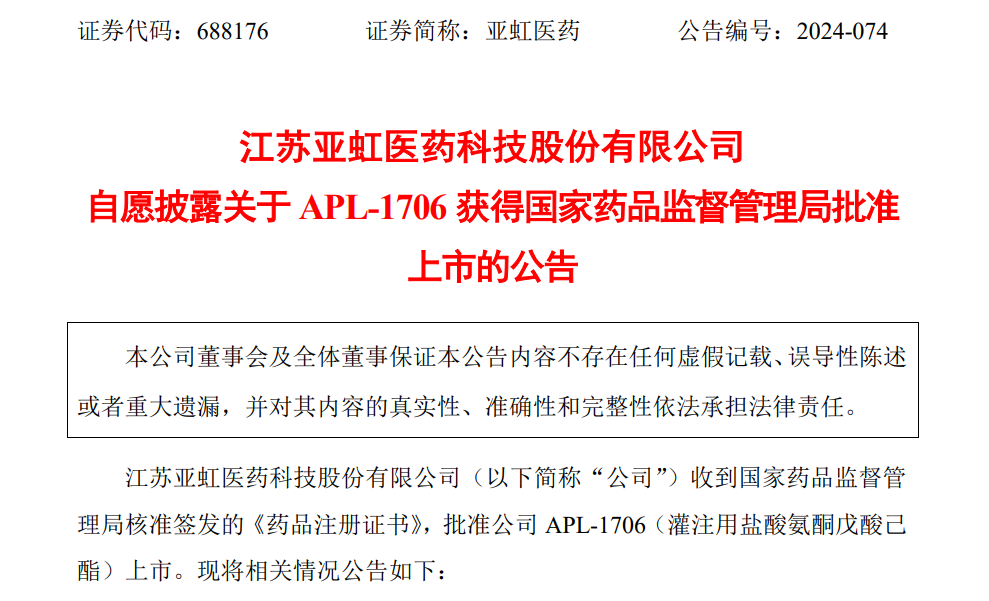



Alebund Pharmaceuticals (Jiangsu) Limited (HKG: 9637) announced that the New Drug Application (NDA) for its core pipeline product AP301, indicated for the treatment of hyperphosphatemia in patients with chronic kidney disease (CKD) on maintenance dialysis, has been formally accepted by China’s National Medical Products Administration (NMPA). The submission is anchored by positive data from the pivotal Phase 3 RESPOND‑1 study conducted across 50 centers in China.
Regulatory Milestone
| Item | Detail |
|---|---|
| Company | Alebund Pharmaceuticals (Jiangsu) Limited (HKG: 9637) |
| Agency | NMPA (China) |
| Application Type | New Drug Application (NDA) |
| Product | AP301 (novel oral iron‑based phosphate binder) |
| Indication | Hyperphosphatemia in CKD patients on maintenance dialysis |
| NDA Acceptance Date | 07 Aug 2026 |
| Key Study | RESPOND‑1 (Phase 3, n = 474, 50 centers in China) |
Drug Profile & Mechanism of Action
- Molecule: Novel oral iron‑based phosphate binder
- Class: Phosphate‑binding agent
- Mechanism: Binds dietary phosphate in the gastrointestinal tract via an iron‑based chelation platform, forming insoluble complexes that are excreted in feces, thereby lowering serum phosphorus levels
- Formulation: Oral tablet
- Differentiator: Iron‑based chemistry may offer a lower daily tablet burden compared with resin‑based binders such as sevelamer
Clinical Evidence – RESPOND‑1 Phase 3 Trial
| Endpoint | AP301 | Sevelamer (Control) | Result |
|---|---|---|---|
| Serum Phosphorus Reduction (Week 12) | 0.72 mmol/L | 0.70 mmol/L | Non‑inferiority met |
| Superiority (Low‑Dose Control Period) | Maintenance dose | Suboptimal low dose | P < 0.001 |
| Serum Phosphorus Reduction (Week 52) | 0.76 mmol/L | 0.72 mmol/L | Numerically greater |
| Serum Phosphorus Response Rate (Week 52) | 66.7 % | 58.6 % | +8.1 ppt |
| Average Daily Tablet Burden | 6.52 g/day | 7.56 g/day | –13.8 % lower |
| Safety Profile | Generally safe and well tolerated | – | Comparable tolerability |
The RESPOND‑1 study enrolled 474 hyperphosphatemia patients on maintenance dialysis across 50 Chinese centers. At Week 12, AP301 demonstrated non‑inferior phosphorus lowering versus sevelamer. During the low‑dose control period, the AP301 maintenance dose showed statistically superior serum phosphorus control compared with the suboptimal low‑dose arm. By Week 52, AP301 delivered a numerically deeper reduction in serum phosphorus alongside a higher response rate and a materially lower pill burden.
Market Impact & Outlook
- China Dialysis Landscape: China has one of the world’s largest dialysis populations, with hyperphosphatemia affecting the vast majority of maintenance dialysis patients. Current standard‑of‑care binders include sevelamer and lanthanum carbonate; an iron‑based alternative with comparable efficacy and lower pill burden could capture meaningful share.
- Differentiation: The 13.8 % reduction in daily tablet burden versus sevelamer is a clinically meaningful advantage in a patient population already burdened by polypharmacy, potentially improving adherence and outcomes.
- Revenue Forecast: Analysts estimate the China phosphate‑binder market for dialysis patients at roughly ¥4–5 billion (≈ US$560–700 million) annually. A competitively priced, domestically developed iron‑based binder could secure mid‑single‑digit market share within two years of launch.
- Pipeline Positioning: AP301 is Alebund’s core pipeline asset; NDA acceptance triggers a 12–18‑month regulatory review window and represents a critical inflection point toward the company’s first major commercial product.
- Competitive Edge: Unlike calcium‑based binders, AP301’s iron‑based mechanism avoids calcium load, and unlike resin binders, it offers a lighter pill burden — a combination that may resonate with Chinese nephrologists seeking to optimize long‑term patient compliance.
Forward‑Looking Statements
This brief contains forward‑looking statements regarding the regulatory timeline, approval prospects, and commercial potential of AP301. Actual results may differ materially due to risks including NMPA review delays, bioequivalence or manufacturing inspection outcomes, competitive dynamics, pricing and reimbursement negotiations, and market adoption rates. Investors should consult official filings for updated risk factors.-Fineline Info & Tech