


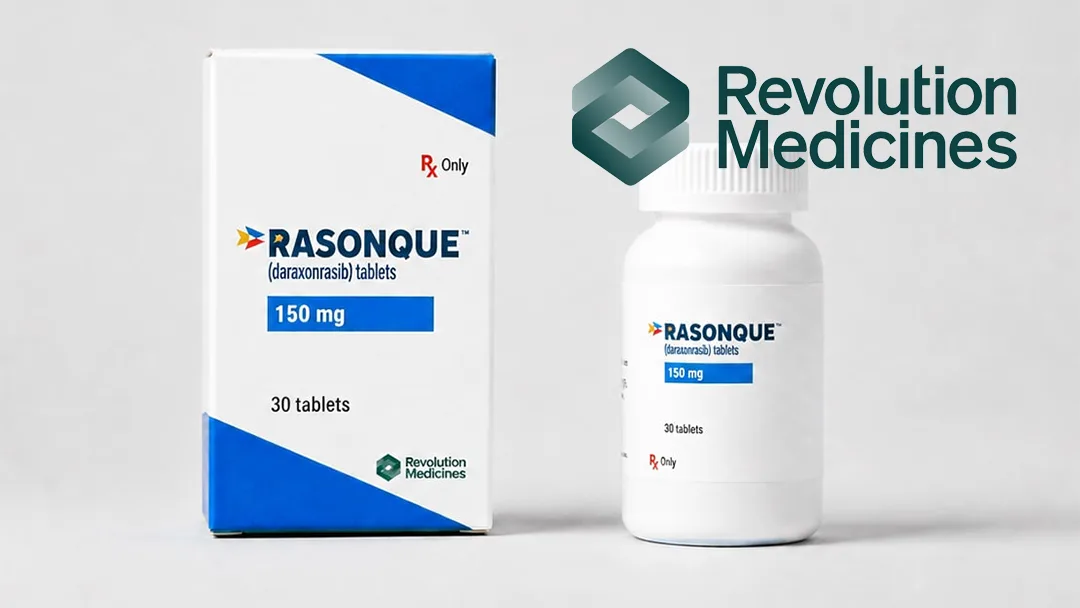
The U.S. Food and Drug Administration (FDA) has approved Revolution Medicines’ Rasonque (daraxonrasib) for the treatment of adult patients with metastatic pancreatic adenocarcinoma (PDAC) who have received at least one prior systemic therapy or who are not candidates for multiagent systemic therapy. The approval marks a significant regulatory milestone for a therapy designed to target cancers driven by a broad range of common RAS genotypes, addressing a disease long considered among the most difficult to treat in oncology.
Regulatory Milestone
| Element | Detail |
|---|---|
| Agency | U.S. Food and Drug Administration (FDA) |
| Approval Type | Marketing approval |
| Product | Rasonque (daraxonrasib) |
| Indication | Adult patients with metastatic pancreatic adenocarcinoma (PDAC) who have received ≥1 prior systemic therapy or are not candidates for multiagent systemic therapy |
| Approval Date | 26 Aug 2026 |
| Next Steps | Global Phase 3 registrational programs ongoing in PDAC and metastatic RAS‑mutant NSCLC |
Drug Profile & Mechanism of Action
- Molecule: Daraxonrasib, administered orally
- Class: RAS(ON) multi‑selective, noncovalent, tri‑complex inhibitor
- Target: A broad range of common RAS genotypes, including both wild‑type and mutant RAS(ON) proteins
- Mechanism: Suppresses RAS signaling by inhibiting interactions between RAS(ON) proteins and their downstream effectors
- Therapeutic Scope: Designed for RAS‑driven cancers, including pancreatic adenocarcinoma (PDAC), non‑small cell lung cancer (NSCLC), and colorectal cancer
- Pipeline Stage: Phase 3 registrational programs underway globally in PDAC and metastatic RAS‑mutant NSCLC
Clinical Evidence – Phase 3 Registrational Program
- The FDA approval supports use in a previously treated or treatment‑limited metastatic PDAC population, a setting with few established options.
- Revolution Medicines is advancing Rasonque through global Phase 3 registrational clinical programs in patients with PDAC and metastatic RAS‑mutant NSCLC, which will serve as the foundation for potential label expansions.
- The multi‑selective design targeting a broad spectrum of RAS genotypes differentiates daraxonrasib from genotype‑restricted approaches and underpins its development across multiple tumor types.
Market Impact & Outlook
- Unmet Need: Metastatic pancreatic cancer remains one of oncology’s most challenging indications, with limited effective therapies after first‑line treatment.
- Broad Commercial Potential: With ongoing registrational programs in both PDAC and metastatic RAS‑mutant NSCLC, Rasonque could address substantial patient populations across RAS‑driven cancers, including colorectal cancer.
- Competitive Positioning: The multi‑selective, tri‑complex mechanism covering both wild‑type and mutant RAS(ON) proteins positions Revolution Medicines distinctly within the rapidly evolving RAS‑targeted therapy landscape.
- Watch Items: Phase 3 readouts will be key catalysts, shaping the potential for broader indications and global regulatory submissions.
Forward‑Looking Statements – This brief is for informational purposes only and does not constitute medical, investment, or regulatory advice. Statements regarding ongoing clinical programs and future development are forward‑looking and subject to risks and uncertainties; actual results may differ materially. Refer to official FDA announcements and Revolution Medicines’ filings for authoritative details.-Fineline Info & Tech