


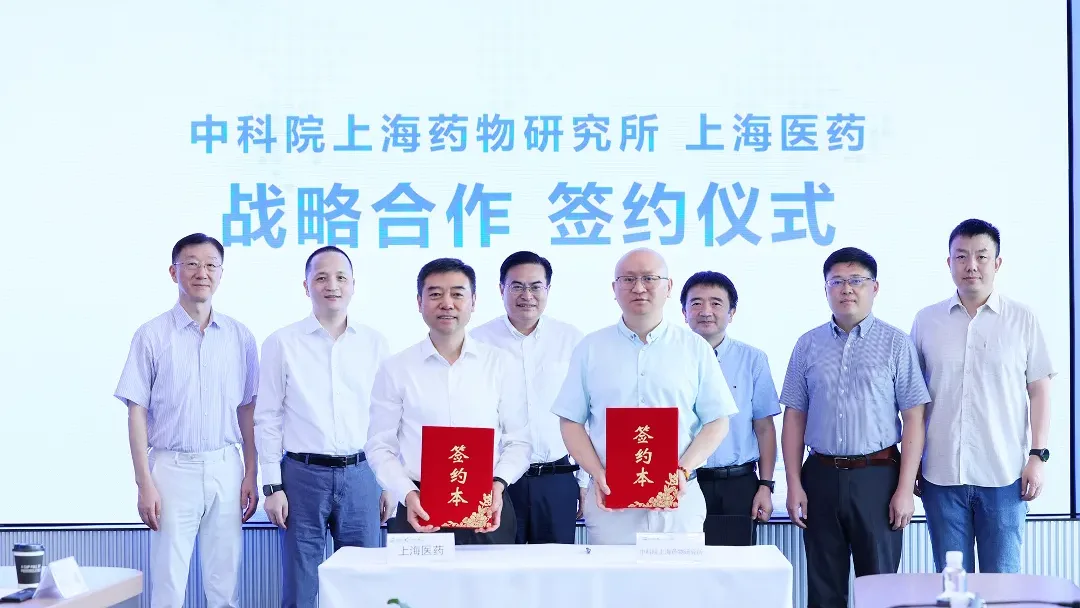
Shanghai Pharmaceuticals Holding Co., Ltd. (HKG: 2607; SHA: 601607) and the Shanghai Institute of Materia Medica, Chinese Academy of Sciences (SIMM) signed a cooperation framework agreement on September 7, 2026 at Shanghai Frontier. Through complementary strengths and resource sharing, the two parties will engage in deep collaboration on innovative drug R&D and the translation of research outcomes, further bridging the gap between scientific research and industrial application and jointly enhancing the efficiency of innovation commercialization.
Deal Milestone
| Item | Detail |
|---|---|
| Party A | Shanghai Pharmaceuticals Holding Co., Ltd. (HKG: 2607; SHA: 601607) |
| Party B | Shanghai Institute of Materia Medica, Chinese Academy of Sciences (SIMM) |
| Agreement Type | Cooperation framework agreement |
| Signing Venue | Shanghai Frontier |
| Signing Date | 7 Sep 2026 |
| Objective | Deep collaboration on innovative drug R&D and translation of research outcomes |
| Strategic Aim | Bridge scientific research and industrial application; accelerate innovation commercialization |
Key Therapeutic Focus Areas
| Therapeutic Area | Strategic Rationale |
|---|---|
| Autoimmune diseases | Large, growing global immunology market |
| Cardiovascular and cerebrovascular diseases | High‑burden chronic disease categories |
| Neuropsychiatric disorders | Underserved CNS space with strong unmet need |
| Oncology | Core innovation area for both parties |
Collaboration Model
- Foundation: The two parties share a strong pre‑existing foundation for collaboration, with the partnership focused on innovation projects
- Translation Pipeline: Efficiently connect SIMM’s research outcomes with translational potential to Shanghai Pharmaceuticals’ R&D pipeline and industrial resources
- Joint Initiatives: Jointly apply for and establish major science and technology projects; identify and incubate high‑quality programs
- Diverse Deal Structures: Explore multiple collaboration models, including:
- Licensing and introduction
- Joint development
- Commissioned R&D
- Project incubation
Market Impact & Outlook
- Academia–Industry Translation Engine: China’s “valley of death” between basic research and commercial drug development remains a structural bottleneck. A framework binding one of China’s leading pharmaceutical groups (HKG: 2607; SHA: 601607) with CAS’s flagship drug discovery institute creates a repeatable pipeline of translational candidates.
- Pipeline Diversification: The four priority therapeutic areas — autoimmune, cardiovascular/cerebrovascular, neuropsychiatric, and oncology — span Shanghai Pharmaceuticals’ strategic innovation agenda beyond its established distribution and generic‑drug base.
- Flexible Deal Architecture: By pre‑agreeing multiple collaboration models (licensing, joint development, commissioned R&D, incubation), the framework lowers transaction friction for individual assets moving from SIMM labs into industrial development.
- National S&T Project Access: Joint applications for major science and technology projects position the partnership to capture government innovation funding, de‑risking early‑stage programs.
Forward‑Looking Statements
This brief contains forward‑looking statements regarding joint research programs, project incubation, licensing activities, and translation of research outcomes. Actual results may differ due to risks including research feasibility, preclinical and clinical outcomes, regulatory timelines, funding availability, and competitive dynamics.-Fineline Info & Tech