


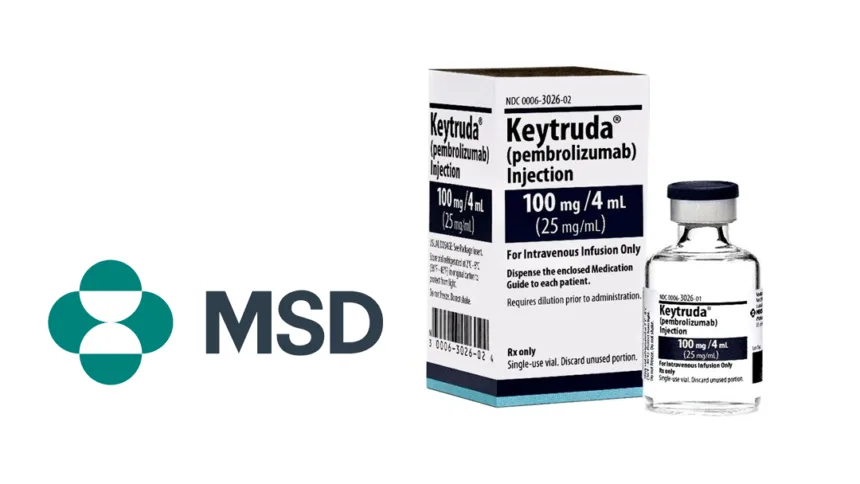
Merck & Co., Inc. (MSD; NYSE: MRK) announced that its PD‑1 inhibitor KEYTRUDA (pembrolizumab) has been approved by China’s National Medical Products Administration (NMPA) in combination with chemotherapy as neoadjuvant treatment, and continued as monotherapy adjuvant treatment after surgery, for patients with early‑stage high‑risk triple‑negative breast cancer (TNBC).
Contents
Regulatory Milestone
| Item | Detail |
|---|---|
| Agency | NMPA (China) |
| Approval Type | New indication approval (perioperative use) |
| Product | KEYTRUDA (pembrolizumab), PD‑1 inhibitor |
| Regimen | With chemotherapy as neoadjuvant treatment, followed by monotherapy adjuvant treatment after surgery |
| Indication | Early‑stage high‑risk triple‑negative breast cancer (TNBC) |
| Announcement Date | 10 Sep 2026 |
| Prior Approval | Nov 2022 – same perioperative regimen, restricted to patients whose tumors express PD‑L1 (CPS ≥ 20) as determined by a validated test |
| Next Steps | Not disclosed |
Label Evolution – 2022 vs. 2026
| Attribute | November 2022 Approval | September 2026 Approval |
|---|---|---|
| Population | Early‑stage high‑risk TNBC with PD‑L1 CPS ≥ 20 (validated test required) | Early‑stage high‑risk TNBC (no PD‑L1 CPS ≥ 20 restriction stated) |
| Regimen | Neoadjuvant chemo‑combination → adjuvant monotherapy post‑surgery | Unchanged |
| Competitive Status | Only PD‑1 inhibitor approved in China for early‑stage high‑risk TNBC | Remains the only PD‑1 inhibitor approved in China for this setting |
Drug Profile & Mechanism of Action
- Molecule: Pembrolizumab (KEYTRUDA), Merck’s flagship anti‑PD‑1 monoclonal antibody.
- Mechanism: Blocks the PD‑1/PD‑L1 immune checkpoint pathway, restoring T‑cell–mediated antitumor immunity; chemotherapy combination promotes antigen release and immune priming in the neoadjuvant window.
- Perioperative Strategy: Neoadjuvant chemo‑immunotherapy before surgery followed by adjuvant pembrolizumab monotherapy aims to eradicate micrometastatic disease and improve long‑term outcomes in early‑stage, high‑risk patients.
- Clinical Data: Trial endpoints and efficacy results underlying the new approval were not disclosed in the announcement.
Market Impact & Outlook
- Patient Pool Expansion: By omitting the PD‑L1 CPS ≥ 20 biomarker restriction present in the 2022 label, the approval potentially broadens the eligible early‑stage high‑risk TNBC population in China, a market with a high incidence of TNBC and substantial demand for curative‑intent therapy.
- Monopoly Position: KEYTRUDA remains the only PD‑1 inhibitor approved in China for early‑stage high‑risk TNBC – a differentiated position in the world’s largest PD‑1 market, where domestic inhibitors compete fiercely in other tumor types.
- Franchise Value: China perioperative breast cancer adds another revenue‑diversifying indication to the world’s top‑selling oncology brand, extending KEYTRUDA’s growth runway amid evolving global competition.
- Commercial Terms: Launch timing, pricing, and NRDL reimbursement status were not disclosed.
Forward‑Looking Statements
This brief contains forward‑looking statements regarding regulatory timelines, clinical outcomes, and commercial expectations for KEYTRUDA (pembrolizumab) in China. Actual results may differ due to risks including reimbursement decisions, market adoption, physician uptake, and competitive dynamics.-Fineline Info & Tech