


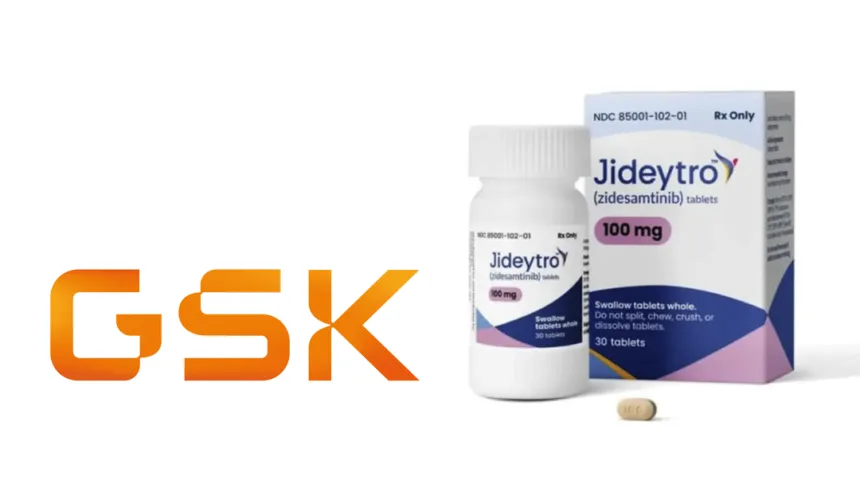
GlaxoSmithKline Plc (GSK; NYSE: GSK) announced positive results from the registrational phase I/II ARROS‑1 clinical trial evaluating Jideytro (zidesamtinib) in patients with locally advanced or metastatic ROS1‑positive non‑small cell lung cancer (NSCLC) who had not received previous tyrosine kinase inhibitor (TKI) therapy (TKI‑naïve).
Trial Snapshot
| Item | Detail |
|---|---|
| Trial | ARROS‑1 – Registrational phase I/II study |
| Investigational Drug | Jideytro (zidesamtinib), a next‑generation ROS1 TKI |
| Population | Locally advanced or metastatic ROS1‑positive NSCLC, TKI‑naïve |
| Median Follow‑Up | 15.2 months (range: 1.1–30.5 months) |
| Prior Regulatory Status | US FDA approval (Jul 2026) for ROS1‑positive NSCLC after prior ROS1 TKI |
| Next Steps | Not disclosed; registrational data support first‑line expansion |
Clinical Evidence – ARROS‑1 Efficacy in TKI‑Naïve Patients
| Endpoint | Result |
|---|---|
| Objective Response Rate (ORR) | 94 % (88/94; 95 % CI: 87–98) – clinically meaningful |
| Complete Response (CR) Rate | 15 % (14/94) |
| Durability – 9 Months | 94 % of responding patients still in response |
| Durability – 12 Months | 86 % of responding patients still in response |
| Progression‑Free Survival (PFS) at 12 Months | 90 % |
| Median Duration of Response (DOR) | Not reached at time of analysis |
| Median PFS | Not reached at time of analysis |
At a median follow‑up of 15.2 months, zidesamtinib produced deep and strikingly durable responses in the first‑line setting – a 94 % ORR with median DOR and median PFS still unreached, signaling the potential to reset the treatment benchmark for ROS1‑positive NSCLC. Safety and tolerability data details were not disclosed in the announcement.
Drug Profile & Strategic Background
- Molecule: Zidesamtinib (Jideytro), a ROS1‑selective tyrosine kinase inhibitor designed with broad coverage of ROS1 resistance mutations.
- Design Goals: Activity against brain metastases, durable treatment responses, and a favorable tolerability profile – key limitations of earlier ROS1 TKIs.
- Portfolio Origin: Entered GSK’s oncology portfolio through the company’s recently completed acquisition of Nuvalent, Inc., a precision oncology specialist.
- Regulatory Footprint: FDA‑approved in July 2026 for adults with locally advanced or metastatic ROS1‑positive NSCLC previously treated with a ROS1 TKI; ARROS‑1 registrational data now support the TKI‑naïve (first‑line) population.
Market Impact & Outlook
- First‑Line Ambition: ROS1‑positive NSCLC is a rare but well‑defined molecular subset; a 94 % ORR with 90 % 12‑month PFS in TKI‑naïve patients positions zidesamtinib as a potential best‑in‑class first‑line standard of care.
- Resistance Coverage Advantage: Built‑in activity against ROS1 resistance mutations and CNS disease addresses the two principal failure modes of incumbent ROS1 TKIs.
- Oncology Franchise Growth: The Nuvalent acquisition is delivering clinical value quickly, reinforcing GSK’s strategy of building a high‑growth precision oncology portfolio through targeted M&A.
- Filing Outlook: Global regulatory submission plans for the first‑line indication were not disclosed.
Forward‑Looking Statements
This brief contains forward‑looking statements regarding clinical outcomes, regulatory timelines, and commercial expectations for Jideytro (zidesamtinib). Interim and registrational results are subject to confirmation in final analyses and regulatory review. Actual results may differ due to risks including safety findings, approval outcomes, market adoption, and competitive dynamics.-Fineline Info & Tech