


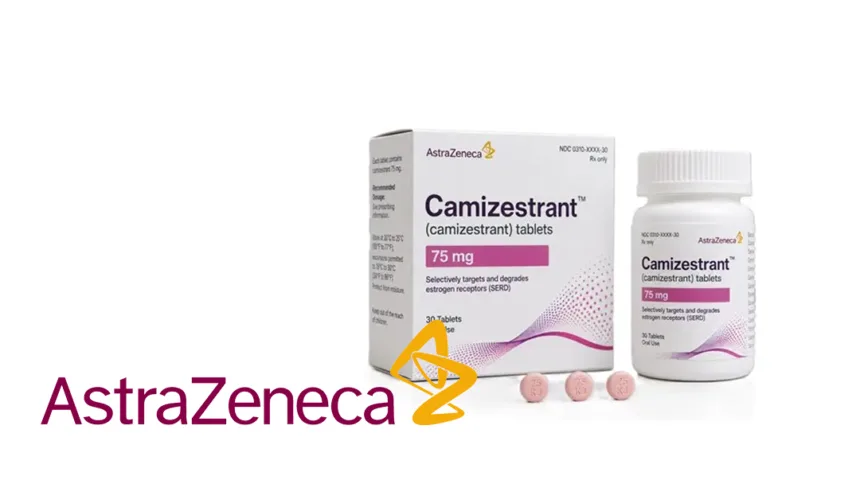
AstraZeneca plc (NYSE: AZN) announced that the SERENA‑4 Phase III trial of its Etcamah (camizestrant) in combination with palbociclib, a cyclin‑dependent kinase (CDK) 4/6 inhibitor, did not meet the primary endpoint of progression‑free survival (PFS) in patients with ER‑positive, HER2‑negative advanced breast cancer, although a numerical improvement was observed.
Contents
Trial Snapshot
| Item | Detail |
|---|---|
| Trial | SERENA‑4 – Phase III, double‑blind, randomised |
| Investigational Regimen | Camizestrant (Etcamah) + palbociclib (CDK4/6 inhibitor) |
| Comparator | Anastrozole (aromatase inhibitor) + palbociclib |
| Population | Adults with ER‑positive, HER2‑negative advanced breast cancer, newly diagnosed with Stage IV de novo or recurrent disease, no prior systemic treatment for metastatic disease (first‑line) |
| Enrollment | 1,371 patients (global) |
| Primary Endpoint | Progression‑free survival (PFS) – not met; numerical improvement observed |
| Results Date | Announced 11 Sep 2026 |
Clinical Outcome – SERENA‑4
- Primary Endpoint Missed: The camizestrant–palbociclib combination failed to meet the primary endpoint of PFS versus the established standard of anastrozole plus palbociclib in the first‑line setting, despite a numerical improvement in the experimental arm.
- Scale of the Trial: With 1,371 enrolled patients across a global, double‑blind, randomised design, SERENA‑4 represented one of the largest head‑to‑head tests of a next‑generation oral SERD against aromatase‑inhibitor backbone therapy.
- Detailed Data: Hazard ratios, median PFS values, secondary endpoints, and safety analyses were not disclosed in the announcement.
Drug Profile & Current Approvals
- Molecule: Etcamah (camizestrant) – a potent, next‑generation oral selective estrogen receptor degrader (SERD) and complete ER antagonist, administered orally, once daily.
- Approved Setting (SERENA‑6 basis): Etcamah in combination with a CDK4/6 inhibitor (palbociclib, ribociclib or abemaciclib) is approved in the US, EU, Japan and several other countries for adults with HR‑positive (or ER‑positive), HER2‑negative locally advanced or metastatic breast cancer upon detection or emergence of ESR1 mutation during first‑line endocrine‑based therapy.
- Management Commentary: Susan Galbraith, Executive Vice President, Oncology Haematology R&D, AstraZeneca, said: “Whilst we are disappointed by the SERENA‑4 outcome, it sharpens our focus on maximising the number of patients who can benefit from Etcamah today based on SERENA‑6 and reinforces the importance of ESR1 testing for patients on first‑line therapy.”
Market Impact & Outlook
- First‑Line Ambitions Checked: The miss denies camizestrant a broader first‑line label expansion in one of oncology’s largest markets, leaving the AI + CDK4/6 inhibitor combination as the entrenched first‑line standard in ER‑positive, HER2‑negative advanced breast cancer.
- Approved Niche Intact: The setback does not affect Etcamah’s existing approvals in the ESR1‑mutated post‑first‑line setting based on SERENA‑6, where the drug is already generating revenue in the US, EU, Japan and other markets.
- Biomarker Strategy Reinforced: AstraZeneca signaled a refocused commercial strategy around ESR1 mutation testing – positioning Etcamah as a precision switch therapy upon ctDNA‑detected resistance rather than a broad first‑line replacement.
- Competitive Landscape: Oral SERD developers continue to vie for differentiation in HR‑positive breast cancer, where CDK4/6 inhibitors dominate and resistance‑guided sequencing is becoming standard practice.
Forward‑Looking Statements
This brief contains forward‑looking statements regarding clinical outcomes, regulatory timelines, and commercial expectations for Etcamah (camizestrant). Actual results may differ due to risks including full data maturation, regulatory decisions, market adoption of ESR1 testing, and competitive dynamics.-Fineline Info & Tech