


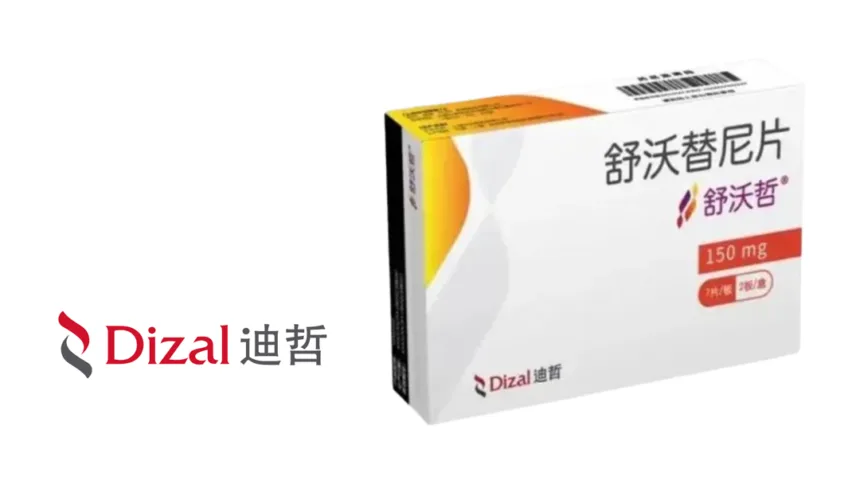
Dizal (Jiangsu) Pharmaceutical Co., Ltd. (SHA: 688192) announced that it has received a US$600 million upfront payment from AstraZeneca plc (NYSE: AZN), stemming from the global exclusive licensing agreement for Sunvozertinib announced by both parties on 14 Jul 2026, which officially came into effect on 31 Aug 2026. Under the terms of the agreement, Dizal granted AstraZeneca exclusive global rights to develop and commercialize Sunvozertinib.
Deal Snapshot
| Item | Detail |
|---|---|
| Licensor | Dizal Pharmaceutical (SHA: 688192) |
| Licensee | AstraZeneca plc (NYSE: AZN) |
| Asset | Sunvozertinib (oral, irreversible, highly selective EGFR TKI) |
| Rights Granted | Exclusive global development and commercialization rights |
| Announcement Date | 14 Jul 2026 |
| Effective Date | 31 Aug 2026 |
| Upfront Payment | US$600 million (received 29 Sep 2026) |
| Milestones / Royalties | Not disclosed in this announcement |
| US Commercialization Launch | Q4 2026 (by AstraZeneca) |
Drug Profile & Mechanism of Action
- Molecule: Orally administered, irreversible, and highly selective tyrosine kinase inhibitor (TKI), independently developed by Dizal.
- Target: Various epidermal growth factor receptor (EGFR) mutation subtypes, with an approved focus on EGFR exon 20 insertion (exon20ins) mutations – a subset historically resistant to classical EGFR TKIs.
- Approved Indication: Monotherapy for second‑line and subsequent‑line treatment of non‑small cell lung cancer (NSCLC) with EGFR exon20ins mutations, approved in both China and the United States.
- Unique Market Position: The only oral small‑molecule targeted drug in this field to achieve dual approval in China and the U.S., receive consistent recommendations from authoritative guidelines globally and domestically, and gain national health insurance coverage in China.
- Regulatory Momentum: The supplemental New Drug Application (sNDA) for first‑line treatment of EGFR exon20ins NSCLC has been accepted by China’s CDE (NMPA) and the U.S. FDA; both agencies previously granted Breakthrough Therapy Designation (BTD) to Sunvozertinib for this indication.
Clinical & Regulatory Evidence
| Regulatory Item | Status |
|---|---|
| 2L+ EGFR exon20ins NSCLC (China) | Approved |
| 2L+ EGFR exon20ins NSCLC (U.S.) | Approved |
| 1L EGFR exon20ins NSCLC sNDA (CDE) | Accepted |
| 1L EGFR exon20ins NSCLC sNDA (FDA) | Accepted |
| Breakthrough Therapy Designation (CDE & FDA, 1L indication) | Granted |
| China National Health Insurance Coverage | Secured |
Specific clinical trial data underlying the approvals were not restated in this announcement.
Market Impact & Outlook
- Cash Inflection for Dizal: The receipt of US$600 million upfront validates the licensing transaction and materially strengthens Dizal’s balance sheet, funding continued pipeline development following the transfer of Sunvozertinib’s global commercial rights.
- AstraZeneca’s Lung Cancer Franchise: Adding a first‑in‑field, dual‑approved oral TKI extends AstraZeneca’s leadership position in EGFR‑mutant NSCLC into the exon20ins niche, complementing its existing targeted therapy portfolio.
- Near‑Term Catalyst: AstraZeneca will launch U.S. commercialization of Sunvozertinib in Q4 2026, setting up an early revenue milestone under the exclusive global license.
- Line‑of‑Therapy Expansion: Acceptance of the first‑line sNDA by both the CDE and FDA, backed by dual Breakthrough Therapy Designations, positions Sunvozertinib to move earlier in the treatment sequence – typically a significant expansion of addressable patients if approved.
- Access Advantage in China: Existing national health insurance coverage and guideline recommendations provide a reimbursement head start in the Chinese market, a differentiator versus competing exon20ins‑targeted agents.
Forward‑Looking Statements
This brief contains forward‑looking statements regarding the Sunvozertinib license agreement between Dizal and AstraZeneca, including the timing of U.S. commercialization launch, regulatory review of the first‑line sNDA by the CDE and FDA, and commercial expectations. Actual results may differ due to risks including regulatory review outcomes, market adoption, reimbursement dynamics, and competitive developments.-Fineline Info & Tech