


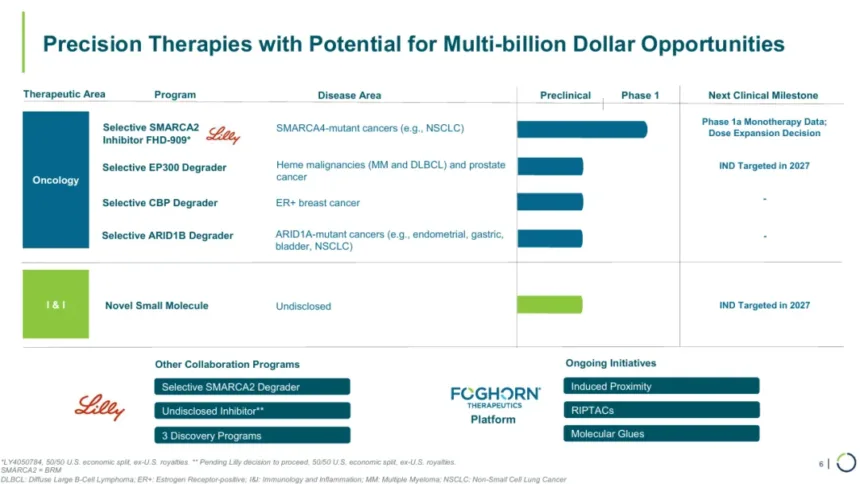
Foghorn Therapeutics Inc. (NASDAQ: FHTX) announced that, following a review of clinical data from the Phase 1 dose‑escalation trial of FHD‑909 (LY4050784), both Foghorn and Eli Lilly and Company (NYSE: LLY, via its Loxo Oncology subsidiary) have decided not to advance the program into the clinical development expansion phase. The collaboration will also not advance the selective SMARCA2 degrader program, and the companies do not anticipate further collaboration activities. As a result, Foghorn is reprioritizing resources toward its proprietary portfolio programs with the greatest potential to address significant patient needs and create long‑term value.
Collaboration Termination Overview
| Item | Detail |
|---|---|
| Parties | Foghorn Therapeutics Inc. (NASDAQ: FHTX) and Eli Lilly (via Loxo Oncology) |
| Original Collaboration Date | 2021 |
| Platform | Foghorn’s proprietary Gene Traffic Control platform |
| Therapeutic Focus | Novel oncology medicines |
| Discontinued Programs | (1) FHD‑909 (LY4050784) — Phase 1 dose escalation completed, not advancing to expansion; (2) Selective SMARCA2 degrader program |
| Decision Basis | Review of Phase 1 dose‑escalation clinical data for FHD‑909 |
| Collaboration Status | No further collaboration activities anticipated |
| Strategic Consequence | Foghorn reprioritizing resources toward proprietary portfolio programs |
| Announcement Date | 1 October 2026 |
Original Collaboration Terms (2021)
| Item | Detail |
|---|---|
| Collaboration Partner | Loxo Oncology (subsidiary of Eli Lilly and Company) |
| Platform | Foghorn’s Gene Traffic Control — a proprietary platform targeting chromatin regulatory mechanisms for novel oncology drug discovery |
| Upfront Cash Payment | Amount not disclosed in current announcement |
| Equity Investment | US$80 million — Lilly invested in Foghorn common stock at US$20 per share |
| Potential Milestone Payments | Up to US$1.3 billion (development and commercialization milestones) |
| Total Potential Deal Value (Original) | Up to ~US$1.38 billion+ (including upfront + equity + milestones) |
Program Background
FHD‑909 (LY4050784)
- Stage at Discontinuation: Phase 1 dose‑escalation trial completed; decision made not to proceed to dose‑expansion cohorts.
- LY Designation: The LY4050784 Lilly designation indicates that the compound had progressed through Lilly’s internal development numbering system, reflecting meaningful advancement within the collaboration framework.
- Clinical Data: Specific Phase 1 dose‑escalation data (safety, tolerability, pharmacokinetics, preliminary efficacy signals) that informed the discontinuation decision were not disclosed in this announcement.
Selective SMARCA2 Degrader Program
- Target: SMARCA2 — a catalytic subunit of the SWI/SNF chromatin remodeling complex, implicated in synthetic‑lethal strategies in SMARCA4‑deficient cancers.
- Stage at Discontinuation: Preclinical / early discovery (specific stage not disclosed).
- Rationale: SMARCA2 degradation has been explored as a synthetic‑lethal approach in tumors with SMARCA4 loss, a mutation found in subsets of non‑small cell lung cancer, small cell carcinoma of the ovary hypercalcemic type (SCCOHT), and other malignancies.
Gene Traffic Control Platform Context
- Platform Concept: Foghorn’s Gene Traffic Control platform targets the chromatin regulatory system — the mechanisms that control gene expression through epigenetic regulation of chromatin structure and accessibility.
- Therapeutic Hypothesis: Dysregulation of chromatin regulatory complexes (including SWI/SNF, Polycomb, and others) is a hallmark of many cancers. By targeting these regulatory mechanisms, Foghorn’s platform aims to reprogram aberrant gene expression programs driving oncogenesis.
- Platform Status: The discontinuation of the Lilly collaboration does not affect Foghorn’s ownership and continued development of the Gene Traffic Control platform for its proprietary pipeline programs.
Market Impact & Outlook
- Collaboration Unwinding – A Common Biotech Outcome: The discontinuation of discovery‑stage collaborations after Phase 1 data review is a recognized risk in pharma–biotech partnerships, particularly in novel target spaces where early clinical data may not meet the threshold for continued investment. The decision reflects a mutual, data‑driven assessment rather than a unilateral termination.
- Foghorn’s Cash Position: With the original US$80 million equity investment from Lilly plus the undisclosed upfront cash payment already received, Foghorn enters this strategic pivot with capital resources to fund its proprietary pipeline. The company’s current cash runway and burn rate were not disclosed in this announcement.
- Proprietary Pipeline Reprioritization: Foghorn’s decision to redirect resources toward proprietary programs signals confidence in its internally developed pipeline candidates, which are not subject to collaboration partner approval for advancement. Specific proprietary programs being prioritized were not disclosed.
- SMARCA2 Degrader Landscape: The discontinuation of the SMARCA2 degrader program reflects the broader challenges in the targeted protein degradation space for chromatin targets, where achieving sufficient selectivity and therapeutic window has proven difficult across the industry. Other companies pursuing SMARCA2/SMARCA4 synthetic‑lethal strategies include AstraZeneca, Bristol Myers Squibb, and Foghorn’s peer biotechs.
- Lilly Oncology Strategy: For Eli Lilly, the collaboration wind‑down represents a relatively modest portfolio adjustment within its broader oncology pipeline, which includes multiple approved products and late‑stage candidates across diverse modalities. Lilly’s oncology franchise remains one of the largest globally.
- Investor Implications: The end of the Lilly collaboration removes the potential for up to US$1.3 billion in future milestone payments from Foghorn’s financial projections. Investors will now evaluate Foghorn primarily on the merits and progress of its proprietary pipeline, which becomes the company’s sole value driver.
Forward‑Looking Statements
This brief contains forward‑looking statements regarding Foghorn Therapeutics’ strategic reprioritization, proprietary pipeline development plans, and resource allocation. Actual results may differ materially due to risks including the ability to advance proprietary programs on the anticipated timelines, clinical development outcomes, cash runway and capital requirements, the need for additional financing, competitive dynamics in the oncology therapeutic space, and the inherent uncertainties of drug discovery and development. The discontinuation of the Lilly collaboration eliminates potential future milestone and royalty revenue from the partnered programs. Investors are advised to exercise caution.-Fineline Info & Tech