


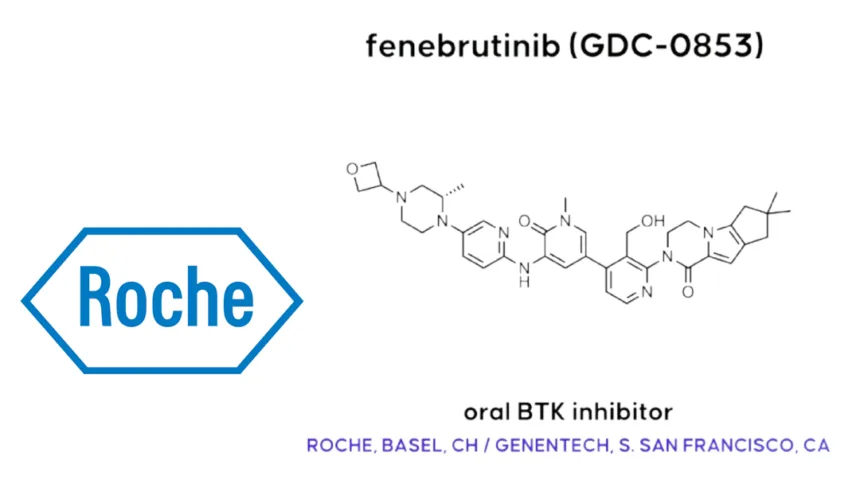
Roche (SWX: ROP; OTCMKTS: RHHBY) announced that the U.S. Food and Drug Administration (FDA) has accepted for priority review the company’s New Drug Application (NDA) for fenebrutinib, an investigational non‑covalent Bruton’s tyrosine kinase (BTK) inhibitor, for the treatment of relapsing multiple sclerosis (RMS) and primary progressive multiple sclerosis (PPMS). The filing is supported by a comprehensive Phase III clinical programme comprising three pivotal studies — FENhance 1 and FENhance 2 in RMS and FENtrepid in PPMS — which demonstrated significant efficacy against established standard‑of‑care comparators in both MS subtypes.
Regulatory Milestone
| Item | Detail |
|---|---|
| Agency | U.S. Food and Drug Administration (FDA) |
| Filing Type | New Drug Application (NDA) |
| Review Designation | Priority Review |
| Product | Fenebrutinib (oral, investigational) |
| Drug Class | Non‑covalent Bruton’s tyrosine kinase (BTK) inhibitor |
| Indications Filed | (1) Relapsing multiple sclerosis (RMS); (2) Primary progressive multiple sclerosis (PPMS) |
| Supporting Studies | Phase III: FENhance 1, FENhance 2 (RMS); FENtrepid (PPMS) |
| Announcement Date | 30 September 2026 |
Priority Review designation by the FDA signifies that the agency has determined the application, if approved, would represent a significant improvement in safety or effectiveness over existing therapies. The standard FDA review target under priority review is approximately 6 months from acceptance.
Drug Profile & Mechanism of Action
- Molecule: Fenebrutinib, a non‑covalent (reversible) Bruton’s tyrosine kinase (BTK) inhibitor administered orally.
- Developer: Roche
- Mechanism: BTK is a key signaling molecule in the B‑cell receptor (BCR) pathway and Fc receptor signaling in myeloid cells. By selectively and reversibly inhibiting BTK, fenebrutinib modulates both adaptive immunity (B‑cell activation and differentiation) and innate immunity (microglial and macrophage activation), addressing multiple pathogenic mechanisms implicated in MS.
- Non‑Covalent Differentiation: Unlike covalent BTK inhibitors (e.g., ibrutinib, acalabrutinib), which form an irreversible bond with BTK, fenebrutinib’s reversible, non‑covalent binding allows for more controlled, titratable inhibition with potentially improved selectivity and safety — a critical consideration for chronic administration in a non‑oncology population.
- Dual Mechanism Relevance in MS: BTK inhibition is hypothesized to address both the peripheral inflammatory component (relapses, new lesions) and the compartmentalized CNS inflammation (chronic active lesions, disability progression) that drives progressive MS — a dual mechanism not fully achieved by current anti‑CD20 therapies.
Clinical Evidence – Phase III Programme
RMS Studies – FENhance 1 and FENhance 2
| Endpoint | Fenebrutinib | Comparator (Teriflunomide) | Result |
|---|---|---|---|
| Annualized Relapse Rate (ARR) | Significantly reduced | Standard of care | Superiority achieved |
| Active Brain Lesions | Significantly reduced | Standard of care | Superiority achieved |
| Chronic Brain Lesions | Significantly reduced | Standard of care | Superiority achieved |
- Comparator: Teriflunomide (Aubagio®) — an established oral disease‑modifying therapy and standard of care in RMS.
- Dual Study Design: The FENhance programme comprised two independent, adequately powered Phase III studies (FENhance 1 and FENhance 2), providing replicated evidence of efficacy — a robust evidentiary standard that strengthens the regulatory filing.
- Chronic Lesion Reduction: The demonstration of significant reduction in chronic (slowly expanding) brain lesions is particularly noteworthy, as chronic active lesions are increasingly recognized as a key driver of long‑term disability accumulation in MS and are not adequately addressed by most current therapies.
PPMS Study – FENtrepid
| Endpoint | Fenebrutinib | Comparator (Ocrevus / ocrelizumab) | Result |
|---|---|---|---|
| Disability Progression (Primary Endpoint) | Non‑inferior | Current standard of care | Non‑inferiority met |
- Comparator: Ocrevus® (ocrelizumab) — Roche’s own anti‑CD20 monoclonal antibody and the only approved medicine for PPMS globally.
- Clinical Significance: Meeting non‑inferiority against Ocrevus — the current gold standard in PPMS — positions fenebrutinib as the first oral therapy to demonstrate comparable efficacy to an IV‑infused anti‑CD20 antibody in progressive MS, offering a potential route‑of‑administration advantage for patients.
- Landmark Achievement: PPMS remains one of the most therapeutically challenging forms of MS, with Ocrevus as the sole approved treatment since 2017. The FENtrepid study represents one of the very few successful head‑to‑head trials in PPMS against ocrelizumab.
Market Impact & Outlook
- Dual‑Indication Filing – A Rare Achievement: Fenebrutinib’s simultaneous NDA filing for both RMS and PPMS is a strategically significant move — if approved, it would become the first oral BTK inhibitor approved for MS and potentially the first oral therapy approved for PPMS, addressing a population with extremely limited treatment options.
- BTK Inhibitor Race in MS: Fenebrutinib competes in the rapidly advancing BTK inhibitor space for MS, alongside Merck KGaA’s evobrutinib (covalent BTK inhibitor) and Sanofi’s tolebrutinib (covalent BTK inhibitor). Fenebrutinib’s non‑covalent mechanism differentiates it from these covalent competitors and may offer a distinct safety and tolerability profile — particularly relevant given hepatotoxicity concerns observed with some covalent BTK inhibitors.
- Ocrevus Cannibalization vs. Portfolio Expansion: While fenebrutinib’s PPMS approval could partially cannibalize Ocrevus revenue in patients preferring oral therapy, Roche’s strategy effectively defends its MS franchise against competitive entry by offering both IV (Ocrevus) and oral (fenebrutinib) options within its own portfolio — a “house always wins” approach to lifecycle management.
- RMS Market Opportunity: The RMS market is large and competitive, with >30 approved disease‑modifying therapies globally. Fenebrutinib’s demonstrated superiority over teriflunomide — including effects on chronic brain lesions — provides a differentiated efficacy narrative that could position it as an early‑line oral option for patients seeking to minimize long‑term disability progression.
- PPMS – Massive Unmet Need: PPMS accounts for approximately ~10–15% of all MS cases (~100,000+ patients in the U.S. alone), with Ocrevus as the only approved therapy. An oral alternative with comparable efficacy would address the significant burden of IV infusion logistics (6‑month infusions, infusion center visits, injection‑related reactions) and expand treatment access.
- Priority Review Timeline: The FDA’s priority review designation (~6‑month target) suggests a potential PDUFA date in early‑to‑mid 2027, positioning fenebrutinib for one of the earliest regulatory decisions among the BTK inhibitor class in MS.
- Chronic Lesion Data as Differentiator: The FENhance studies’ demonstration of significant reduction in chronic active lesions — increasingly validated as a biomarker for long‑term disability — provides fenebrutinib with a mechanistic efficacy story that extends beyond traditional relapse‑based endpoints and may resonate with neurologists focused on preventing silent disease progression.
- Oral MS Market Growth: The global MS treatment market is shifting toward oral and subcutaneous formulations as patients increasingly prefer therapies that avoid IV infusion. Fenebrutinib, if approved, would be positioned to capture share in this growing oral MS segment, which already includes dimethyl fumarate, teriflunomide, siponimod, ozanimod, ponesimod, and cladribine.
Forward‑Looking Statements
This brief contains forward‑looking statements regarding the FDA review timeline, potential approval of fenebrutinib, and commercial expectations for RMS and PPMS indications. Actual results may differ materially due to risks including the outcome of FDA review, potential requests for additional data or analyses, competitive dynamics in the MS therapeutic landscape (including other BTK inhibitors in development), safety profile characterization in post‑marketing surveillance, market access and reimbursement negotiations, and the ability to differentiate fenebrutinib from established anti‑CD20 therapies including Ocrevus. Investors are advised to exercise caution.-Fineline Info & Tech