


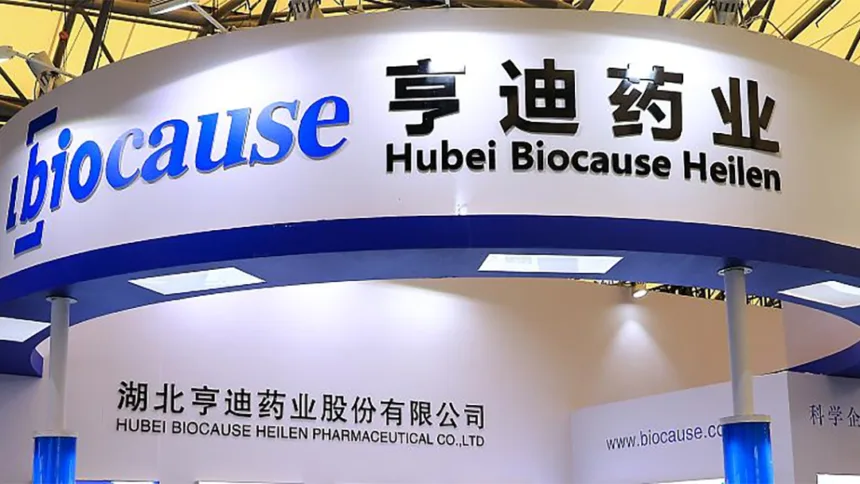
Hubei Biocause Heilen Pharmaceutical Co., Ltd. (SHE: 301211) announced that it has received Drug Registration Certificates from China’s National Medical Products Administration (NMPA) for Ibuprofen Arginine Granules in two strengths (0.2 g and 0.4 g), approved as Class 4 chemical drugs and classified as Category A over‑the‑counter (OTC) medicines. The product — a salt formulation of ibuprofen with L‑arginine offering superior water solubility compared to standard ibuprofen — is indicated for the relief of toothache, dysmenorrhea, headache, sprains, joint pain, and fever associated with influenza.
Regulatory Milestone
| Item | Detail |
|---|---|
| Agency | NMPA (China) |
| Approval Type | Drug registration (domestic production) |
| Product | Ibuprofen Arginine Granules |
| Specifications | 0.2 g and 0.4 g |
| Registration Classification | Class 4 chemical drug (generic equivalent) |
| OTC Classification | Category A OTC |
| Receipt Numbers | CYHS2500726; CYHS2500727 |
| Certificate Numbers | 2026S03587; 2026S03588 |
| Approval Numbers | National Medicine Zhunzi H20266099; H20266100 |
| Shelf Life | 18 months |
| MAH / Manufacturer | Hubei Biocause Heilen Pharmaceutical Co., Ltd. |
| Approval Date | October 2026 |
Drug Profile & Mechanism of Action
- Molecule: Ibuprofen arginine — a salt formulation of ibuprofen (NSAID) combined with L‑arginine, an amino acid.
- Drug Class: Non‑steroidal anti‑inflammatory drug (NSAID) — antipyretic and analgesic.
- Key Formulation Advantage: The arginine salt form provides significantly improved water solubility compared to standard ibuprofen, enabling faster dissolution and absorption in the gastrointestinal tract, which translates to more rapid onset of analgesic and antipyretic effects.
- Mechanism of Action: Ibuprofen inhibits cyclooxygenase‑1 and cyclooxygenase‑2 (COX‑1/COX‑2) enzymes, reducing the synthesis of prostaglandins — key mediators of pain, inflammation, and fever. The L‑arginine moiety does not alter the pharmacological mechanism but enhances the pharmacokinetic profile through improved dissolution.
- Approved Indications: Relief of toothache, dysmenorrhea (menstrual pain), headache, sprains, joint pain, and fever associated with influenza.
- Dosage Forms: Granules (for oral administration, dissolved in water) — a patient‑friendly dosage form suitable for populations with difficulty swallowing tablets.
Strategic Significance
- Category A OTC Status: Classification as Category A OTC (甲类非处方药) allows the product to be sold in licensed pharmacies across China without a prescription, providing broad consumer access through the country’s extensive retail pharmacy network (estimated >600,000 retail pharmacy outlets nationwide).
- Dual Strength Strategy: The approval of both 0.2 g and 0.4 g strengths enables dose‑flexible prescribing — the lower strength for mild pain/fever and the higher strength for moderate‑to‑severe symptoms — addressing a broader range of consumer needs within a single product line.
- Granule Formulation Differentiation: The granule dosage form offers practical advantages over conventional ibuprofen tablets and capsules — including faster dissolution in water, easier administration for elderly patients, children (where age‑appropriate), and patients with swallowing difficulties, and portability for on‑the‑go use.
Market Impact & Outlook
- China OTC Analgesic Market: China’s OTC pain relief and antipyretic market is one of the largest in the world, driven by a population of >1.4 billion, high prevalence of headache, dysmenorrhea, and musculoskeletal pain, and increasing consumer preference for self‑medication. The market is estimated at tens of billions of RMB annually and continues to grow with rising health awareness and retail pharmacy expansion.
- Ibuprofen as a Cornerstone Molecule: Ibuprofen is among the most widely used NSAIDs globally and in China, with established consumer recognition and trust. The arginine salt formulation provides a differentiated positioning within the crowded ibuprofen market, potentially commanding a premium over standard ibuprofen products based on its faster onset of action.
- Solubility‑Driven Differentiation: Standard ibuprofen is a poorly water‑soluble drug (BCS Class II), which limits its dissolution rate and delays onset of action. The arginine salt formulation addresses this fundamental limitation, offering a clinically meaningful improvement in speed of pain relief — a key consumer priority in acute pain indications (toothache, headache, dysmenorrhea).
- Retail Pharmacy Channel: As a Category A OTC product, ibuprofen arginine granules will be distributed through China’s retail pharmacy channel — a market segment characterized by consumer‑driven purchasing decisions, brand marketing, and shelf competition. Biocause Heilen’s ability to establish brand awareness and secure favorable shelf positioning will be critical to commercial success.
- Biocause Heilen’s NSAID Franchise: As a company with established capabilities in pharmaceutical manufacturing and distribution in Hubei province, Biocause Heilen (SHE: 301211) can leverage its existing manufacturing infrastructure and distribution network to support the commercial launch. The company’s positioning in the NSAID/analgesic space aligns with a large, stable, and consumer‑driven market segment.
- Competitive Landscape: The Chinese ibuprofen OTC market is highly competitive, with numerous domestic and international brands (e.g., Fenbid®/芬必得 by GSK Consumer Healthcare, Meilin®/美林 by Johnson & Johnson, and numerous domestic generic ibuprofen products). Biocause Heilen’s granule formulation and arginine salt differentiation provide a basis for product‑level differentiation in a commoditized market.
- E‑Commerce and O2O Opportunity: China’s rapidly growing online pharmacy and O2O (online‑to‑offline) drug delivery channels — including platforms such as Meituan Pharmacy, Ele.me Health, and JD Health — provide additional distribution pathways for OTC analgesic products, particularly for acute pain indications where consumers seek rapid delivery.
Forward‑Looking Statements
This brief contains forward‑looking statements regarding the commercial potential of ibuprofen arginine granules, retail pharmacy market access, and competitive positioning in China’s OTC analgesic market. Actual results may differ materially due to risks including competitive dynamics in the crowded ibuprofen market, retail pharmacy channel execution, brand marketing effectiveness, pricing pressure from established competitors, e‑commerce channel development, and changes in OTC drug regulatory policies. Investors are advised to exercise caution.-Fineline Info & Tech