


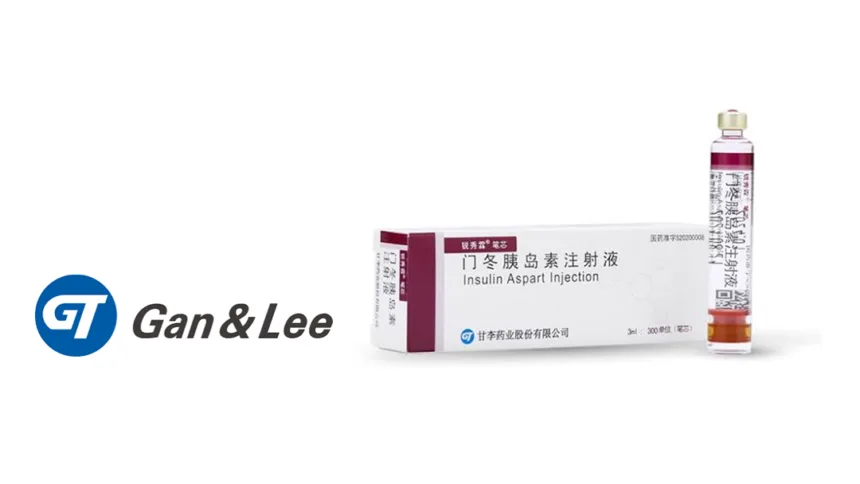
Gan & Lee Pharmaceuticals Co., Ltd. (SHA: 603087) announced that it has received a drug registration certificate from the Ethiopian Food and Drug Authority (EFDA) for Rapilin (Insulin Aspart Injection, 3 ml : 100 units/ml, cartridge), a rapid‑acting insulin analogue for the treatment of diabetes – becoming the first insulin aspart product registered in Ethiopia, a country of approximately 130 million people with an estimated 2.3 million diabetics and no currently marketed rapid‑acting insulin analogue.
Regulatory Milestone
| Item | Detail |
|---|---|
| Agency | Ethiopian Food and Drug Authority (EFDA) |
| Approval Type | Drug Registration Certificate |
| Approval Number | 13984/14624/NMR/2026 |
| Product | Rapilin (Insulin Aspart Injection) |
| Dosage Form | Injection – cartridge |
| Specification | 3 ml : 100 units/ml |
| Indication | Diabetes mellitus |
| Applicant | Gan & Lee Pharmaceuticals Co., Ltd. |
| Competitive Status | No insulin aspart products currently marketed in Ethiopia |
| Cumulative R&D Investment | RMB 226.69 million (≈ US$31.5 million) as of 30 June 2026 |
Drug Profile & Mechanism of Action
- Molecule: Insulin aspart – a rapid‑acting insulin analogue with a single amino acid substitution (aspartic acid for proline at position B28) that reduces self‑association and accelerates subcutaneous absorption
- Pharmacokinetic Profile: Rapid onset, rapid peak, short duration – designed to closely mimic physiological postprandial insulin secretion
- Administration: Subcutaneous injection immediately before meals
- Clinical Advantage: Compared to regular human insulin, insulin aspart provides more precise postprandial glycemic control while reducing pre‑meal hypoglycemia risk, improving both efficacy and safety in mealtime glucose management
- Delivery Format: Cartridge format compatible with standard insulin pen devices, supporting patient convenience and dose accuracy in outpatient settings
Clinical Context – Diabetes in Ethiopia
| Parameter | Data |
|---|---|
| Population | ~130 million (2024), Africa’s second‑most‑populous nation |
| GDP per Capita | US$1,133.9 (2024, current exchange rates) |
| Diabetes Patients (20–79 years) | ~2.3 million (IDF Diabetes Atlas, 11th Edition, 2025) |
| Diabetes Prevalence (20–79 years) | 3.6 % |
| Per‑Patient Annual Diabetes Spending | US$96.2 |
| Current Insulin Aspart Availability | None – no insulin aspart products marketed in Ethiopia prior to Rapilin |
Ethiopia’s diabetes burden is growing rapidly in parallel with urbanization, dietary transition, and lifestyle changes – mirroring the broader epidemiological shift across sub‑Saharan Africa. However, the country’s per‑patient diabetes spending of US$96.2 annually underscores the severe constraints on treatment access, with most patients relying on human insulin (the lowest‑cost option) rather than modern insulin analogues that offer superior glycemic control and safety profiles.
Market Impact & Outlook
- First‑Mover Advantage: Rapilin is the first insulin aspart product registered in Ethiopia, granting Gan & Lee a pioneering position in introducing rapid‑acting insulin analogue therapy to a market of 2.3 million diabetics. This first‑mover status carries significant advantages in brand recognition, prescriber education, and formulary positioning with Ethiopia’s public health institutions.
- Africa Market Strategy: Ethiopia represents a strategic beachhead for Gan & Lee’s expansion across East Africa and the broader African continent. As one of Africa’s largest and fastest‑growing economies, Ethiopia’s healthcare infrastructure is expanding with international development support, creating incremental demand for modern insulin therapies.
- Insulin Analogue Upgrade Cycle: The Ethiopian diabetes market is currently dominated by human insulin (NPH and regular insulin), reflecting cost constraints in a low‑income healthcare system. The introduction of insulin aspart represents the beginning of an analogue upgrade cycle – a transition that has already occurred in developed markets and is now underway across emerging economies as incomes rise and healthcare coverage expands.
- Gan & Lee’s Global Insulin Platform: This registration adds to Gan & Lee’s growing portfolio of international insulin approvals, building on the company’s established manufacturing capabilities as one of China’s leading recombinant insulin producers. Gan & Lee has been systematically pursuing registrations across emerging markets in Africa, Southeast Asia, Latin America, and the Middle East.
- Pricing and Access Considerations: With per‑patient annual diabetes spending at just US$96.2, Ethiopia’s market will require affordable pricing strategies – potentially supported by government procurement programs, international donor funding (WHO, Global Fund), or tiered‑pricing models that balance access with commercial sustainability.
- R&D Investment Recovery: The cumulative RMB 226.69 million invested in the insulin aspart program is being amortized across multiple international registrations, with each new market approval contributing incrementally to return on investment. The Ethiopian registration alone is modest in revenue terms but compounds the global commercialization footprint.
- Regulatory Precedent: EFDA registration in Ethiopia can serve as a reference approval for regulatory submissions in neighboring East African countries (Kenya, Tanzania, Uganda, Rwanda) that recognize or reference EFDA decisions in their own registration processes, potentially accelerating regional market expansion.
Forward‑Looking Statements
This brief contains forward‑looking statements regarding the commercialization, market adoption, and revenue potential of Rapilin (Insulin Aspart Injection) in Ethiopia. Drug registration does not guarantee commercial success. Actual outcomes may differ due to risks including healthcare infrastructure constraints, pricing and reimbursement dynamics, procurement processes, supply chain logistics, currency exchange fluctuations, and the inherent uncertainties of pharmaceutical commercialization in emerging markets.-Fineline Info & Tech