


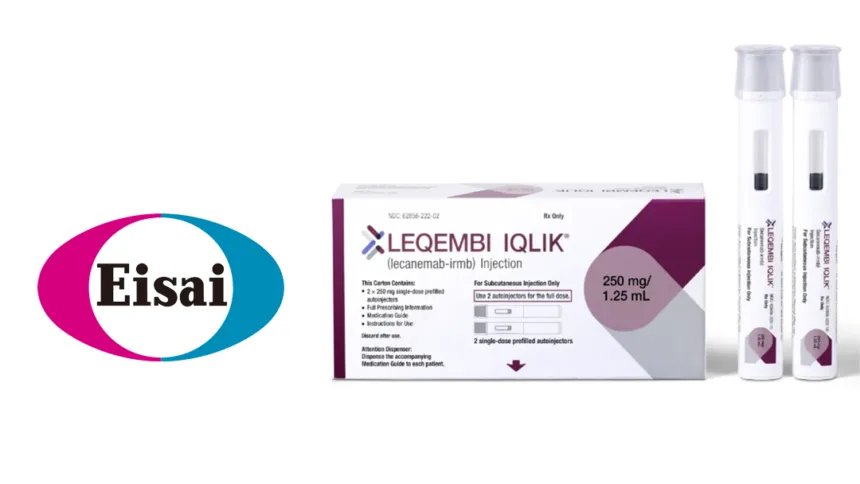
Eisai Co., Ltd. (TYO: 4523) announced that China’s first prescription for the subcutaneous autoinjector formulation of Leqembi (lecanemab) was issued at the Hainan Hospital of Ruijin Hospital Affiliated to Shanghai Jiao Tong University School of Medicine (“Ruijin Hainan Hospital”) – a milestone that brings the anti‑amyloid Alzheimer’s disease (AD) therapy into a patient‑administered subcutaneous format for the world’s largest AD population.
Milestone Snapshot
| Item | Detail |
|---|---|
| Company | Eisai Co., Ltd. (TYO: 4523) |
| Product | Leqembi (lecanemab) – subcutaneous autoinjector formulation |
| Event | First prescription issued in China |
| Site | Hainan Hospital of Ruijin Hospital, Shanghai Jiao Tong University School of Medicine |
| First Regional Approval | Aug 2026 – Hainan Provincial Medical Products Administration (via Bo’ao Lecheng pilot zone policy) |
| National Approval | Sept 2026 – NMPA approval for initial treatment of MCI or mild AD dementia due to AD |
| Target Population | Early symptomatic AD – mild cognitive impairment (MCI) or mild dementia |
Drug Profile & Mechanism of Action
- Molecule: Lecanemab – a humanized monoclonal antibody targeting amyloid‑beta (Aβ) with high affinity for soluble Aβ protofibrils, the neurotoxic aggregates believed to drive early AD pathology.
- Mechanism: Lecanemab reduces Aβ plaque burden in the brain and intervenes in the key pathological process of AD, distinguishing it from symptomatic therapies that do not modify underlying disease biology.
- Formulation Innovation: The subcutaneous autoinjector replaces intravenous infusion with a portable, patient‑friendly delivery format – potentially lowering treatment burden, reducing infusion‑center dependence, and expanding real‑world accessibility across China’s fragmented healthcare geography.
- Regulatory Pathway: China’s rollout followed a two‑step path – first leveraging the Bo’ao Lecheng pilot zone policy for Hainan provincial approval in August 2026, then securing NMPA approval in September 2026 for the initial treatment of MCI or mild AD dementia due to AD.
Clinical Evidence – Clarity AD Open‑Label Extension
| Endpoint | Result (48 Months Continuous Lecanemab) |
|---|---|
| Patients Remaining in Mild AD or MCI Stage | 81.4% |
| Risk Reduction of Progression to Moderate‑to‑Severe Dementia | 56% |
| Study Design | Open‑label extension phase of Clarity AD |
Results from the open‑label extension phase of the Clarity AD study showed that after 48 months of continuous lecanemab treatment, 81.4% of patients remained in the mild AD or mild cognitive impairment (MCI) stage, and the risk of progression to moderate‑to‑severe dementia was reduced by 56% – evidence supporting early and sustained intervention in the disease course.
Market Impact & Outlook
- Massive Addressable Population: China has an estimated 15–17 million Alzheimer’s patients, the world’s largest; until now disease‑modifying options have been effectively absent, making lecanemab’s subcutaneous launch a watershed for Chinese neurology practice.
- Access Transformation: The autoinjector format addresses a central barrier to anti‑amyloid therapy adoption – repeated IV infusions – potentially enabling broader prescription beyond top‑tier hospital infusion centers and easing caregiver logistics.
- Early‑Intervention Paradigm: With NMPA approval anchored in MCI and mild AD dementia, the launch is expected to accelerate diagnostic infrastructure investment (PET/CSF/blood biomarker testing) needed to identify early‑stage patients.
- Policy Precedent: The Bo’ao Lecheng‑to‑NMPA sequencing demonstrates an efficient accelerated access pathway for innovative neurology drugs in China, one that other global developers are likely to emulate.
- Next Milestones: Nationwide commercial rollout of the autoinjector; reimbursement/access negotiations; real‑world adoption data. Timing not disclosed.
Forward‑Looking Statements
This brief contains forward‑looking statements regarding commercialization, patient adoption, reimbursement access, and long‑term clinical outcomes for the subcutaneous autoinjector formulation of Leqembi (lecanemab) in China. Actual results may differ materially due to risks including diagnostic capacity constraints, pricing and reimbursement policy, safety monitoring requirements (such as ARIA management), competitive therapies, and treatment adherence in real‑world settings.-Fineline Info & Tech