



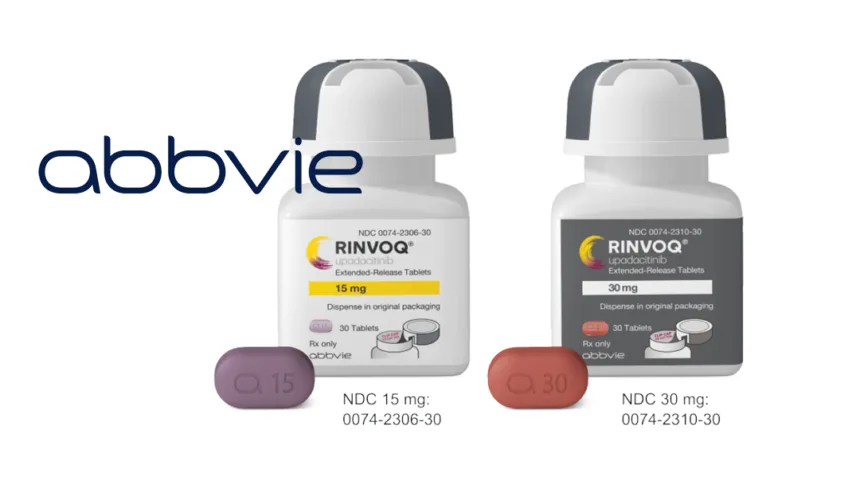
AbbVie Inc. (NYSE: ABBV) announced that the European Commission (EC) has approved RINVOQ (upadacitinib) for the treatment of active polyarticular juvenile idiopathic arthritis (pJIA) in patients aged 2 years and older who have had an inadequate response or intolerance to one or more DMARDs. The decision marks RINVOQ’s ninth approved indication in the European Union, extending the franchise into pediatric rheumatology.
Regulatory Milestone
| Item | Detail |
|---|---|
| Agency | European Commission (EC) |
| Approval Type | Marketing authorization – new indication |
| Product | RINVOQ (upadacitinib), oral JAK inhibitor |
| Indication | Active polyarticular juvenile idiopathic arthritis (pJIA) |
| Population | Patients aged 2 years and older |
| Treatment Line | Inadequate response or intolerance to one or more DMARDs |
| Approval Date | Announced 23 Sep 2026 |
| EU Indication Count | Ninth approved indication |
Drug Profile & Mechanism of Action
- Molecule: Upadacitinib, an oral JAK (Janus kinase) inhibitor used to treat immune‑mediated inflammatory diseases.
- Mechanism Rationale: By modulating JAK‑pathway signaling, upadacitinib dampens the inflammatory cascades that drive autoimmune conditions — a mechanism now validated across rheumatologic, dermatologic, and gastroenterologic diseases.
- EU Regulatory History: First approved by the European Commission in December 2019 for ulcerative colitis; subsequently gained EU approvals across vitiligo, severe alopecia areata, atopic dermatitis, giant cell arteritis, axial spondyloarthritis, psoriatic arthritis, and rheumatoid arthritis.
- Approved EU Indications (9): Ulcerative colitis, rheumatoid arthritis, psoriatic arthritis, axial spondyloarthritis, atopic dermatitis, giant cell arteritis, severe alopecia areata, vitiligo, and now pJIA.
- Pediatric Trial Data: Pivotal study design and efficacy outcomes supporting the pJIA approval were not disclosed in the announcement.
Clinical Context – Polyarticular Juvenile Idiopathic Arthritis
- Disease Burden: pJIA is the most common category of juvenile idiopathic arthritis, a chronic autoimmune condition affecting children that can cause persistent joint inflammation, pain, and long‑term functional impairment if inadequately controlled.
- Treatment Gap: The approval addresses patients who fail or cannot tolerate DMARDs (disease‑modifying antirheumatic drugs) — a population with limited therapeutic options in pediatric rheumatology.
- Age Extension: Authorization from 2 years of age positions RINVOQ among the broader‑label options for very young patients with active polyarticular disease.
- Class Competition: Biologic DMARDs, including TNF inhibitors, have anchored pJIA treatment to date; an oral JAK inhibitor offers a needle‑free alternative for eligible children.
Market Impact & Outlook
- Franchise Expansion: The ninth EU indication reinforces upadacitinib’s position as one of the broadest JAK inhibitor portfolios in Europe, spanning adult and now pediatric immune‑mediated inflammatory diseases.
- Pediatric Exclusivity & Positioning: Entry into pJIA extends AbbVie’s reach into a specialty segment with high unmet need and long treatment durations, deepening relationships with pediatric rheumatology centers across the EU.
- Portfolio Strategy: The indication‑by‑indication expansion mirrors AbbVie’s lifecycle strategy of leveraging a single molecule’s immunology platform across multiple inflammatory diseases, offsetting competitive pressure in any single indication.
- Investor Watch Items: National reimbursement decisions across EU member states, uptake versus biologic standards of care in pJIA, and further label expansions in remaining pipeline indications.
Forward‑Looking Statements
This brief contains forward‑looking statements regarding RINVOQ’s (upadacitinib’s) commercialization in pJIA, reimbursement outcomes across EU markets, and future indication expansions. Actual results may differ due to risks including payer decisions, competitive dynamics in JAK inhibitors and pediatric rheumatology, safety profile considerations, and regulatory developments.-Fineline Info & Tech