


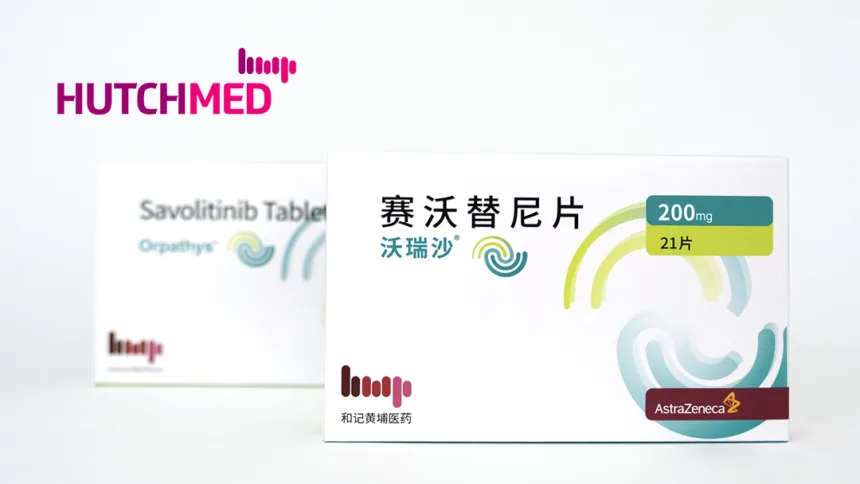
HutchMed (China) Limited (NASDAQ: HCM; HKG: 0013) announced positive results from the global Phase III SAFFRON study of the MET tyrosine kinase inhibitor (TKI) ORPATHYS (savolitinib) in combination with the EGFR TKI TAGRISSO (osimertinib) versus platinum‑based doublet chemotherapy in patients with EGFR‑mutated non‑small cell lung cancer (NSCLC) – results presented at the 2026 European Society for Medical Oncology (ESMO) Congress.
Study Snapshot
| Item | Detail |
|---|---|
| Company | HutchMed (China) Limited (NASDAQ: HCM; HKG: 0013) |
| Study | Global Phase III SAFFRON |
| Regimen | ORPATHYS (savolitinib) + TAGRISSO (osimertinib) vs. platinum‑based doublet chemotherapy |
| Population | 338 patients with locally advanced or metastatic EGFR‑mutated NSCLC with MET overexpression or amplification, progressed after first‑ or second‑line TAGRISSO |
| Assessment | Blinded independent central review (BICR) |
| Congress | ESMO 2026 |
| Announcement Date | 26 October 2026 |
Drug Profile & Combination Rationale
- ORPATHYS (savolitinib): A selective MET tyrosine kinase inhibitor (TKI) targeting MET‑driven signaling.
- TAGRISSO (osimertinib): The standard‑of‑care third‑generation EGFR TKI for EGFR‑mutated NSCLC.
- Resistance Biology: MET overexpression/amplification is a well‑characterized acquired resistance mechanism in EGFR‑mutated NSCLC following osimertinib therapy – the SAFFRON design directly attacks this bypass pathway by pairing MET inhibition with continued EGFR blockade.
- Target Population: Patients whose disease progressed following first‑ or second‑line treatment with TAGRISSO – a setting with limited evidence‑based options beyond chemotherapy.
Clinical Evidence – Phase III SAFFRON Results (BICR)
| Endpoint | ORPATHYS + TAGRISSO | Chemotherapy | Benefit |
|---|---|---|---|
| Progression‑Free Survival (PFS) | Median 7.6 months | Median 5.4 months | −45 % risk of progression or death (HR 0.55, 95 % CI 0.42–0.72, p<0.001) |
| 12‑Month PFS Rate | 36 % | 10 % | 3.6× higher |
| Overall Survival (OS) | Median 17.8 months | Median 12.9 months | −32 % risk of death; +4.9 months median OS |
| Subgroup Consistency | Consistent PFS benefit across all prespecified subgroups | – | – |
The combination of ORPATHYS plus TAGRISSO reduced the risk of disease progression or death by 45 % compared with chemotherapy (HR 0.55, 95 % CI 0.42–0.72, p<0.001), with consistent PFS benefit observed across all prespecified subgroups. The overall survival analysis further showed a 32 % reduction in the risk of death and a 4.9‑month extension in median OS (17.8 vs. 12.9 months).
Market Impact & Outlook
- Post‑Osimertinib Standard of Care: SAFFRON positions savolitinib + osimertinib as a potential new chemotherapy‑sparing standard for the large population of EGFR‑mutated NSCLC patients with MET overexpression/amplification progressing on TAGRISSO – a setting historically relegated to platinum doublets.
- Global Registration Path: As a global Phase III with BICR‑confirmed, statistically significant PFS and OS benefits, the dataset supports regulatory filings across multiple markets and reinforces the commercial value of the HutchMed–AstraZeneca savolitinib partnership (ORPATHYS/TAGRISSO combination).
- Precision Medicine Validation: The 12‑month PFS rate of 36 % vs. 10 % and consistent subgroup benefits underscore the strategic logic of MET biomarker–selected combination therapy, likely driving companion‑diagnostic adoption and biomarker testing in EGFR‑mutant NSCLC.
- Franchise Momentum for HutchMed: The positive global readout strengthens HutchMed’s oncology portfolio at a pivotal moment, adding a differentiated, biomarker‑driven asset with blockbuster‑scale population potential in one of the world’s largest cancer markets.
Forward‑Looking Statements
This brief contains forward‑looking statements regarding savolitinib (ORPATHYS), including regulatory submissions and approvals based on the SAFFRON study, commercialization of the savolitinib–osimertinib combination, and further clinical development. Actual results may differ materially due to risks including regulatory review outcomes, competitive therapies, reimbursement and market adoption, and real‑world safety experience.-Fineline Info & Tech