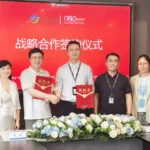



Nerviano Medical Sciences S.r.l. (NMS), an Italy-based research and development company, and HiDiamond Biotechnology Co., Ltd. announced a collaboration and license agreement for NMS‑173, a highly potent, second-generation dual inhibitor of mutant Isocitrate Dehydrogenase 1 and 2 (mIDH1/2). Under the agreement, HiDiamond will advance and fund the clinical development of the asset, with both parties jointly steering strategy through an equally represented Joint Development Committee (JDC), targeting accelerated progression through Phase 1/2 and into proof-of-concept studies.
Deal Milestone
| Item | Detail |
|---|---|
| Parties | Nerviano Medical Sciences S.r.l. (NMS, Italy) and HiDiamond Biotechnology Co., Ltd. |
| Agreement Type | Collaboration and license agreement |
| Asset | NMS‑173 – second-generation covalent mIDH1/2 dual inhibitor |
| Announcement Date | 9 Sep 2026 |
| Development Responsibility | HiDiamond advances and funds clinical development, including related regulatory activities |
| Governance | Joint Development Committee (JDC) with equal representation jointly defines development strategy |
| Financial Terms | Not disclosed; stage-based proceeds-sharing framework upon future out-licensing |
| Next Steps | Accelerate NMS‑173 through Phase 1/2 and into proof-of-concept studies |
Drug Profile & Mechanism of Action
- Molecule: NMS‑173, a highly potent, second-generation small-molecule inhibitor.
- Targets: Mutant Isocitrate Dehydrogenase 1 and 2 (mIDH1/2) — a dual-target approach covering both mutant enzyme isoforms driving oncogenic metabolism.
- Mechanism: Unlike first-generation reversible inhibitors, NMS‑173 utilizes a covalent mechanism of action, forming a durable bond with the mutant enzyme designed to achieve sustained target inhibition.
- Resistance Rationale: The covalent modality is intended to potentially address resistance mechanisms associated with existing reversible inhibitors, a recognized limitation in the mIDH-targeted therapy class.
- Scientific Background: IDH1/2 mutations occur across several tumor types — notably acute myeloid leukemia, gliomas, and cholangiocarcinoma — where mutant enzymes produce the oncometabolite 2-hydroxyglutarate, disrupting cellular differentiation; mutant IDH inhibitors aim to restore normal differentiation programs. (Indications under development for NMS‑173 were not disclosed.)
Deal Structure & Governance
- Funding Model: HiDiamond is responsible for advancing and funding the clinical development of NMS‑173, including related regulatory activities.
- Joint Strategy: The JDC, with equal representation from both companies, jointly defines the development strategy — combining NMS’s scientific and development expertise with HiDiamond’s clinical development capabilities.
- Value-Creation Framework: The structure is explicitly designed for value creation, positioning the asset for accelerated progression through Phase 1/2 and into proof-of-concept studies.
- Proceeds Sharing: The companies have established a stage-based proceeds-sharing framework to align long-term interests. Upon future out-licensing of NMS‑173 to a third-party global partner, NMS and HiDiamond will share the resulting proceeds — including upfront, milestone and royalty payments — pursuant to the agreed framework.
Market Impact & Outlook
- mIDH Inhibitor Landscape: First-generation reversible mIDH inhibitors have clinically validated the mutant IDH target, while acquired resistance remains an active area of therapeutic pursuit — positioning covalent, second-generation dual inhibitors as a differentiated next wave.
- Cross-Border Partnership Model: The Italy–China collaboration pairs a European discovery engine’s scientific heritage with an Asian clinical developer’s execution capacity, reflecting the increasingly global structure of oncology asset development.
- Aligned Incentives: A stage-based proceeds-sharing model tied to future out-licensing aligns both parties toward maximizing asset value rather than near-term milestones, with economics shared across upfront, milestone, and royalty streams.
- Partnering Optionality: The explicit contemplation of a third-party global partner out-license signals an eventual exit pathway to a large-cap pharma acquirer or licensee once proof-of-concept is established.
- Pipeline Implications: Clinical entry and proof-of-concept timing for NMS‑173 were not disclosed; development pace will depend on regulatory interactions and Phase 1/2 execution under the JDC framework.
Forward‑Looking Statements
This brief contains forward‑looking statements regarding the collaboration and license agreement between Nerviano Medical Sciences and HiDiamond Biotechnology, including expectations for NMS‑173’s clinical development, sustained target inhibition, resistance-profile potential, and future out-licensing. Actual results may differ due to risks including clinical trial outcomes, regulatory review, resistance evolution, competitive dynamics, and the absence of any committed out-licensing transaction. Financial terms of the agreement have not been disclosed.-Fineline Info & Tech