



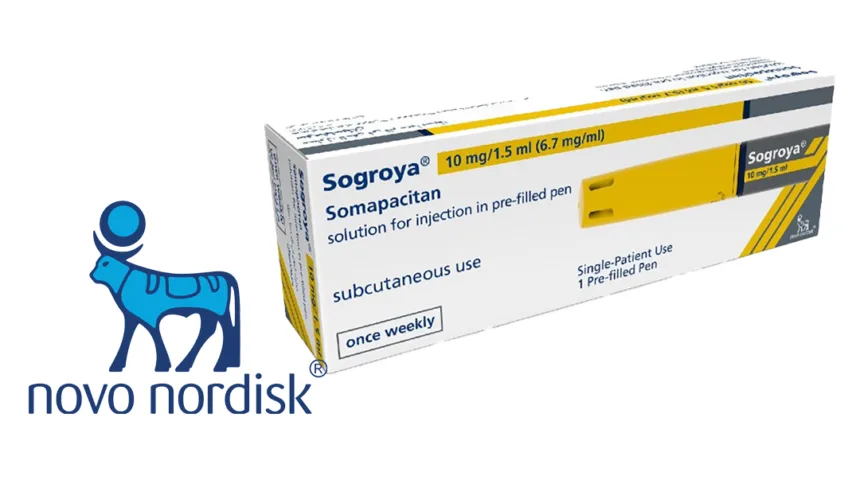
Novo Nordisk A/S (NYSE: NVO) announced that it has received a positive opinion from the Committee for Medicinal Products for Human Use (CHMP) of the European Medicines Agency (EMA), recommending once‑weekly Sogroya (somapacitan) for children with idiopathic short stature (ISS) with persistent growth disturbance.
Regulatory Milestone
| Item | Detail |
|---|---|
| Agency | EMA (European Union) – CHMP |
| Opinion Type | Positive opinion recommending approval |
| Product | Sogroya (somapacitan), once‑weekly long‑acting growth hormone |
| Indication | Children with idiopathic short stature (ISS) with persistent growth disturbance |
| Opinion Date | 18 September 2026 |
| Existing EU Authorizations | Growth hormone deficiency in adults (31 March 2021); children aged ≥3 years (24 July 2023) |
| Next Steps | CHMP opinion to be forwarded to the European Commission, which typically issues a final EU‑wide decision within approximately two months |
Drug Profile & Mechanism of Action
- Molecule: Somapacitan, a long‑acting human growth hormone (hGH) analogue that replaces deficient or inadequate endogenous growth hormone signaling to support linear growth.
- Administration: A single subcutaneous injection once a week — a substantial burden reduction versus the once‑daily injections required by conventional growth hormone therapy.
- Disease Context: ISS is a diagnosis given to children who are significantly shorter than their peers when no underlying medical cause can be found, a condition that can affect a child’s confidence and well‑being.
- Portfolio Position: Sogroya is Novo Nordisk’s long‑acting complement to its established daily hGH franchise Norditropin; an ISS authorization would extend the brand from growth hormone deficiency into the broader pediatric short‑stature population.
- Treatment Paradigm: Weekly dosing may improve adherence, a recognized challenge in pediatric growth hormone therapy where daily injections can compromise long‑term outcomes.
Clinical Evidence – REAL8 Phase III Trial
| Endpoint | Result (Sogroya Once‑Weekly) | Comparator (Once‑Daily Growth Hormone) | Relative Assessment |
|---|---|---|---|
| Mean Annualized Height Velocity at Week 52 | Non‑inferior | Once‑daily GH treatment | Non‑inferiority demonstrated |
| Populations Studied | ISS, born small for gestational age (SGA), and Noonan Syndrome | – | Supports multi‑indication expansion |
The REAL8 clinical trial, which supported the positive CHMP opinion, showed that once‑weekly Sogroya was non‑inferior to once‑daily growth hormone treatment for mean annualized height velocity at Week 52 in children with idiopathic short stature, born small for gestational age, and Noonan Syndrome. Numerical height velocity values and safety data were not disclosed in the announcement.
Market Impact & Outlook
- Larger Addressable Population: ISS broadens Sogroya’s EU label from confirmed growth hormone deficiency to children with short stature of unknown origin — a substantially larger pediatric population evaluated in growth clinics.
- Competitive Landscape: The long‑acting pediatric growth hormone field also includes Ascendis Pharma’s Skytrofa (lonapegsomatropin), authorized in the EU for pediatric GHD; weekly formulations collectively challenge the daily‑injection standard of care.
- Adherence Economics: If superior real‑world adherence translates into better height outcomes, weekly therapy could shift payer and prescriber preference across the hGH category.
- Regulatory Momentum: The European Commission decision is the final step for EU‑wide authorization; US and other regional filing plans for the ISS indication were not disclosed.
Forward‑Looking Statements
This brief contains forward‑looking statements regarding regulatory timelines, including the anticipated European Commission decision, clinical outcomes, and commercial expectations for Sogroya in idiopathic short stature. Actual results may differ due to risks including final authorization conditions, label scope, reimbursement outcomes, competitive dynamics, and real‑world adoption.-Fineline Info & Tech