Sino Biopharmaceutical’s Subsidiary Chia Tai Tianqing Secures NMPA Approval for Benmelstobart-Anlotinib Combo in Alveolar Soft Part Sarcoma – 72.4% ORR and Unreached Median PFS in Rare Cancer Indication
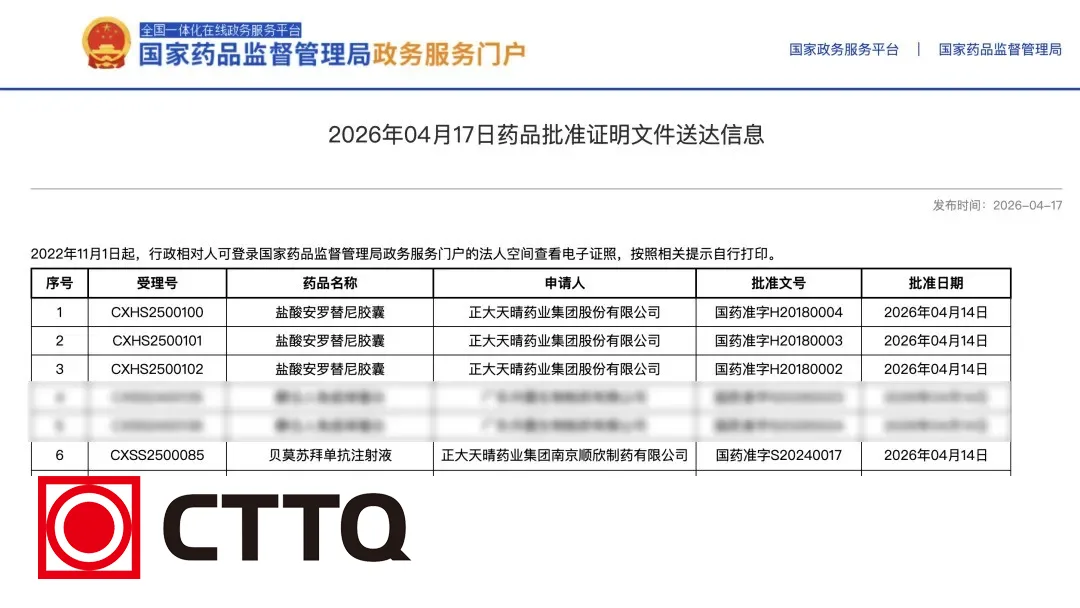
The National Medical Products Administration (NMPA) has granted approval to Chia Tai Tianqing Pharmaceutical Co., Ltd., a wholly-owned subsidiary of Sino Biopharmaceutical Limited (HKG: 1177), for the combination of benmelstobart (anti-PD-L1 monoclonal antibody) and anlotinib (oral multi-target kinase inhibitor) in the treatment of advanced or unresectable alveolar soft part sarcoma (ASPS). The approval, supported by the TQB2450-Ib-02 study showing a 72.41% objective response rate (ORR) and unreached median progression-free survival (PFS) after 24.9 months of follow-up, follows Breakthrough Therapy Designation and Priority Review status, marking the combo’s fourth approved indication in China.
Anlotinib: Oral multi-target tyrosine kinase inhibitor with anti-angiogenic and direct anti-tumor effects
Combination Rationale: Dual mechanism targeting both tumor microenvironment (immune checkpoint inhibition) and tumor vasculature/signaling pathways (kinase inhibition)
ASPS Context: Rare soft tissue sarcoma affecting primarily young adults, with limited treatment options and poor prognosis with conventional therapies
Market Significance & Competitive Positioning
Strategic Element
Impact
Rare Disease Focus
Addresses significant unmet need in ASPS, a condition with no standard effective therapies
Portfolio Expansion
Fourth indication approval strengthens commercial viability of the benmelstobart-anlotinib combination
China Leadership
Demonstrates Sino Biopharmaceutical’s dominance in developing innovative combinations for Chinese patient populations
Global Potential
Strong efficacy data may support international regulatory submissions for this rare indication
Commercial Implications
Pricing Strategy: Premium pricing expected given breakthrough designation and high unmet need in rare sarcoma
Market Access: Priority review status likely facilitates rapid inclusion in provincial reimbursement lists
Physician Adoption: Established safety profile from previous indications supports rapid uptake in sarcoma specialty centers
Revenue Impact: While ASPS is rare, the approval validates the combination’s broad applicability across tumor types
Development Strategy & Future Outlook
Additional Indications: Ongoing trials exploring the combination in other rare tumors and solid malignancies
Biomarker Development: Research into predictive biomarkers to optimize patient selection across indications
International Expansion: Potential partnerships for global development leveraging strong clinical data package
Pipeline Validation: Success reinforces Sino Biopharmaceutical’s strategy of developing proprietary combinations rather than single-agent approaches
Industry Context & Regulatory Environment
China Oncology Innovation: Part of broader trend of Chinese pharmaceutical companies developing novel combinations for domestic and global markets
Rare Disease Incentives: Benefits from China’s evolving regulatory framework that encourages development of therapies for rare conditions
Competitive Landscape: Limited competition in ASPS space creates opportunity for market leadership despite small patient population
Reimbursement Support: Breakthrough therapy designation typically associated with favorable reimbursement decisions in China
Forward‑Looking Statements This brief contains forward-looking statements regarding commercial performance, market penetration, and development plans. Actual results may differ due to risks including market adoption rates, competitive dynamics, reimbursement decisions, and regulatory developments.-Fineline Info & Tech
Insight, China's Pharmaceutical Industry Fineline Info & Tech is a comprehensive global pharmaceutical database that spans the entire product lifecycle. Its mission is to equip professionals and executives across all sectors of the life sciences industry with a standardized data language, offering a holistic view of the Chinese pharmaceutical competitive landscape. Flcube.com furnishes critical data essential for informed decision-making, drawing on global industry news, policy insights, competitive intelligence, and advanced analytical tools.