


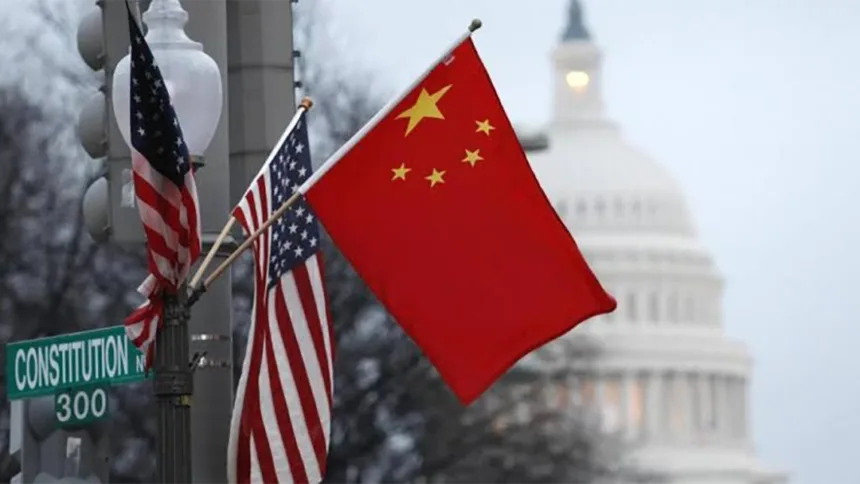
Proposed US Treasury Department regulations released on 22 October 2026 would extend existing US outbound investment controls to biotechnology, potentially affecting venture financing, equity‑linked licensing agreements, and cross‑border NewCo structures involving Chinese pharmaceutical companies – while leaving conventional pharmaceutical licensing largely unaffected. The proposal implements the Comprehensive Outbound Investment National Security (COINS) Act.
Policy Snapshot
| Item | Detail |
|---|---|
| Issuing Agency | US Department of the Treasury |
| Release Date | 22 October 2026 |
| Statutory Basis | Comprehensive Outbound Investment National Security (COINS) Act |
| Scope | Extension of existing outbound investment controls to biotechnology (plus high‑performance computing and hypersonic systems) |
| Covered Transactions | Equity acquisitions, certain debt financing, joint ventures, venture capital fund investments |
| Comment Deadline | 7 December 2026 |
| Effective Date | Only after final regulations are issued – currently a proposal, not binding law |
Covered Sectors & Transaction Types
- Prohibited Activities: The proposal would prohibit certain US investments in Chinese businesses involved in phaceutical compounds, biologics, biomanufacturing, genetic sequencing, bioinformatics, and automated drug discovery.
- Covered Deal Structures: Equity acquisitions, certain debt financing, joint ventures, and investments through venture capital funds would fall within the restriction perimeter.
- Beyond Biotech: The broader proposal also adds high‑performance computing and hypersonic systems to the existing control regime covering semiconductors, artificial intelligence, and quantum technologies.
- What Stays Open: Conventional pharmaceutical licensing – pure out‑licensing without an equity component – would remain largely unaffected, preserving the core China–US drug‑deal pipeline.
Impact on NewCo Structures & Equity‑Linked Licensing
- NewCo Model Under Pressure: The restrictions could complicate the increasingly popular NewCo model, in which Chinese drug developers transfer overseas rights to US‑based companies in exchange for cash and equity.
- Recent Precedents: Jiangsu Nhwa Pharmaceutical’s October 2026 deal with Somnivera gave Nhwa a 15 % stake in the US venture; Haisco Pharmaceutical struck a comparable partnership with Sentivera in August 2026.
- Ownership Thresholds: Minority Chinese ownership alone would not automatically trigger restrictions, but aggregate ownership or control by Chinese‑linked investor groups could bring some NewCo structures within scope.
- Licensing‑Linked Equity Deals: Equity investments accompanying major licensing deals could also face scrutiny – Pfizer’s 2025 agreement with 3SBio included a USD 100 million equity investment alongside USD 1.25 billion in upfront licensing payments, and Takeda’s partnership with Innovent included USD 100 million in equity investment. However, both 3SBio and Innovent are publicly traded, and the proposed regulations provide exceptions for certain publicly traded securities.
Market Impact & Outlook
- China Biotech Financing Landscape: If finalized, the rules would narrow a key funding channel for early‑stage Chinese biotech companies that have increasingly relied on US venture capital and cross‑border structures, pushing dealmakers toward pure licensing formats and non‑US capital sources.
- Deal Structuring Response: Expect sponsors to engineer around the perimeter – keeping Chinese equity stakes minority and dispersed, favoring cash‑only licensing, and routing investment through non‑covered vehicles and jurisdictions.
- Timeline & Uncertainty: With public comments due 7 December 2026 and effectiveness contingent on final regulations, the proposal leaves a window for industry feedback and potential scope revisions; no transaction restrictions apply yet.
- Broader Decoupling Signal: Adding biotechnology, high‑performance computing, and hypersonic systems to the existing semiconductor/AI/quantum controls marks a significant widening of US–China technology and life‑sciences investment decoupling, with long‑term implications for global drug‑development collaboration.
Forward‑Looking Statements
This brief contains forward‑looking statements regarding the proposed US Treasury regulations under the COINS Act, including their final scope, timing, effectiveness, and potential impact on cross‑border biotechnology investment and licensing transactions. The measures remain a proposal; actual outcomes may differ materially based on the public comment process, final rulemaking, legal challenges, and market responses.-Fineline Info & Tech