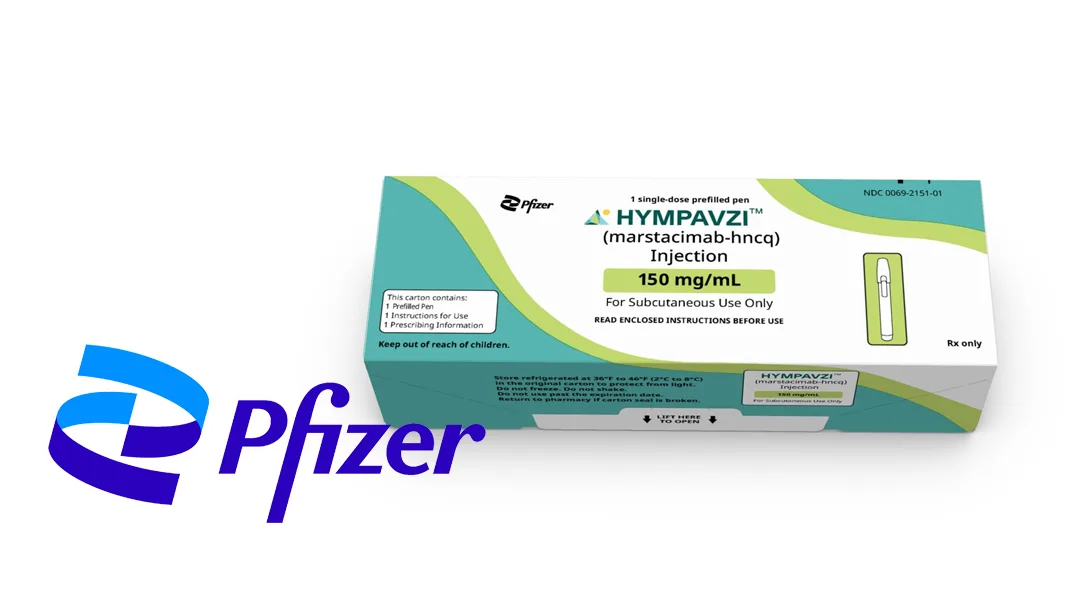
Pfizer Inc. (NYSE: PFE) announced that the U.S. Food and Drug Administration (FDA) has accepted for priority review its supplemental Biologics License Application (sBLA) for Hympavzi (marstacimab), seeking approval to treat hemophilia A or B patients aged 6 years and older with inhibitors, as well as children aged 6-11 without inhibitors. The expansion would significantly broaden access to the first non-factor hemophilia therapy targeting tissue factor pathway inhibitor (TFPI).
Hemophilia Market Scale: Global hemophilia therapeutics market exceeds $15 billion, with inhibitor patients representing 30% of severe hemophilia A cases and historically underserved by conventional prophylaxis.
Non-Factor Disruption: Marstacimab’s TFPI-targeting mechanism positions Pfizer to disrupt factor replacement dominance, competing with Genevant/Alnylam’s fitusiran (RNAi) and Sanofi’s efanesoctocog alfa (factor VIII fusion) in the hemophilia innovation race.
Pediatric Expansion Value:Priority review for ages 6-11 captures prophylaxis initiation window, potentially establishing lifelong therapy loyalty before patients transition to adult factor regimens.
Inhibitor Market Penetration: Approval for inhibitor patients would unlock the highest-unmet-need hemophilia segment, where annual treatment costs often exceed $1 million per patient and clinical outcomes remain suboptimal.
Development Roadmap
Phase
Milestone
Anticipated Timing
Current
FDA priority review for sBLA (ages 6+ with inhibitors; 6-11 without)
Q1 2026
Near-term
PDUFA decision date (priority review = 6-month timeline)
Q3 2026
Global Expansion
EU EMA and Japan PMDA submissions for pediatric indications
2026-2027
Future
Real-world evidence generation in youngest children (under 6)
Post-approval studies
Forward‑Looking Statements This brief contains forward‑looking statements regarding Hympavzi regulatory approval timelines, pediatric hemophilia market penetration, and competitive positioning in the non-factor therapy space. Actual results may differ due to FDA review outcomes, pricing negotiations with payers, and competitive responses from factor replacement and gene therapy manufacturers.-Fineline Info & Tech
Insight, China's Pharmaceutical Industry Fineline Info & Tech is a comprehensive global pharmaceutical database that spans the entire product lifecycle. Its mission is to equip professionals and executives across all sectors of the life sciences industry with a standardized data language, offering a holistic view of the Chinese pharmaceutical competitive landscape. Flcube.com furnishes critical data essential for informed decision-making, drawing on global industry news, policy insights, competitive intelligence, and advanced analytical tools.