


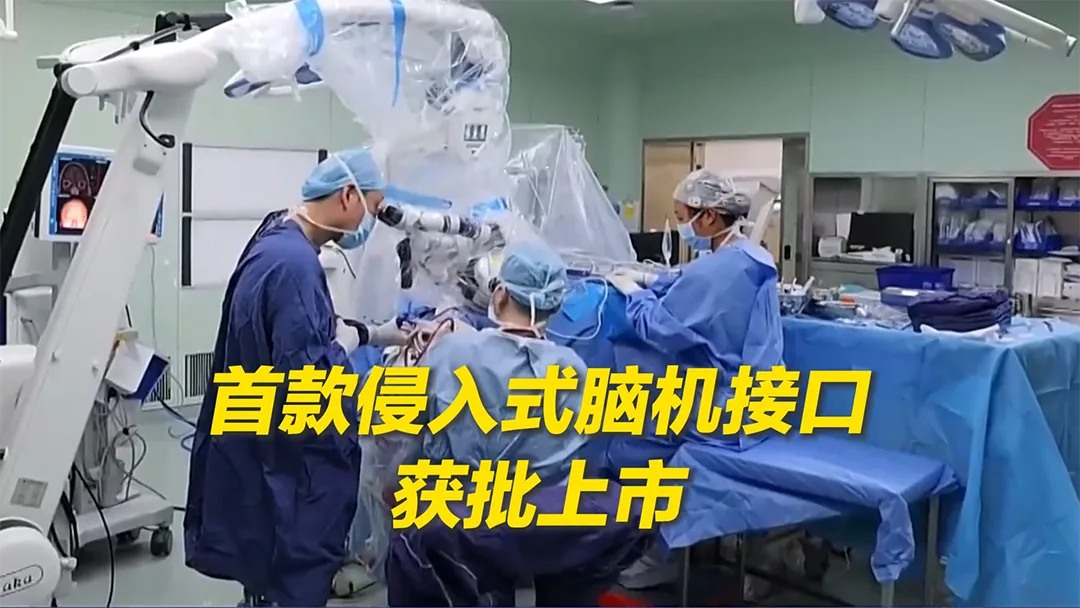
China’s National Medical Products Administration (NMPA) granted registration approval for the “Implantable Brain-Computer Interface Hand Motor Function Compensation System,” marking the world’s first market launch of an invasive BCI medical device. The regulatory milestone signifies the transition of brain-computer interface technology from experimental research to clinical application, establishing China as the first jurisdiction to authorize invasive neural implants for functional motor restoration.
Regulatory Milestone
| Item | Detail |
|---|---|
| Agency | NMPA (China) |
| Approval Type | Innovative medical device registration (Class III) |
| Product | Implantable Brain-Computer Interface Hand Motor Function Compensation System |
| Significance | World’s first approved invasive BCI medical device |
| Indication | Hand grasping functional compensation for tetraplegia patients |
| Market Entry | First invasive BCI authorized for clinical application globally |
System Architecture
| Component | Function |
|---|---|
| BCI Implant + EEG Electrode Kit | Minimally invasive epidural neural signal acquisition |
| EEG Signal Transceiver | Wireless power and data transmission |
| Pneumatic Glove Device | Actuated hand grasping compensation |
| Disposable Surgical Toolkit | Sterile implantation instruments |
| Software Suite | EEG decoding, medical testing, and clinical management modules |
Technical Innovation: Minimally invasive epidural implantation combined with wireless power/communication eliminates percutaneous wires, reducing infection risk vs. transcutaneous BCI systems.
Patient Eligibility Criteria
| Parameter | Specification |
|---|---|
| Age Range | 18–60 years |
| Injury Level | Cervical spinal cord injury (C2–C6) |
| ASIA Impairment Scale | A–C (complete to incomplete motor/sensory impairment) |
| Disease Duration | Diagnosis confirmed >1 year |
| Stability | Condition stable ≥6 months post-standard treatment |
| Functional Status | Absent hand grasping; preserved upper arm function |
Target Population: Estimated 50,000+ annual incident cases of traumatic cervical spinal cord injury in China; addressable market for BCI intervention in chronic stable phase patients.
Clinical Evidence & Market Impact
| Outcome | Clinical Trial Result |
|---|---|
| Hand Grasping Function | Significant improvement in compensated grasping capability |
| Quality of Life | Meaningful enhancement in patient-reported outcomes |
| Safety Profile | Minimally invasive approach demonstrated acceptable risk-benefit |
Strategic Implications:
- Technology Leadership: China establishes first-mover regulatory pathway for invasive BCI therapeutics, ahead of FDA (Synchron, Neuralink pending) and EMA
- Market Expansion: Platform validation enables future indications (lower limb, speech decoding, sensory restoration)
- Manufacturing Ecosystem: Domestic supply chain for neural electrodes, wireless transceivers, and pneumatic actuators
- Revenue Projection: Addressable market of RMB 2–5 billion annually in China for upper extremity BCI systems; global licensing potential for NMPA-approved technology
Forward‑Looking Statements
This brief contains forward‑looking statements regarding clinical adoption rates, reimbursement pathways, and technology platform expansion for invasive BCI medical devices. Actual results may differ due to surgical training requirements, payor coverage decisions, and competitive dynamics from non-invasive BCI alternatives.-Fineline Info & Tech