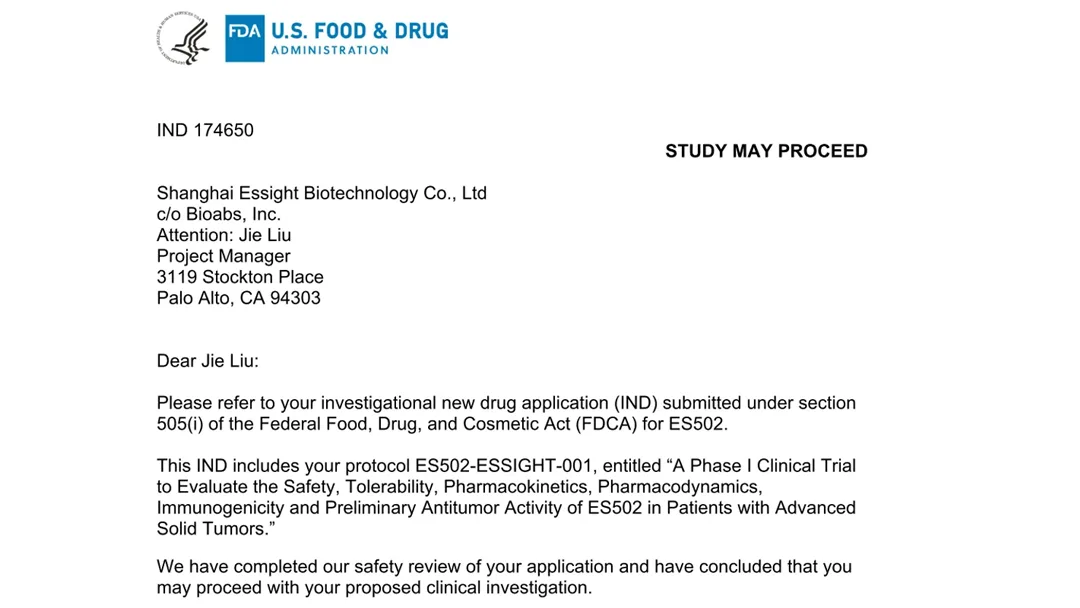
Shanghai Essight Biotechnology Co., Ltd. announced that ES502 Injection has received FDA approval to proceed with a Phase I clinical trial for patients with advanced solid tumors harboring RAS G12V mutations (KRAS/NRAS/HRAS). ES502 becomes the world’s first TCR×CD3 bispecific T‑cell engager (TCE) targeting the RAS G12V neoantigen to enter clinical development, with potential to address 30–70% of global patients carrying this prevalent oncogenic driver mutation.
30–70% of RAS G12V mutation carriers globally (pan‑tumor indication potential)
Market Context & Strategic Impact
Factor
Implication
RAS Mutation Prevalence
RAS G12V present in ~15% of solid tumors (pancreatic, colorectal, lung); represents largest undruggable oncogene class post‑KRAS G12C inhibitor approvals
TCE Market Growth
Global bispecific T‑cell engager market projected $8+ billion by 2030; oncology pipeline increasingly targets intracellular neoantigens
Competitive Landscape
First‑mover advantage vs. TCR‑T cell therapies (Adaptimmune, Immatics) and other TCR bispecifics in RAS space
Development Pathway: Phase I dose‑escalation in solid tumors; potential for FDA Breakthrough Therapy designation given unmet need in RAS‑mutant cancers
Commercial Potential: Peak sales $1–2 billion globally if approved, assuming broad RAS G12V label and competitive efficacy vs. emerging KRAS inhibitors
Forward‑Looking Statements This brief contains forward‑looking statements regarding clinical development timelines, patient enrollment, and therapeutic potential for ES502. Actual results may differ due to dose‑limiting toxicities, mutation‑specific HLA restriction limitations, and competitive dynamics in the RAS‑targeted oncology space.-Fineline Info & Tech