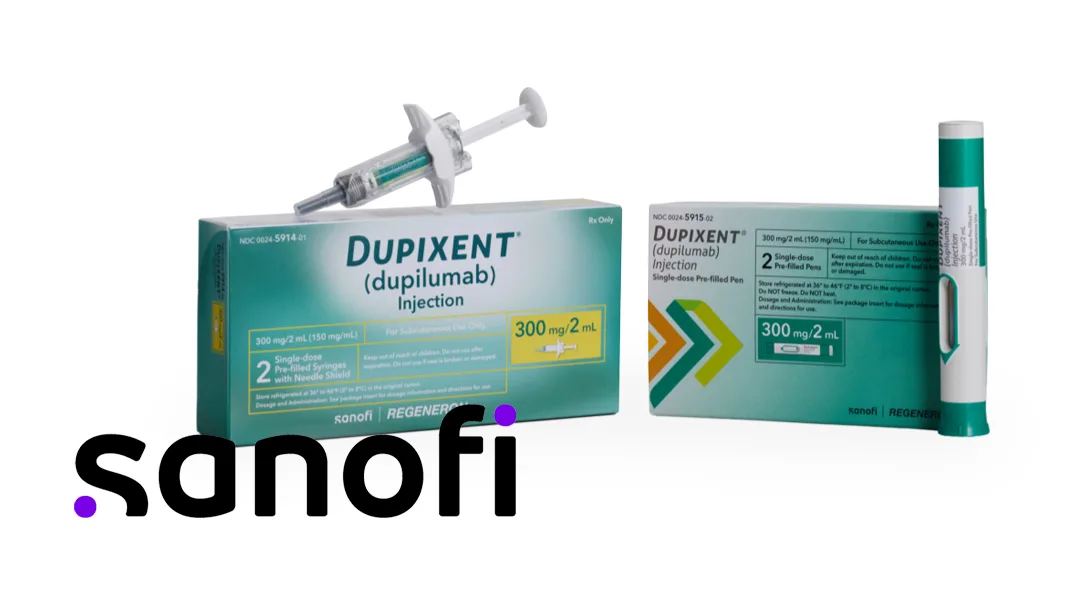
Sanofi S.A. (NASDAQ: SNY) announced that Dupixent (dupilumab) has received marketing approval from Japan’s Ministry of Health, Labour and Welfare (MHLW) for moderate‑to‑severe bullous pemphigoid (BP) – marking the seventh indication for the IL‑4/IL‑13 inhibitor in Japan and validating its type 2 inflammation‑driven disease expansion strategy based on LIBERTY‑BP‑ADEPT Phase II/III trial results.
Non‑immunosuppressant IL‑4/IL‑13 inhibition – superior safety profile for elderly population
Commercial Expansion
Seventh Japan indication validates type 2 inflammation platform strategy; cumulative addressable population >500,000 patients across all indications in Japan
Premium pricing sustainability through indication expansion; formulary access leverage across therapeutic areas
Market Impact & Outlook
Dupixent Global Franchise:US$13+ billion annual sales (2025); Japan represents 8‑10% of global revenue (~US$1‑1.3 billion); indication expansion strategy drives 15‑20% annual growth despite maturing atopic dermatitis/asthma markets.
Bullous Pemphigoid Market Dynamics: Autoimmune dermatology niche US$300‑500 million globally; Japan US$40‑60 million addressable market; Dupixent’s first‑in‑class biologic positioning supports premium pricing (estimated ¥3‑5 million annually); corticosteroid reduction value proposition resonates with payers.
Type 2 Inflammation Platform Validation: Seventh indication (BP) demonstrates IL‑4/IL‑13 pathway ubiquity across seemingly unrelated diseases (atopic dermatitis → asthma → COPD → bullous pemphigoid); supports continued indication expansion (eosinophilic esophagitis, food allergy, other autoimmune blistering diseases).
Competitive Moat: vs. AbbVie’s Rinvoq (JAK inhibitor) – Dupixent’s non‑immunosuppressant profile preferred in elderly/comorbid populations; vs. emerging IL‑13‑only inhibitors (lebrikizumab) – Dupixent’s dual IL‑4/IL‑13 mechanism provides broader efficacy; first‑mover advantage in BP establishes standard‑of‑care before competitors enter.
Regulatory & Commercial Catalysts: EU EMA BP submission H2 2026; US FDA BP filing 2027; potential for global BP approval 2028‑2029 adding US$200‑300 million annual incremental revenue; pediatric indication expansion (atopic dermatitis, asthma) ongoing with US$1+ billion additional peak sales potential.
Forward‑Looking Statements This brief contains forward‑looking statements regarding indication expansion timelines, regulatory approval expectations, and commercial projections for Dupixent in bullous pemphigoid. Actual results may differ due to competitive dynamics with emerging biologics, reimbursement negotiations in Japan and other markets, and safety profile evolution with long‑term use.-Fineline Info & Tech