 By Fineline Cube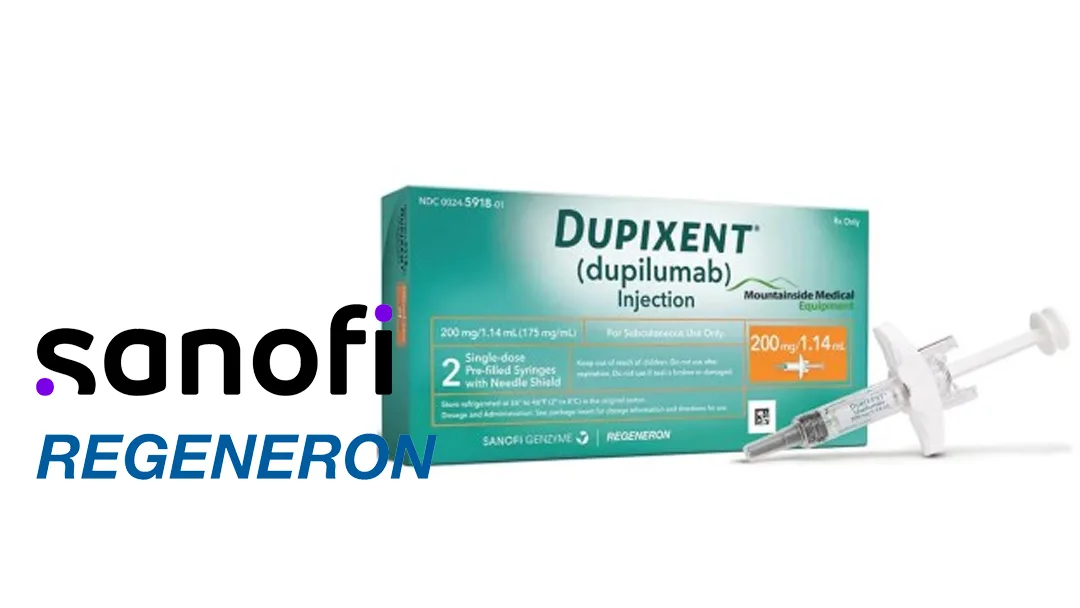
The U.S. Food and Drug Administration (FDA) has granted approval to Sanofi (NASDAQ: SNY) and Regeneron (NASDAQ: REGN) for dupilumab, a monoclonal antibody targeting interleukin-4 (IL-4) and interleukin-13 (IL-13), for the treatment of pediatric patients aged 2 to 11 years with chronic spontaneous urticaria (CSU) who remain symptomatic despite H1 antihistamine (H1AH) treatment. This marks a significant expansion of the therapy’s indication into younger patient populations.
Regulatory Approval Summary
| Item | Detail |
|---|---|
| Agency | FDA (United States) |
| Approval Type | New pediatric indication |
| Product | Dupilumab (monoclonal antibody) |
| Indication | Chronic spontaneous urticaria (CSU) in patients aged 2–11 years |
| Patient Population | Symptomatic despite H1 antihistamine treatment |
| Approval Date | Week of April 22, 2026 |
| Global Status | Previously approved in EU and multiple countries for same pediatric indication |
| Next Steps | Commercial launch and physician education initiatives |
Product Profile & Mechanism of Action
- Molecular Target: Dual inhibition of interleukin-4 (IL-4) and interleukin-13 (IL-13), key drivers of type 2 inflammation
- Therapeutic Class: Monoclonal antibody (mAb)
- Administration: Subcutaneous injection
- Clinical Need: Addresses unmet medical need in pediatric CSU patients refractory to standard antihistamine therapy
- Global Recognition: Already approved in the European Union and multiple international markets for the same pediatric indication
- Existing Indications: Dupilumab is already approved for atopic dermatitis, asthma, chronic rhinosinusitis with nasal polyps, eosinophilic esophagitis, and prurigo nodularis across various age groups
Market Impact Assessment
| Aspect | Analysis |
|---|---|
| Patient Population | Estimated 15,000–20,000 pediatric CSU patients aged 2–11 in the U.S. refractory to antihistamines |
| Market Opportunity | Potential annual revenue contribution of $180–250 million by 2028 |
| Competitive Advantage | First and only biologic approved for pediatric CSU in this age group |
| Pricing Strategy | Expected to follow existing dupilumab pricing framework (~$40,000 annually per patient) |
| Reimbursement Outlook | Favorable coverage expected given established safety profile and unmet need |
Strategic Implications
This approval represents a strategic milestone for the Sanofi-Regeneron partnership, further solidifying dupilumab’s position as a leading immunology franchise. By expanding into pediatric CSU, the companies are addressing a significant unmet medical need while extending the drug’s lifecycle and market reach.
The alignment between U.S. and European regulatory decisions demonstrates global consensus on dupilumab’s benefit-risk profile in pediatric CSU. This harmonization simplifies global development and commercial strategies for the partners.
For Sanofi and Regeneron, this approval reinforces their leadership in type 2 inflammatory diseases and provides additional growth momentum for the dupilumab franchise, which generated approximately $9.2 billion in global sales in 2025.
The approval also highlights the FDA’s increasing willingness to approve innovative therapies for pediatric rare and chronic conditions, particularly when robust clinical data demonstrates meaningful clinical benefit over existing standard-of-care treatments.
Forward-Looking Statements
This brief contains forward-looking statements regarding market opportunities, revenue projections, and regulatory developments. Actual results may differ due to competitive dynamics, reimbursement challenges, and evolving treatment guidelines.-Fineline Info & Tech