 By Fineline Cube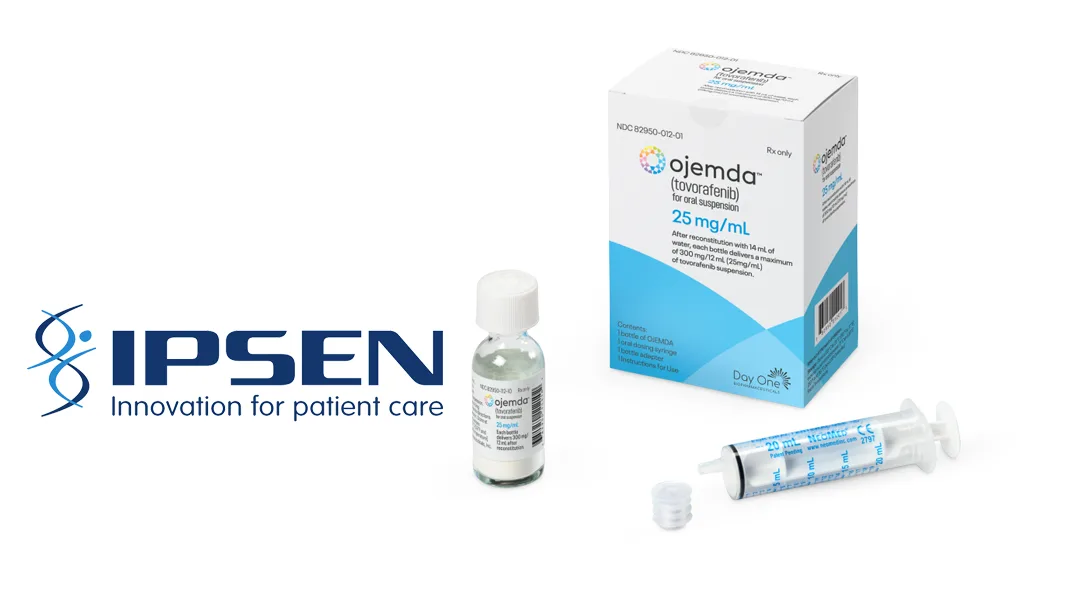
Ipsen S.A. (EPA: IPN, OTCMKTS: IPSEY) announced on April 22, 2026, that the European Commission (EC) has granted conditional marketing authorization for Ojemda (tovorafenib) as monotherapy for the treatment of patients 6 months of age and older with pediatric low-grade glioma (pLGG) harboring a BRAF fusion or rearrangement, or BRAF V600 mutation, who have progressed after one or more prior systemic therapies. The approval is based on compelling efficacy data from the pivotal Phase II FIREFLY-1 study.
Regulatory Approval Summary
| Item | Detail |
|---|---|
| Company | Ipsen S.A. (EPA: IPN, OTCMKTS: IPSEY) |
| Product | Ojemda (tovorafenib) |
| Regulatory Authority | European Commission (EC) |
| Approval Type | Conditional marketing authorization |
| Indication | Pediatric low-grade glioma (pLGG) with BRAF alterations in patients ≥6 months old |
| Patient Population | Progressed after ≥1 prior systemic therapy |
| Approval Date | April 22, 2026 |
| Next Steps | Full data submission within specified timeframe to convert to standard approval |
Product Profile & Clinical Data
- Mechanism of Action: Type II RAF kinase inhibitor targeting mutant BRAF V600, wild-type BRAF, and wild-type CRAF kinases
- Clinical Trial: FIREFLY-1 Phase II study evaluated tovorafenib in 137 children and young adults with relapsed/refractory BRAF-altered pLGG
- Primary Endpoint Results:
- 71% Objective Response Rate (ORR) per Response Assessment in Neuro-Oncology criteria for High-Grade Gliomas (RANO-HGG)
- 53% ORR per Response Assessment in Pediatric Neuro-Oncology for Low-Grade Glioma (RAPNO-LGG) criteria
- Clinical Significance: Responses represent clinically meaningful tumor reduction in a historically difficult-to-treat pediatric population
- Safety Profile: Manageable adverse event profile consistent with RAF kinase inhibitor class effects
- Unmet Need: Addresses critical gap in treatment options for children with progressive pLGG after standard therapies fail
Market Impact Assessment
| Aspect | Analysis |
|---|---|
| Patient Population | Estimated 1,200–1,800 eligible pediatric pLGG patients annually across EU/EEA |
| Market Opportunity | Peak annual sales potential of €280–350 million in European markets |
| Competitive Landscape | First targeted therapy specifically approved for BRAF-altered pLGG in this age group |
| Pricing Strategy | Expected premium pricing reflecting orphan drug status and significant clinical benefit |
| Reimbursement Outlook | Favorable HTA assessments anticipated given high unmet medical need and robust response rates |
Strategic Implications
This conditional approval represents a transformative milestone for Ipsen’s oncology portfolio and establishes Ojemda as a potential standard of care for pediatric patients with BRAF-altered low-grade glioma. The impressive response rates demonstrated in the FIREFLY-1 study—particularly the 71% ORR by RANO-HGG criteria—highlight the drug’s substantial clinical impact in a disease area where treatment options have been severely limited.
For Ipsen, Ojemda represents a strategic asset in the company’s transition toward becoming a leading oncology-focused biopharmaceutical company. The approval validates the company’s investment in rare pediatric cancers and provides a foundation for potential label expansions into other BRAF-altered tumor types.
The conditional nature of the approval requires Ipsen to submit additional long-term safety and efficacy data, which will be generated through ongoing follow-up of FIREFLY-1 participants and planned confirmatory studies. This regulatory pathway allows for accelerated patient access while ensuring comprehensive data collection continues.
Globally, Ipsen is pursuing parallel regulatory submissions, with U.S. FDA review currently underway under priority review designation, potentially leading to approval in Q3 2026.
Forward-Looking Statements
This brief contains forward-looking statements regarding regulatory developments, market opportunities, and clinical outcomes. Actual results may differ due to regulatory decisions, competitive dynamics, and evolving treatment paradigms.-Fineline Info & Tech