 By Fineline Cube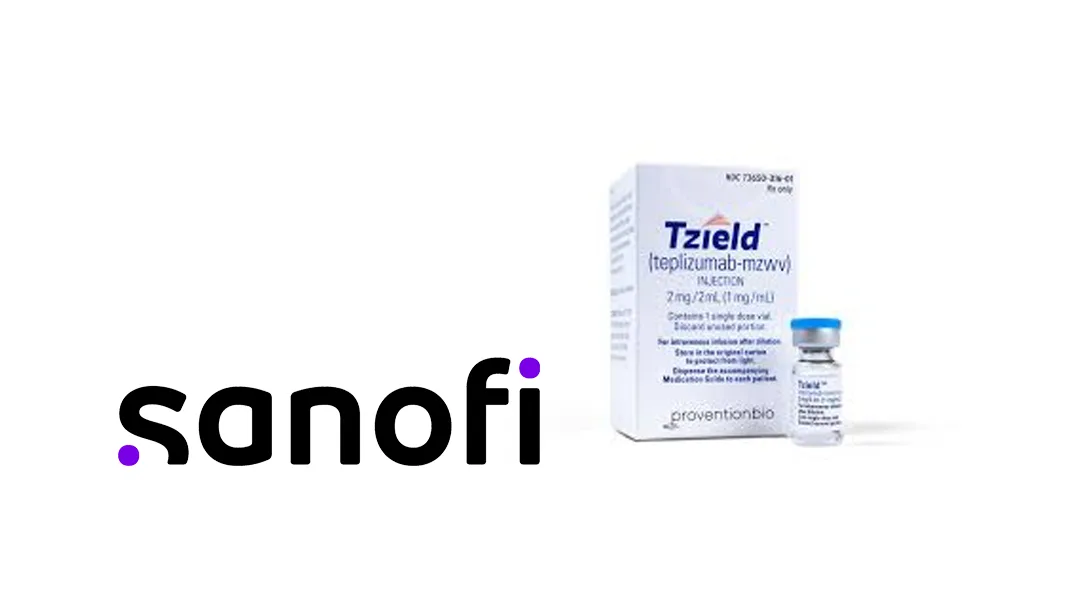
The U.S. Food and Drug Administration (FDA) has approved a supplemental biologics license application for Sanofi (NASDAQ: SNY)‘s Tzield (teplizumab-mzwv), significantly expanding the indication from patients eight years and older to as young as one year of age for delaying the onset of stage 3 type 1 diabetes (T1D) in patients diagnosed with stage 2 T1D. The approval was granted under priority review and is supported by one-year data from the PETITE-T1D phase 4 study (NCT05757713) evaluating safety and pharmacokinetics in young children.
Regulatory Approval Summary
| Item | Detail |
|---|---|
| Agency | FDA (United States) |
| Company | Sanofi (NASDAQ: SNY) |
| Product | Tzield (teplizumab-mzwv) |
| Approval Type | Supplemental biologics license application |
| Review Designation | Priority review |
| Previous Indication | Patients ≥8 years old with stage 2 T1D |
| New Indication | Patients ≥1 year old with stage 2 T1D |
| Approval Date | April 22, 2026 |
| Supporting Study | PETITE-T1D phase 4 (NCT05757713) |
Product Profile & Clinical Development
- Mechanism of Action: CD3-directed monoclonal antibody that modulates T-cell activity to preserve pancreatic beta-cell function
- Original Approval: First approved in November 2022 for patients eight years and older with stage 2 T1D
- Clinical Significance: First and only therapy approved to delay progression from stage 2 to stage 3 T1D
- New Data Source: PETITE-T1D phase 4 study provided one-year safety and pharmacokinetic data in children aged 1–7 years
- Treatment Paradigm: Single 14-day course administered intravenously to delay clinical onset of symptomatic T1D
- Unmet Need: Addresses critical window for intervention in very young children at high risk of developing full-blown T1D
Market Impact Assessment
| Aspect | Analysis |
|---|---|
| Expanded Patient Population | Increases addressable U.S. market by approximately 60%, adding ~8,000–10,000 children aged 1–7 annually |
| Market Opportunity | Potential peak annual sales increase from $450 million to $700+ million by 2029 |
| Competitive Position | Maintains exclusive position as only approved T1D-delaying therapy; no direct competitors in development |
| Pricing Strategy | Expected to maintain current pricing (~$100,000 per course) given significant clinical benefit and orphan drug status |
| Reimbursement Outlook | Favorable coverage expected given preventive nature and substantial healthcare cost savings from delayed T1D onset |
Strategic Implications
This expanded approval represents a transformative milestone for Sanofi’s immunology franchise and significantly enhances Tzield’s commercial potential. By extending the indication to children as young as one year old, Sanofi has effectively doubled the window for therapeutic intervention in the natural history of type 1 diabetes.
The priority review designation and rapid approval timeline reflect the FDA’s recognition of Tzield’s substantial clinical benefit and the urgent unmet need in pediatric T1D prevention. The supporting PETITE-T1D phase 4 data demonstrates Sanofi’s commitment to generating robust evidence across the full pediatric age spectrum.
For families affected by T1D, this approval provides hope for significantly delaying or potentially preventing the onset of a lifelong chronic condition. The ability to intervene in children as young as one year old—often before any symptoms appear—represents a paradigm shift in T1D management.
From a commercial perspective, this expansion strengthens Sanofi’s position in the growing immunology market and provides additional growth momentum for a product that has already demonstrated strong early adoption since its 2022 launch. The company will likely accelerate physician education and screening initiatives to identify eligible young patients in the expanded age range.
Forward-Looking Statements
This brief contains forward-looking statements regarding market opportunities, regulatory developments, and commercial expectations. Actual results may differ due to adoption rates, competitive dynamics, and evolving treatment guidelines.-Fineline Info & Tech