


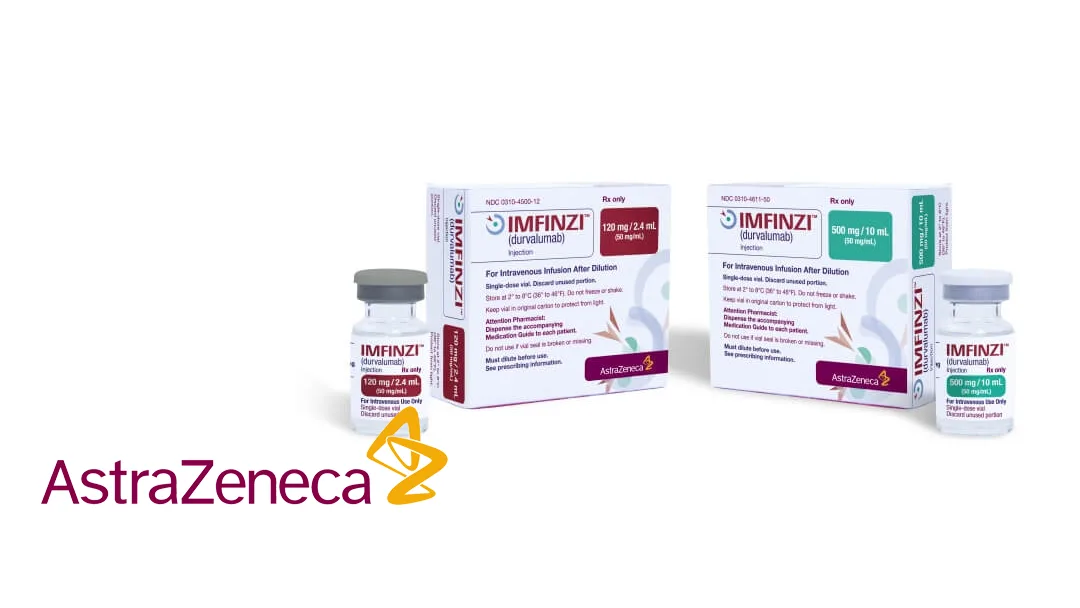
AstraZeneca plc (NYSE: AZN) announced that China’s National Medical Products Administration (NMPA) has granted approvals for two first-line immuno-oncology regimens in hard-to-treat cancers:
- Imfinzi (durvalumab) + Imjudo (tremelimumab) for advanced or unresectable hepatocellular carcinoma (HCC)
- Durvalumab monotherapy for the same HCC indication
This follows an early-April NMPA approval of the STRIDE regimen (single tremelimumab priming dose + durvalumab) combined with platinum-based chemotherapy for first-line metastatic non-small cell lung cancer (NSCLC) in patients with EGFR/ALK-negative status.
Regulatory Milestone
| Item | Detail |
|---|---|
| Agency | NMPA (China) |
| Approval Type | Full marketing authorization |
| Products | Imfinzi (durvalumab) ± Imjudo (tremelimumab) |
| Indications | 1. Advanced/unresectable HCC (combo & mono) 2. Metastatic NSCLC (combo + chemo) |
| Basis | Global Phase III HIMALAYA trial + China cohort |
| Commercial Launch | Immediate availability through hospital channels |
Clinical Evidence – HIMALAYA Trial Highlights
Global Cohort (All Patients)
- STRIDE vs. Sorafenib: 22% reduction in death risk (HR 0.78; p=0.0035)
- Median OS: 16.4 months (STRIDE) vs. 13.8 months (sorafenib)
- Durvalumab mono: Non-inferior to sorafenib (HR 0.86; median OS 16.6 months)
China Cohort (Key Differentiator)
- STRIDE vs. Sorafenib: 40% reduction in death risk (HR 0.60; 95% CI: 0.42–0.84)
- Median OS: 25.3 months vs. 14.1 months (+11.2 months)
- 3-Year OS Rate: 40.6% (STRIDE) vs. ~20% (sorafenib)
Safety Profile – Favorable Tolerability
| Arm | Grade ≥3 TRAEs |
|---|---|
| STRIDE | 24.1% |
| Durvalumab mono | 12.4% |
| Sorafenib | 40.2% |
Both regimens demonstrated significantly lower high-grade toxicity than the tyrosine kinase inhibitor standard.
Market Impact & Strategic Implications
- HCC Landscape: China accounts for >50% of global HCC cases; first-line immuno-oncology options remain limited despite high unmet need.
- Pricing & Access: AstraZeneca expects inclusion in 2026 National Reimbursement Drug List (NRDL) negotiations, critical for volume uptake.
- Competitive Positioning: STRIDE’s dual checkpoint inhibition (PD-L1 + CTLA-4) offers a differentiated mechanism versus single-agent PD-1 inhibitors dominating China’s market.
- Revenue Catalyst: Analysts project peak annual sales of $300–500 million in China across HCC and NSCLC indications by 2028.
Forward‑Looking Statements
This brief contains forward-looking statements regarding commercial performance, regulatory pathways, and clinical adoption. Actual outcomes may vary due to reimbursement dynamics, competitive pressures, and real-world evidence generation.-Fineline Info & Tech