


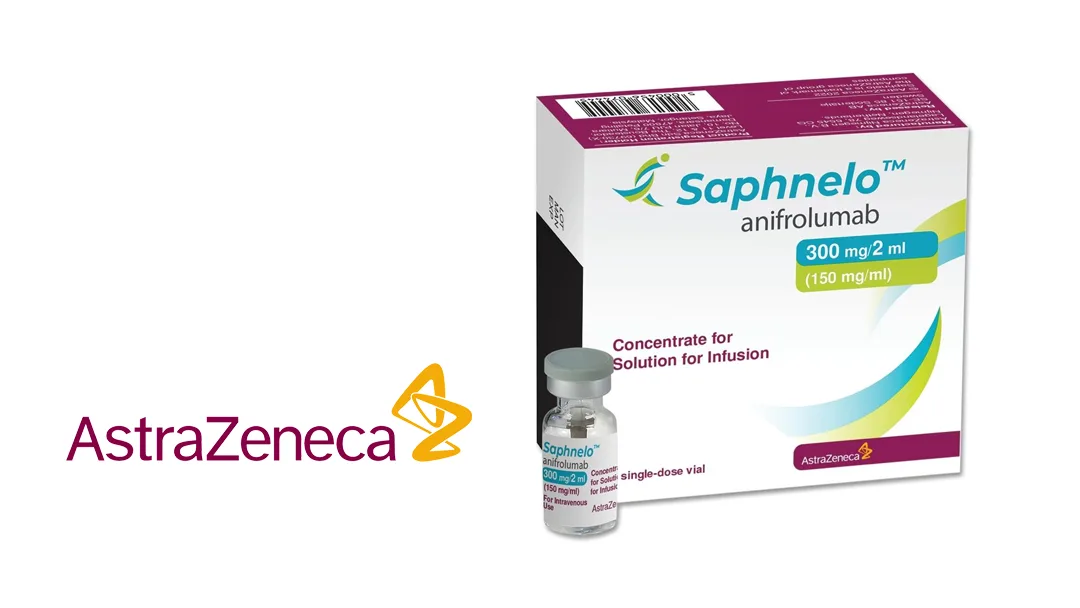
AstraZeneca plc (NYSE: AZN) announced that the U.S. Food and Drug Administration (FDA) has approved the subcutaneous (SC) formulation of Saphnelo™ (anifrolumab) for the treatment of adult patients with systemic lupus erythematosus (SLE) in combination with standard therapy.
The approval follows a two-month regulatory review extension during which the FDA requested additional supplemental information, now resolved to the agency’s satisfaction. The decision is based on the Phase III TULIP-SC trial, which demonstrated that SC Saphnelo achieved statistically significant and clinically meaningful reductions in SLE disease activity versus placebo in patients with mild-to-moderate to severe disease already receiving background therapy.
Regulatory & Clinical Profile
| Parameter | Detail |
|---|---|
| Drug | Saphnelo™ (anifrolumab) – first-in-class, fully human monoclonal antibody |
| Mechanism | Binds type I interferon (IFN) receptor subunit → blocks all type I IFN signaling |
| Formulation | Subcutaneous injection (self-administered) |
| Indication | Adult SLE (on top of standard therapy) |
| Pivotal Trial | TULIP-SC Phase III – met primary and key secondary endpoints |
| Safety | Consistent with intravenous (IV) Saphnelo; no new safety signals |
| Regulatory Path | Approved after addressing FDA’s February 2026 data request |
Disease Context: Unmet Need in SLE
- Prevalence: ~1.5 million Americans affected; 90% are women of childbearing age
- Treatment Gap: Few targeted biologics available; most rely on corticosteroids and immunosuppressants with significant toxicity
- Type I IFN Role: Overactive in >50% of SLE patients; correlates with disease severity and flares
Strategic Implications for AstraZeneca
- Franchise Expansion: Builds on existing IV Saphnelo approval (2021); SC format enhances patient convenience and adherence
- Commercial Advantage: First and only type I IFN inhibitor available in both IV and SC forms in the U.S.
- Pipeline Synergies: Anifrolumab is also in late-stage trials for cutaneous lupus, lupus nephritis, myositis, and systemic sclerosis—all driven by type I IFN dysregulation
- Revenue Potential: Analysts project peak annual sales of $800 million–$1.2 billion globally, with SC formulation capturing >60% of new starts
Market Differentiation
Unlike B-cell-targeted therapies (e.g., belimumab), Saphnelo addresses the upstream inflammatory driver in IFN-high SLE patients, offering a complementary mechanism for combination strategies. The SC regimen (monthly self-injection) enables outpatient management without infusion center visits, aligning with patient preference trends.
Forward‑Looking Statements
This brief reflects current regulatory status. Commercial uptake, payer coverage, and expansion into additional indications remain subject to real-world evidence and ongoing clinical trial outcomes.-Fineline Info & Tech