


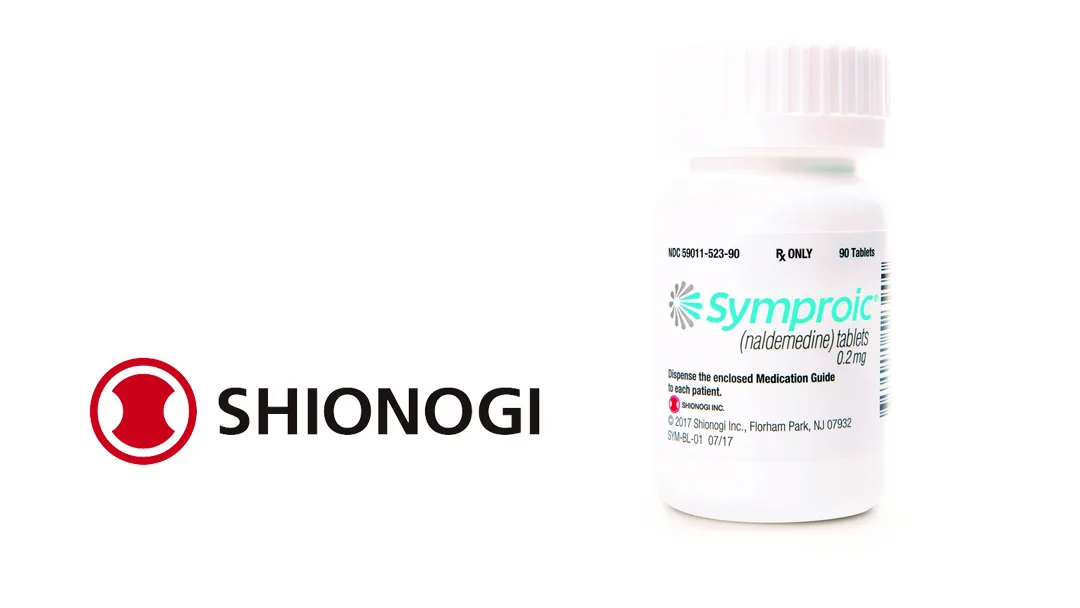
Shionogi & Co., Ltd. (TYO: 4507) announced that China’s National Medical Products Administration (NMPA) has granted marketing approval for Symproic (naldemedine), an opioid-induced constipation (OIC) therapy. Naldemedine represents the world’s first approved oral, peripherally acting selective mu-opioid receptor antagonist (PAMORA) and is now registered across major global markets including China, the United States, European Union, United Kingdom, and Japan.
Regulatory Milestone & Global Registration Status
| Parameter | Detail |
|---|---|
| Regulatory Agency | NMPA (China) |
| Approval Type | Marketing authorization |
| Indication | Opioid-induced constipation (OIC) |
| Global Registration | ✓ China (including Hong Kong, Macau, Taiwan) ✓ United States ✓ European Union ✓ United Kingdom ✓ Japan |
| Guideline Recognition | American College of Gastroenterology (AGA) European Society for Medical Oncology (ESMO) |
Drug Profile & Mechanism of Action
- Drug Class: Oral, peripherally acting selective mu-opioid receptor antagonist (PAMORA)
- Innovation Status: World’s first approved oral PAMORA
- Mechanism: Blocks binding of opioids to mu receptors in the gut
- Physiological Effects:
- Restores normal intestinal peristalsis
- Normalizes fluid secretion in gastrointestinal tract
- Fundamentally reverses OIC pathophysiology at receptor level
- Selectivity Advantage: Peripheral action minimizes central nervous system effects
Clinical Significance & Market Context
Opioid-Induced Constipation Burden
- Patient Population: Millions of chronic pain patients worldwide requiring opioid therapy
- Prevalence: OIC affects 40-60% of patients on chronic opioid therapy
- Current Treatment Limitations: Traditional laxatives address symptoms but not underlying mechanism
- Unmet Need: Targeted therapy that specifically addresses opioid receptor-mediated constipation
Competitive PAMORA Landscape
| Product | Company | China Status | Differentiation |
|---|---|---|---|
| Naldemedine (Symproic) | Shionogi | NMPA approved | World’s first oral PAMORA, global guideline recognition |
| Methylnaltrexone | Salix/Valeant | Approved | Subcutaneous administration only |
| Naloxegol | AstraZeneca | Not approved in China | Limited global availability |
| Traditional Laxatives | Various generics | Widely available | Symptomatic relief only, no mechanistic action |
Strategic Market Implications
For Shionogi & Co.
- China Market Entry: Completes global commercial footprint for flagship PAMORA product
- Revenue Expansion: Access to world’s largest population of chronic pain patients
- Guideline Leverage: AGA and ESMO recommendations support rapid physician adoption
- Pricing Strategy: Premium positioning justified by mechanistic superiority over traditional approaches
China Pain Management Market Dynamics
- Opioid Usage Growth: Increasing acceptance of opioid therapy for cancer and chronic non-cancer pain
- Healthcare Infrastructure: Growing number of pain clinics and palliative care centers
- Regulatory Environment: NMPA approval reflects recognition of significant unmet medical need
- Reimbursement Potential: High clinical value may support inclusion in national reimbursement drug list
Commercial Outlook & Implementation Strategy
- Market Launch Timeline: Expected Q3-Q4 2026
- Target Prescribers: Oncologists, pain specialists, palliative care physicians
- Education Initiative: Physician training on OIC diagnosis and PAMORA mechanism
- Distribution Network: Leveraging existing Shionogi China infrastructure and potential partnerships
Forward-Looking Statements
This brief contains forward-looking statements regarding market launch, commercial performance, and regulatory compliance for Symproic (naldemedine). Actual results may differ due to risks including market competition, pricing negotiations, healthcare policy changes, and evolving treatment guidelines for opioid-induced constipation.-Fineline Info & Tech