



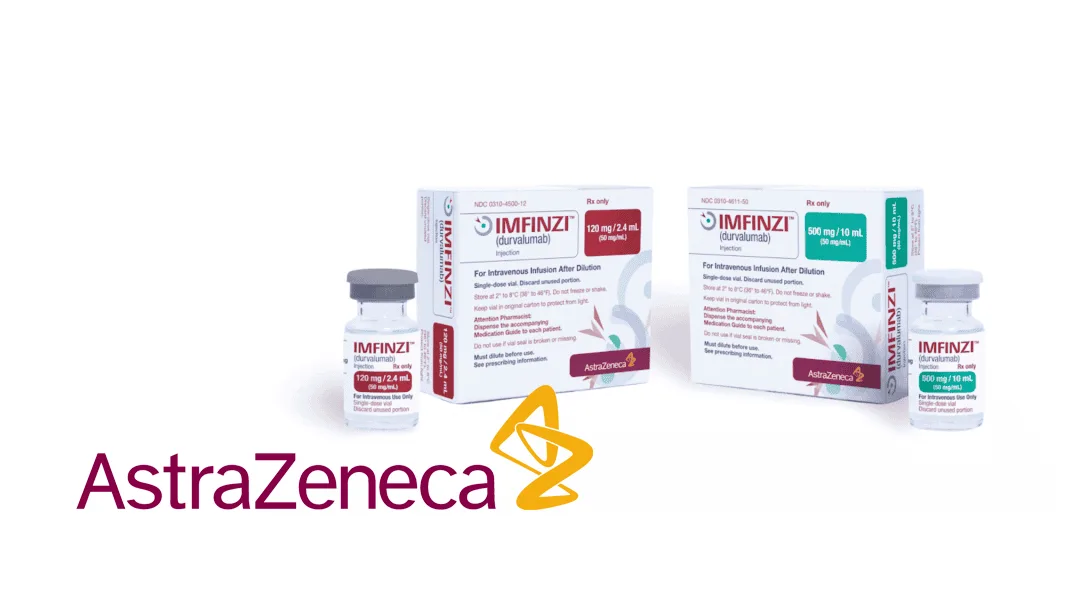
AstraZeneca (NYSE: AZN) announced that the U.S. Food and Drug Administration (FDA) has approved IMFINZI (durvalumab), its PD-L1 antibody, in combination with Bacillus Calmette-Guérin (BCG) induction and maintenance therapy for the treatment of adult patients with BCG-naïve, high-risk non-muscle-invasive bladder cancer (NMIBC). The approval, supported by the Phase 3 POTOMAC trial, demonstrated a 32% reduction in the risk of high-risk disease recurrence, progression, or death compared to BCG alone, marking the first immunotherapy combination approved for this indication.
Regulatory Approval Details
| Item | Detail |
|---|---|
| Agency | FDA (United States) |
| Approval Type | Full approval |
| Company | AstraZeneca (NASDAQ: AZN) |
| Drug Combination | IMFINZI (durvalumab) + BCG induction and maintenance |
| Indication | BCG-naïve, high-risk non-muscle-invasive bladder cancer (NMIBC) |
| Approval Date | 28 May 2026 |
| Supporting Trial | Phase 3 POTOMAC study |
Clinical Trial Results
| Endpoint | Result (IMFINZI + BCG) | Comparator (BCG alone) | Benefit |
|---|---|---|---|
| Primary Endpoint | Recurrence-free survival (composite of recurrence, progression, or death) | BCG alone | 32% risk reduction (HR: 0.68; p<0.001) |
| Treatment Duration | One year of IMFINZI added to standard BCG regimen | Standard BCG regimen | Enhanced efficacy without compromising safety |
| Patient Population | BCG-naïve, high-risk NMIBC | Same population | Addresses significant unmet need in early-stage disease |
| Safety Profile | Consistent with known profiles of individual agents | Not applicable | No new safety signals identified |
Disease Context & Unmet Need
Non-muscle-invasive bladder cancer (NMIBC) accounts for approximately 75% of newly diagnosed bladder cancer cases, with high-risk NMIBC carrying a substantial risk of progression to muscle-invasive disease requiring radical cystectomy (bladder removal). Despite being the standard of care for decades, BCG monotherapy fails in up to 40% of high-risk patients, creating an urgent need for more effective treatment strategies.
The IMFINZI-BCG combination represents a paradigm shift by:
- Preserving bladder function: Reducing progression to muscle-invasive disease avoids radical surgery
- Leveraging immune synergy: Combining innate (BCG) and adaptive (PD-L1 inhibition) immune activation
- Addressing early disease: First-line intervention in treatment-naïve patients maximizes therapeutic benefit
“This approval transforms the treatment landscape for patients with high-risk NMIBC who face the prospect of losing their bladder,” said Dr. Susan Galbraith, Executive Vice President, Oncology R&D at AstraZeneca. “By adding IMFINZI to standard BCG therapy, we can significantly reduce the risk of disease recurrence and progression while maintaining quality of life.”
Commercial and Strategic Implications
The NMIBC market represents a substantial commercial opportunity:
- Addressable Population: Approximately 25,000–30,000 newly diagnosed high-risk NMIBC patients annually in the U.S.
- Treatment Setting: Early-stage disease with potential for curative intent, driving high treatment adoption
- Franchise Expansion: Extends IMFINZI’s established presence in genitourinary cancers beyond muscle-invasive bladder cancer and lung cancer
- Competitive Positioning: First and only immunotherapy combination approved for NMIBC, with no direct competitors in this specific indication
AstraZeneca expects to launch the combination immediately, with pricing expected to reflect the significant clinical benefit demonstrated in the POTOMAC trial.
Forward‑Looking Statements
This brief contains forward-looking statements regarding regulatory approvals, commercial launches, and market opportunities for IMFINZI. Actual results may differ due to market adoption patterns, competitive developments, and evolving treatment guidelines.-Fineline Info & Tech