 By Fineline Cube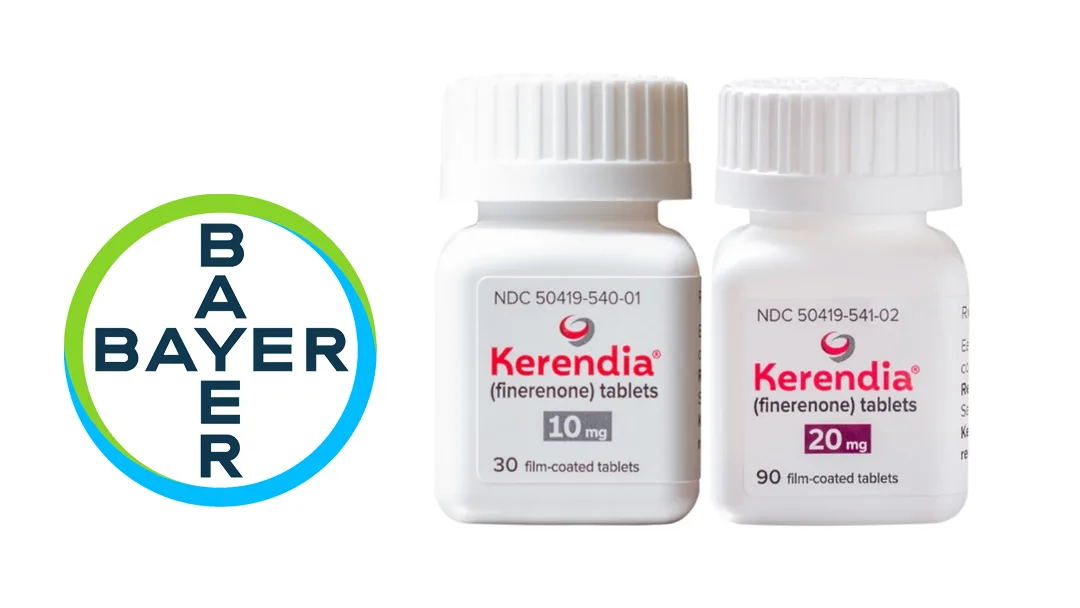
Bayer AG (ETR: BAYN) announced positive results from a pivotal Phase III study presented at the 63rd European Renal Association (ERA) Congress, demonstrating that Kerendia (finerenone) significantly reduced kidney disease progression in adults with non-diabetic chronic kidney disease (nd-CKD). The trial met its primary endpoint with a statistically significant improvement in estimated glomerular filtration rate (eGFR) slope, while also showing robust kidney-cardiovascular protection, potentially expanding Kerendia’s addressable market beyond its current diabetic CKD indication.
Primary Endpoint: Kidney Function Preservation
| Parameter | Kerendia | Placebo | Result |
|---|---|---|---|
| Primary Endpoint | eGFR slope (mean annual change) | eGFR slope (mean annual change) | Statistically significant reduction in kidney disease progression |
| Measurement Period | Baseline to month 32 | Baseline to month 32 | Clinically meaningful preservation of kidney function |
| Background Therapy | Standard of care for nd-CKD | Standard of care for nd-CKD | Added benefit on top of current standard treatments |
Secondary Composite Kidney-Cardiovascular Endpoint
- Components: Kidney failure, sustained eGFR decline ≥57%, hospitalization for heart failure, or cardiovascular death
- Result: Statistically significant risk reduction vs. placebo
- Clinical Impact: First mineralocorticoid receptor antagonist to demonstrate dual kidney-cardiovascular protection in non-diabetic population
- Market Significance: Addresses critical unmet need in 60% of CKD patients who do not have diabetes
Safety Profile & Tolerability
| Adverse Event Type | Kerendia Group | Placebo Group | Clinical Assessment |
|---|---|---|---|
| Treatment-Emergent AEs (TEAEs) | 68.3% | 65.4% | Comparable overall safety |
| Treatment-Emergent Serious AEs (TESAEs) | 20.9% | 21.2% | No increased serious event risk |
| Hyperkalemia (AESI) | 17.0% | 13.3% | Expected class effect, manageable |
| Severe Hyperkalemia | <1% | Not specified | Low clinical significance |
| Hyperkalemia Leading to Discontinuation | <2% | Not specified | Minimal impact on treatment adherence |
Market Opportunity & Commercial Implications
- Addressable Population: 450 million people globally with CKD; 60% (270 million) have non-diabetic etiology
- Current Treatment Gap: No approved therapies specifically indicated for nd-CKD progression
- Competitive Moat: First and only mineralocorticoid receptor antagonist with proven efficacy in both diabetic and non-diabetic CKD
- Revenue Potential: Could double Kerendia’s current $1.2B annual sales with nd-CKD approval
- Regulatory Pathway: Supplemental NDA/MAA submission expected Q3 2026 with potential approval in H1 2027
Scientific Innovation & Mechanism
- Selective MRA: Finerenone’s non-steroidal structure provides tissue-selective anti-inflammatory and anti-fibrotic effects
- Beyond Blood Pressure: Kidney protection independent of blood pressure lowering effects
- Cardio-Renal Axis: Simultaneously addresses both kidney and cardiovascular components of CKD progression
- Inflammation Targeting: Reduces oxidative stress and inflammatory pathways driving fibrosis
Strategic Significance for Bayer
- Franchise Expansion: Transforms Kerendia from diabetes-focused to broad CKD therapy
- Portfolio Diversification: Strengthens cardiovascular and renal therapeutic areas
- Competitive Defense: Creates significant barrier to entry for competing MRAs
- Pricing Power: Premium positioning justified by first-in-class status in nd-CKD
Development Timeline & Next Steps
- Regulatory Submissions: Global filings planned for Q3-Q4 2026
- Label Expansion: Current label limited to type 2 diabetes with albuminuric CKD
- Real-World Evidence: Post-marketing studies to validate trial findings in diverse populations
- Combination Strategies: Investigational protocols with SGLT2 inhibitors and RAS inhibitors
Forward‑Looking Statements
This brief contains forward-looking statements regarding clinical trial results, regulatory submissions, and commercial expectations for Kerendia. Actual results may differ due to final regulatory decisions, competitive dynamics, market adoption rates, and evolving treatment guidelines.-Fineline Info & Tech