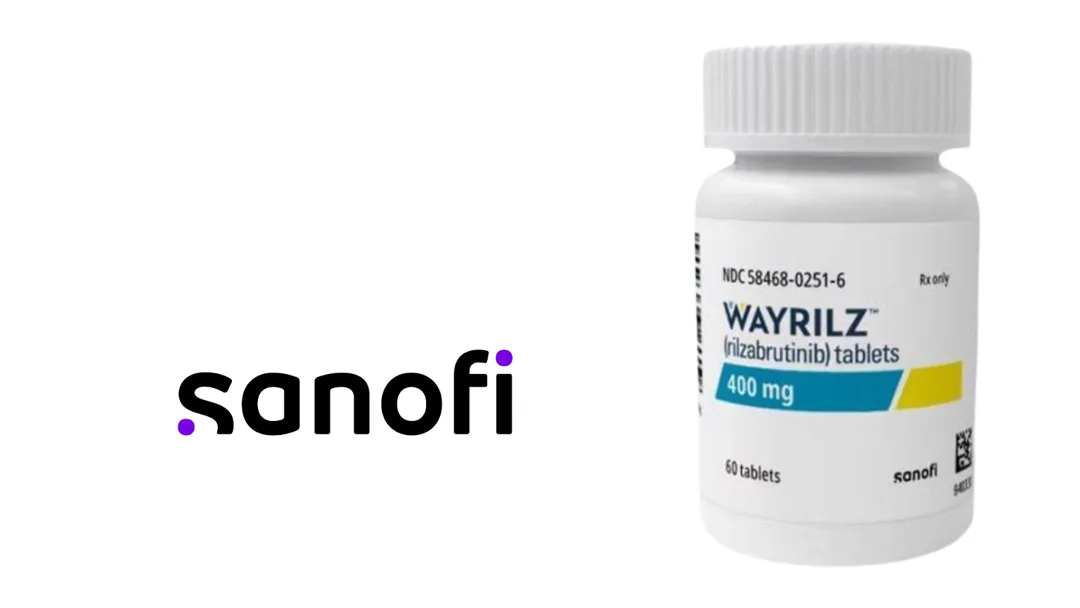
Sanofi S.A. (NASDAQ: SNY) announced that Japan’s Pharmaceuticals and Medical Devices Agency (PMDA) has approved Wayrilz (rilzabrutinib) for the treatment of persistent or chronic immune thrombocytopenia (ITP) in patients who demonstrate insufficient response to other therapies or experience problematic tolerability issues. This approval marks the sixth major regulatory authorization for Wayrilz, following previous approvals in the United States, European Union, United Arab Emirates, United Kingdom, and now Japan.
Regulatory Milestone
| Item | Detail |
|---|---|
| Agency | PMDA (Japan) |
| Approval Type | Full marketing approval |
| Product | Wayrilz (rilzabrutinib) – oral BTK inhibitor |
| Indication | Persistent/chronic ITP in refractory or intolerant patients |
| Approval Date | 23 Jun 2026 |
| Global Status | Approved in US, EU, UAE, UK, and Japan |
Drug Profile & Mechanism of Action
- Compound: Rilzabrutinib – novel oral reversible covalent Bruton’s tyrosine kinase inhibitor (BTKi)
- Innovation: First-in-class multi-immune modulation approach designed to restore immune balance rather than broad immunosuppression
- Therapeutic Potential: Platform molecule with applicability across multiple rare immune-mediated and inflammatory diseases
- Administration: Oral dosing regimen offering improved convenience over injectable alternatives
- Target Population: Patients with persistent/chronic ITP who have failed or cannot tolerate existing therapies
Clinical Evidence – LUNA 3 Phase 3 Study (NCT04562766)
| Endpoint | Result | Significance |
|---|---|---|
| Primary Endpoint | Met | Statistically significant improvement in sustained platelet response |
| Secondary Endpoints | Met | Positive impact on bleeding symptoms, quality of life measures, and durability of response |
| Safety Profile | Favorable | Reversible covalent binding mechanism associated with reduced off-target effects |
| Patient Population | Refractory/intolerant ITP patients | Addresses critical unmet need in difficult-to-treat population |
The LUNA 3 study demonstrated that Wayrilz achieved both primary and secondary endpoints, showing clinically meaningful improvements in sustained platelet counts and reduction in bleeding-related symptoms compared to placebo.
Market Impact & Strategic Outlook
- ITP Treatment Landscape: Current options include corticosteroids, IVIG, splenectomy, and newer biologics, but many patients remain refractory or experience significant side effects
- Commercial Opportunity: Japan represents the world’s third-largest pharmaceutical market with approximately 15,000-20,000 ITP patients, including an estimated 30-40% with refractory disease
- Competitive Advantage: Wayrilz’s oral administration, favorable safety profile, and multi-immune modulation mechanism differentiate it from existing BTK inhibitors and biologic therapies
- Platform Expansion: Success in ITP validates Sanofi’s reversible covalent BTK inhibition platform for potential expansion into other immune-mediated conditions including pemphigus, lupus, and inflammatory arthritis
Forward-Looking Statements
This brief contains forward-looking statements regarding commercial performance, market adoption, and pipeline expansion. Actual results may differ due to risks including competitive dynamics, pricing pressures, reimbursement challenges, and clinical development outcomes for additional indications.-Fineline Info & Tech