


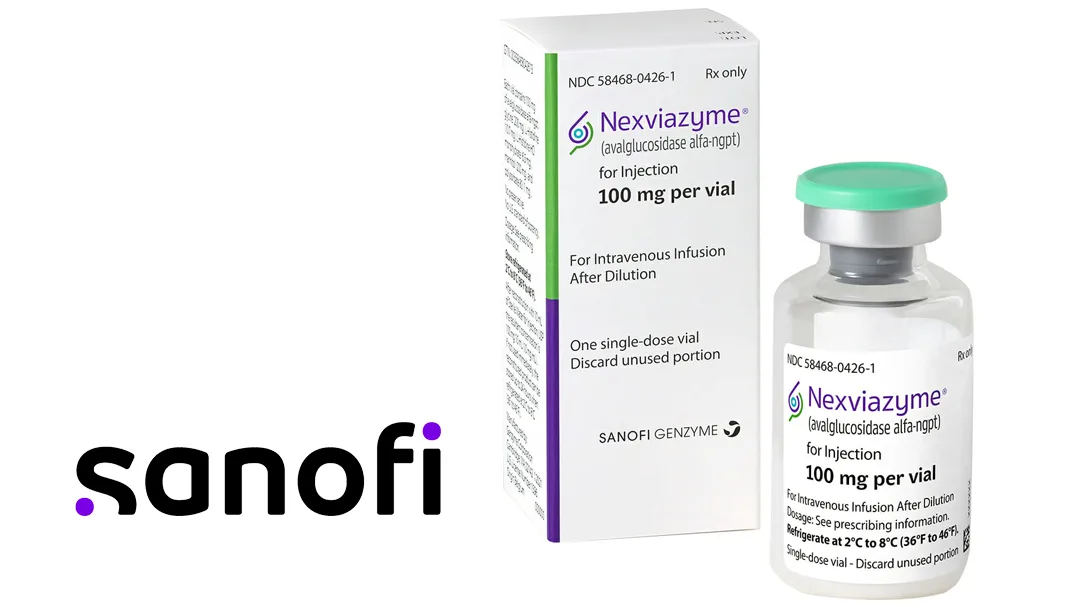
Sanofi S.A. (NASDAQ: SNY) announced today positive top-line results from the Baby-COMET Phase 3 study (NCT04910776), a single-arm, open-label clinical trial evaluating Nexviazyme® (avalglucosidase alfa) in treatment-naïve pediatric patients with infantile-onset Pompe disease (IOPD) aged six months and younger.
The study met its primary endpoint, demonstrating that 100% of participants remained alive and free of invasive ventilation at 52 weeks of treatment. Additionally, the trial achieved all secondary endpoints, including survival and ventilation-free status at 12 and 18 months, along with numerical improvements across multiple disease progression metrics.
Clinical Trial Overview
| Study Parameter | Detail |
|---|---|
| Study Name | Baby-COMET (NCT04910776) |
| Design | Single-arm, open-label, Phase 3 |
| Population | Treatment-naïve pediatric patients ≤6 months with IOPD |
| Primary Endpoint | Proportion alive and free of invasive ventilation at 52 weeks |
| Primary Result | 100% success rate (statistically significant vs historical controls) |
| Secondary Endpoints | All met: 12-month and 18-month survival/ventilation-free outcomes + disease progression metrics |
| Safety Profile | Consistent with established Nexviazyme profile; well tolerated |
Disease Background & Unmet Need
Pompe Disease Spectrum
- Pathophysiology: Caused by deficient acid alpha-glucosidase (GAA) enzyme activity, leading to glycogen accumulation in muscle cells throughout the body
- Infantile-Onset Pompe Disease (IOPD): Most severe form with rapid symptom progression beginning in infancy
- Untreated prognosis: Heart failure and death within first year of life
- Cardiac involvement: Hypertrophic cardiomyopathy, arrhythmias
- Respiratory compromise: Progressive respiratory muscle weakness requiring invasive ventilation
- Late-Onset Pompe Disease (LOPD): Progressive skeletal muscle deterioration over time
- Mobility impact: Wheelchair dependence as disease advances
- Respiratory decline: Mechanical ventilation often required for breathing support
Historical Treatment Landscape
- Standard of Care: Myozyme/Lumizyme (alglucosidase alfa) – first-generation enzyme replacement therapy (ERT)
- Limitations: Suboptimal enzyme uptake due to limited mannose-6-phosphate (M6P) receptor binding affinity
- Clinical Gap: Despite treatment, many IOPD patients still experience progressive disease and poor long-term outcomes
Nexviazyme: Next-Generation Enzyme Replacement Therapy
Molecular Innovation
- Enhanced Targeting: Engineered with approximately 15-fold higher M6P moieties compared to Myozyme/Lumizyme
- Mechanism: High-affinity binding to mannose-6-phosphate (M6P) receptors – the key pathway for cellular uptake and lysosomal delivery of ERT
- Therapeutic Goal: Improve enzyme delivery to target tissues and enhance glycogen clearance in affected muscles
Clinical Differentiation
- Superior Uptake: Enhanced M6P receptor binding translates to more efficient cellular internalization
- Tissue Penetration: Improved delivery to both cardiac and skeletal muscle compartments
- Dosing Efficiency: Potential for better clinical outcomes at standard dosing regimens
Market Impact & Strategic Implications
- Orphan Drug Market: Pompe disease represents a high-value ultra-orphan indication with premium pricing dynamics
- Competitive Advantage: Nexviazyme’s superior molecular design positions it as the preferred ERT for newly diagnosed IOPD patients
- Regulatory Momentum: Positive Baby-COMET data supports label expansion and strengthens existing approvals across major markets
- Commercial Trajectory: Sanofi expects accelerated adoption in the IOPD segment, building on Nexviazyme’s established presence in late-onset Pompe disease
- Revenue Potential: IOPD indication could contribute USD 200–300 million in incremental annual revenue given the critical unmet need and premium reimbursement environment
Sanofi’s Rare Disease Portfolio Strategy
- Franchise Leadership: Reinforces Sanofi’s position as a global leader in rare genetic disorders
- Pipeline Synergy: Complements existing lysosomal storage disorder portfolio including Cerezyme, Fabrazyme, and Myozyme
- Innovation Focus: Demonstrates commitment to next-generation biologics with enhanced targeting and efficacy profiles
- Patient-Centric Approach: Addresses the most vulnerable patient population with potentially life-saving therapy
Forward‑Looking Statements
This brief contains forward-looking statements regarding clinical trial results, regulatory pathways, and commercial expectations. Actual outcomes may differ due to risks including final regulatory decisions, market dynamics, and competitive pressures.-Fineline Info & Tech