 By Fineline Cube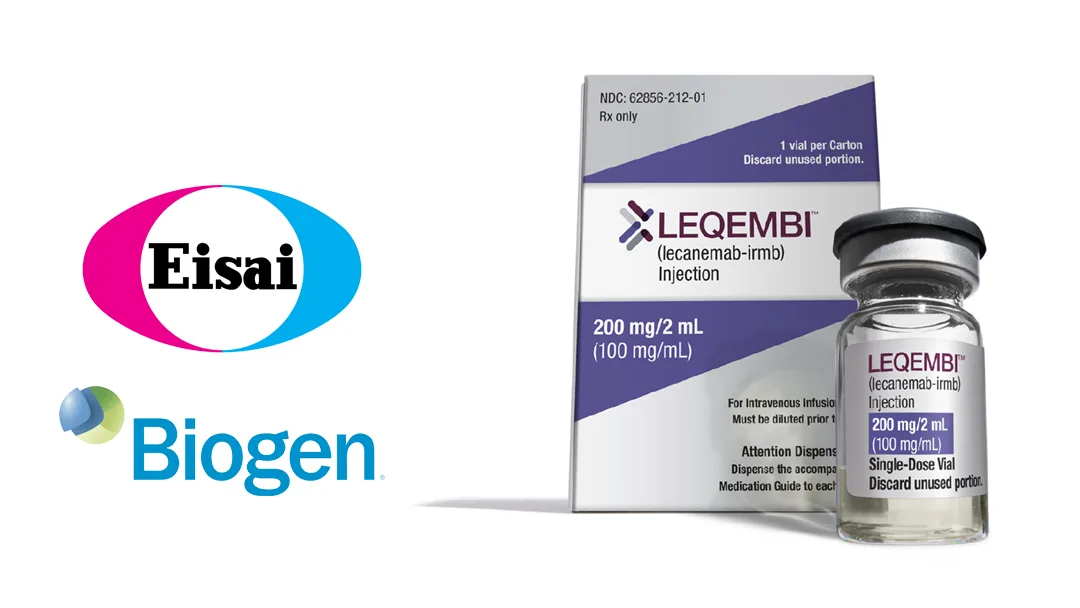
Eisai Co., Ltd. (TYO: 4523) and Biogen Inc. (NASDAQ: BIIB) announced that China’s National Medical Products Administration (NMPA) has approved the subcutaneous formulation (SC-AI autoinjector) of the anti-amyloid-beta (Aβ) protofibril antibody LEQEMBI (lecanemab) as an initial treatment for early Alzheimer’s disease (AD), including patients with mild cognitive impairment (MCI) or mild Alzheimer’s disease dementia. The approval introduces a weekly, home-based injection option alongside the established biweekly intravenous (IV) infusion regimen in hospital settings.
Regulatory Milestone
| Item | Detail |
|---|---|
| Agency | National Medical Products Administration (NMPA), China |
| Approval Type | New formulation approval |
| Product | LEQEMBI (lecanemab) subcutaneous autoinjector (SC-AI) |
| Indication | Initial treatment of early Alzheimer’s disease (MCI or mild AD dementia) |
| Dosing Regimen | 500 mg per week, administered as two consecutive injections of 250 mg each |
| Date | 03 Sept 2026 |
| Next Steps | Launch and commercialization of the SC formulation in China |
Drug Profile & Formulation Overview
- Molecule: Lecanemab, an anti-amyloid-beta (Aβ) protofibril antibody jointly developed and commercialized by Eisai and Biogen
- Formulation: Subcutaneous autoinjector (SC-AI) — a self-administrable device designed for home-based use
- Approved Regimen: 500 mg weekly, delivered as two consecutive 250 mg subcutaneous injections
- Treatment Setting: Adds weekly home-based subcutaneous injection alongside the existing biweekly IV infusion administered in hospital settings
- Patient Population: Early AD — the stage where disease-modifying intervention delivers the greatest potential clinical value
Clinical & Treatment Pathway Outlook
- The SC-AI formulation expands the treatment pathway by offering an at-home alternative to hospital-based IV infusion, addressing convenience, capacity and caregiver burden constraints
- Weekly self-administration may improve treatment adherence and access for patients and families across China’s geographically dispersed population
- The dual-route model (SC home dosing + IV hospital dosing) gives clinicians flexibility to tailor delivery to patient needs and care settings
Market Impact & Outlook
- Large addressable market: China has one of the world’s largest Alzheimer’s disease populations, and approved disease-modifying options for early AD remain scarce — positioning lecanemab as a category-defining therapy
- Access unlock: The IV-infusion requirement had been a key barrier to adoption; the SC-AI option materially lowers the treatment burden and broadens the treatable population
- Competitive positioning: A home-administrable anti-Aβ therapy strengthens LEQEMBI’s differentiation against emerging amyloid-targeting competitors in China
- Partnership momentum: The approval reinforces the Eisai–Biogen alliance strategy of maximizing lecanemab’s global reach through formulation innovation
Forward‑Looking Statements: This brief is for informational purposes only and does not constitute investment advice or an offer to buy or sell any security. Statements regarding drug commercialization, market uptake and reimbursement outcomes are forward-looking and subject to risks and uncertainties, including pricing policy, competitive developments and real-world adoption. Actual results may differ materially. Readers should conduct their own due diligence before making investment decisions.-Fineline Info & Tech