


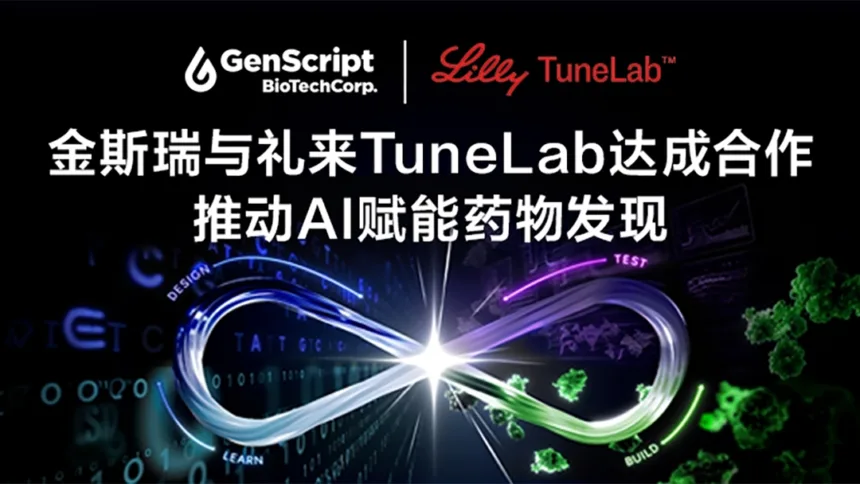
GenScript Biotech Corporation (HKG: 1548) announced a collaboration with Lilly TuneLab, Eli Lilly and Company’s (NYSE: LLY) AI/machine learning drug discovery collaboration platform. The partnership connects Lilly TuneLab’s computational predictive capabilities with GenScript’s large‑scale experimental capabilities, enabling participating biotech companies to validate AI‑selected candidates through standardized wet‑lab workflows and accelerate candidate molecule evaluation.
Partnership Snapshot
| Item | Detail |
|---|---|
| Deal Type | Collaboration |
| Parties | GenScript Biotech Corporation (HKG: 1548) & Lilly TuneLab (Eli Lilly and Company, NYSE: LLY) |
| Platform | Lilly TuneLab – collaborative AI/ML drug discovery platform |
| GenScript Role | Wet‑lab services: protein expression, purification, and characterization analysis for TuneLab participating companies |
| Core Function | Validation of AI‑selected candidate sequences via standardized, traceable experimental workflows |
| Financial Terms | Not disclosed |
| Announcement Date | 16 Sep 2026 |
Lilly TuneLab Platform Profile
- Platform Model: A collaborative AI/machine learning drug discovery platform that opens to participating companies models trained on Lilly’s decades of R&D data.
- Predictive Capabilities: Coverage includes antibody developability and small‑molecule ADMET — absorption, distribution, metabolism, excretion, and toxicity — two of the highest‑attrition risk areas in early drug discovery.
- Feedback Loop: Participating companies can feed experimental results back into the platform to drive continuous model optimization, creating a shared learning cycle across the TuneLab network.
- Access Terms: Participation criteria and commercial terms for platform users were not disclosed.
GenScript’s Role – Wet‑Lab Validation Engine
- Service Scope: GenScript will provide wet‑lab services including protein expression, purification, and characterization analysis for Lilly TuneLab participating companies.
- Validation Function: GenScript will validate AI‑selected candidate sequences through standardized, traceable experimental workflows — converting computational predictions into verifiable biological evidence.
- Compute‑to‑Bench Bridge: The collaboration connects Lilly TuneLab’s computational predictive capabilities with GenScript’s large‑scale experimental capabilities, closing the loop between in‑silico selection and bench‑level confirmation.
- Capacity Details: Throughput, turnaround commitments, and pricing structures were not disclosed.
Market Impact & Outlook
- Faster, More Reliable Evidence: The integrated model is designed to help biotech companies obtain reliable biological evidence more quickly, accelerating the evaluation of candidate molecules and subsequent R&D decisions — compressing one of the slowest links in early discovery.
- De‑risking Early Discovery: By pairing antibody developability and ADMET prediction with standardized experimental validation, the collaboration targets the classic failure modes that eliminate candidates after costly downstream investment.
- Platform + CRO Convergence: The deal reflects an emerging structure in AI‑enabled drug discovery — pharma‑backed predictive platforms allied with large‑scale service providers — giving participating biotechs access to both proprietary models and industrialized wet‑lab capacity.
- Network Effects: With experimental results feeding back into TuneLab’s models, the GenScript collaboration strengthens the platform’s data flywheel across its participating‑company network.
- Next Catalysts: Expansion of services to additional TuneLab participants, new predictive modalities, and any disclosed validation outcomes — timing not disclosed.
Forward‑Looking Statements
This brief contains forward‑looking statements regarding the collaboration between GenScript Biotech and Lilly TuneLab, including the predictive performance of AI/ML models, validation workflows, and the acceleration of drug discovery decisions. Computational predictions require experimental confirmation and do not guarantee candidate success. Actual results may differ materially due to scientific, technical, operational, and competitive risks. Financial terms were not disclosed.-Fineline Info & Tech