


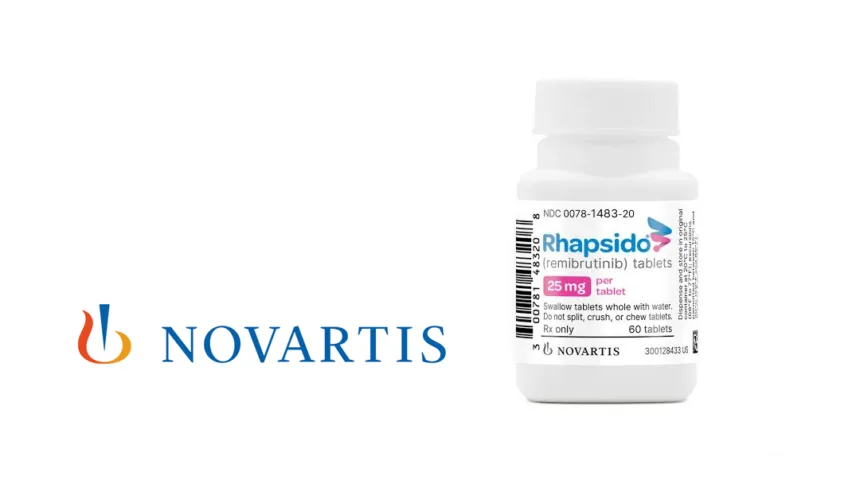
Novartis AG (NYSE: NVS) announced that the U.S. Food and Drug Administration (FDA) has approved Rhapsido® (remibrutinib), an oral, highly selective Bruton’s tyrosine kinase inhibitor (BTKi), for the treatment of adults with symptomatic dermographism (SD) inadequately controlled by H1 antihistamines. This marks the first approved treatment for symptomatic dermographism — a chronic inducible urticaria condition — and represents a landmark regulatory milestone for BTK inhibitor therapy in chronic urticaria and dermatological diseases.
Regulatory Milestone
| Item | Detail |
|---|---|
| Agency | U.S. Food and Drug Administration (FDA) |
| Approval Type | New drug approval (first‑in‑indication) |
| Product | Rhapsido® (remibrutinib), oral |
| Drug Class | Highly selective Bruton’s tyrosine kinase inhibitor (BTKi) |
| Indication | Adults with symptomatic dermographism (SD) inadequately controlled by H1 antihistamines |
| Pivotal Study | RemIND (Phase III) — SD cohort |
| Regulatory Significance | First approved treatment for symptomatic dermographism |
| Approval Date | 7 October 2026 |
Drug Profile & Mechanism of Action
- Molecule: Remibrutinib (brand name: Rhapsido®), an oral, highly selective BTK inhibitor.
- Developer: Novartis AG
- Mechanism: BTK is a critical signaling molecule downstream of the high‑affinity IgE receptor (FcεRI) on mast cells and basophils. By selectively inhibiting BTK, remibrutinib blocks FcεRI‑mediated signaling, preventing mast cell degranulation and the subsequent release of histamine, tryptase, leukotrienes, and other pro‑inflammatory mediators that drive urticarial wheal formation and pruritus.
- Selectivity Advantage: Remibrutinib’s high selectivity for BTK over other Tec family kinases and off‑target kinases is designed to minimize off‑target toxicities (e.g., bleeding, cardiac arrhythmias, infections) that have been associated with earlier‑generation, less selective BTK inhibitors (e.g., ibrutinib) in oncology indications.
- Differentiation from Antihistamines: While H1 antihistamines block histamine receptors downstream, remibrutinib acts upstream at the mast cell level, inhibiting the release of multiple inflammatory mediators simultaneously — providing a more comprehensive blockade of the urticaria cascade.
- Formulation: Oral tablet
Clinical Evidence – RemIND Phase III Trial (SD Cohort)
The FDA approval is based on the symptomatic dermographism cohort of the Phase III RemIND clinical trial, which enrolled patients who remained symptomatic despite treatment with second‑generation H1 antihistamines.
| Endpoint | Rhapsido (Remibrutinib) | Placebo | Statistical Significance |
|---|---|---|---|
| Complete Response from Hives at Week 12 (Total Fric Score) | 29.3% | 14.0% | p = 0.0229 |
| Onset of Response | As early as Week 2 | — | — |
Safety Profile:
| Parameter | Observation |
|---|---|
| Safety Assessment Period | Up to Week 24 |
| Safety Profile | Consistent across both SD and chronic spontaneous urticaria (CSU) populations |
| Overall Conclusion | Favorable and manageable safety profile for chronic administration |
Significance of Complete Response Endpoint
- Total Fric Score is a validated, standardized provocation test for dermographism that quantifies the threshold force required to elicit a wheal response — a direct measure of skin reactivity.
- Complete response — defined as the absence of wheal formation at standardized provocation — represents the most stringent efficacy endpoint in dermographism trials and reflects a meaningful improvement in patients’ daily quality of life (reduced scratching, skin marking, and social embarrassment).
Disease Background – Symptomatic Dermographism
- Definition: Symptomatic dermographism (also known as dermatographic urticaria or “skin writing”) is a chronic inducible urticaria characterized by the development of wheals and flare reactions in response to mechanical stimulation of the skin (scratching, rubbing, pressure from clothing).
- Prevalence: Estimated to affect ~2–5% of the general population, with higher prevalence among young adults and individuals with atopic backgrounds.
- Current Treatment Landscape: Prior to Rhapsido’s approval, no therapy was specifically approved for symptomatic dermographism. Treatment relied on off‑label use of second‑generation H1 antihistamines (e.g., cetirizine, loratadine, fexofenadine), which provide inadequate symptom control in a significant proportion of patients.
- Disease Burden: While not life‑threatening, symptomatic dermographism causes significant quality‑of‑life impairment — chronic pruritus, visible skin reactions, sleep disturbance, and social anxiety — creating substantial demand for effective targeted therapies.
Market Impact & Outlook
- First‑in‑Indication Approval: Rhapsido becomes the first FDA‑approved therapy specifically indicated for symptomatic dermographism, creating a new therapeutic category in chronic urticaria management. First‑mover status in an indication affecting ~2–5% of the population provides a significant commercial advantage.
- Antihistamine‑Refractory Population: The approved indication specifically targets patients inadequately controlled by H1 antihistamines — a well‑defined, treatment‑refractory subpopulation with no prior approved alternatives. This creates a clear prescribing algorithm: antihistamine failure → Rhapsido.
- Chronic Urticaria Platform Strategy: Remibrutinib is being developed across multiple chronic urticaria subtypes, including chronic spontaneous urticaria (CSU) — a larger indication with an estimated ~0.5–1% global prevalence and a market currently dominated by Xolair® (omalizumab, Novartis/Genentech). The consistent safety profile observed across both SD and CSU in clinical trials supports the platform potential of remibrutinib across the urticaria spectrum.
- BTK Inhibitor Repurposing – Oncology to Immunology: Rhapsido’s approval represents one of the first successful translations of BTK inhibitor technology from oncology to chronic inflammatory/dermatological diseases. The high selectivity profile required for chronic, non‑oncology administration distinguishes remibrutinib from oncology‑focused BTK inhibitors (ibrutinib, acalabrutinib, zanubrutinib) and validates the therapeutic hypothesis that BTK inhibition can modulate mast cell‑driven diseases.
- CSU as the Larger Prize: While the initial approval is for SD, the chronic spontaneous urticaria (CSU) indication represents a significantly larger commercial opportunity — with a global market currently valued at ~US$3–4 billion (anchored by Xolair®). Phase III data for remibrutinib in CSU are anticipated, and a positive readout could position Rhapsido as a first‑line oral alternative to injectable biologics in CSU.
- Novartis Immunology Franchise: Rhapsido strengthens Novartis’s position in chronic urticaria and immunology — complementing its existing Xolair® franchise while providing an oral option that expands the treatment paradigm. Importantly, Rhapsido and Xolair® serve different patient segments (SD vs. CSU; oral vs. injectable), minimizing cannibalization risk.
- Competitive Landscape: In the BTK inhibitor‑for‑urticaria space, remibrutinib competes with:
- Fenebrutinib (Roche) — also in Phase III for CSU
- Other emerging BTK inhibitors in earlier development for urticaria
- Established biologics (Xolair®, dupilumab) in CSU
Rhapsido’s first FDA approval in SD provides a regulatory and commercial head start over competitors still in clinical development.
- Pricing and Market Access: As a first‑in‑class oral therapy in a previously untreated indication, Rhapsido is positioned for premium pricing with limited direct competition. The chronic nature of dermographism (patients may require treatment for years) creates favorable long‑term revenue per patient economics.
Forward‑Looking Statements
This brief contains forward‑looking statements regarding the commercial potential of Rhapsido, clinical development plans for additional indications (including CSU), and competitive positioning in the chronic urticaria therapeutic space. Actual results may differ materially due to risks including market adoption dynamics, physician prescribing preferences, pricing and reimbursement negotiations, competitive developments from other BTK inhibitors and biologics in urticaria, long‑term safety characterization in post‑marketing surveillance, and regulatory decisions in other jurisdictions. Investors are advised to exercise caution.-Fineline Info & Tech