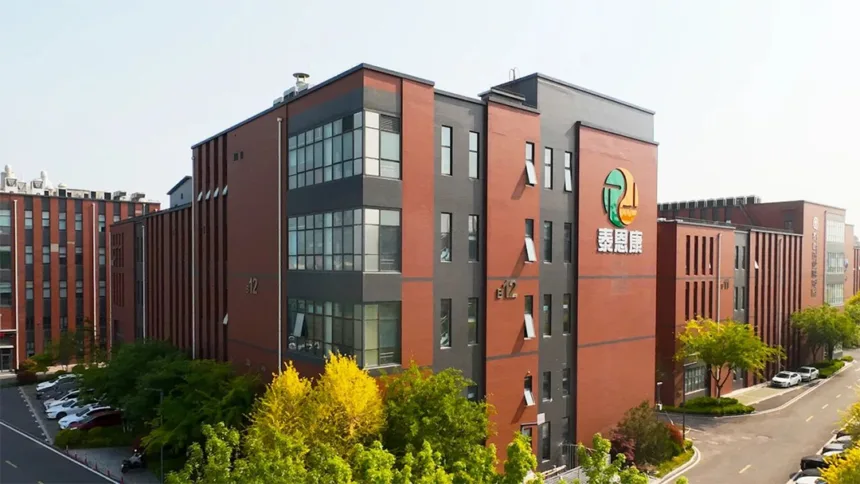
Guangdong Taienkang Pharmaceutical Co., Ltd. (SHE: 301263) announced that its wholly‑owned subsidiary Shandong HABKSON Biotechnology Co., Ltd. (“HABKSON”) has received a Drug Registration Certificate from China’s National Medical Products Administration (NMPA) for Diquafosol Sodium Eye Drops, 3% (5 ml : 150 mg), a Chemical Drug Class 4 generic indicated for dry eye disease with corneal and conjunctival epithelial damage associated with abnormal tear dynamics – entering a domestic market valued at approximately RMB 228 million (2023) and joining a growing field of 46 approved manufacturers.
Regulatory Milestone
| Item | Detail |
|---|---|
| Agency | NMPA (China) |
| Certificate Type | Drug Registration Certificate |
| Acceptance Number | CYHS2500796 |
| Approval Number | 国药准字 H20266157 |
| Product | Diquafosol Sodium Eye Drops |
| Specification | 3 % (5 ml : 150 mg) |
| Registration Classification | Chemical Drug Class 4 (generic) |
| Applicant / MAH | Shandong HABKSON Biotechnology Co., Ltd. (wholly‑owned subsidiary of Taienkang Pharma) |
| Indication | Dry eye patients diagnosed with corneal and conjunctival epithelial damage associated with abnormal tear dynamics |
| Originator / Reference Product | Diquas® (Santen Pharmaceutical Co., Ltd., Japan) |
Drug Profile & Mechanism of Action
- Molecule: Diquafosol sodium – a P2Y2 purinergic receptor agonist that acts on the ocular surface to stimulate tear fluid and mucin secretion
- Mechanism: Activates P2Y2 receptors on conjunctival epithelial cells and goblet cells, promoting:
- Tear fluid secretion – restoring aqueous tear volume
- Mucin secretion – improving tear film stability and ocular surface lubrication
- Corneal epithelial repair – facilitating restoration of damaged corneal and conjunctival epithelium
- Therapeutic Differentiation: Unlike artificial tears (symptomatic relief) and anti‑inflammatory agents (cyclosporine, lifitegrast), diquafosol addresses dry eye through a secretagogue mechanism – directly stimulating the eye’s own tear production machinery, making it complementary to other dry eye therapeutic classes
- Originator History: Diquas® was originally developed by Santen Pharmaceutical Co., Ltd. (Japan), launched in Japan in April 2010, and approved in China in October 2017 under the brand name 丽爱思 (Lì Ài Sī)
Market Context – Diquafosol Sodium in China
| Parameter | Detail |
|---|---|
| China Market Size (2023) | RMB 228 million (≈ US$32 million) in total terminal sales (Mosaic Pharma / 摩熵医药 data) |
| Originator | Diquas® / 丽爱思 (Santen Pharmaceutical) |
| Approved Generic Manufacturers | 46 companies (as of announcement date, per NMPA database) |
| Market Growth Drivers | Rising screen time, aging population, environmental factors, increased dry eye diagnosis rates |
| Therapeutic Positioning | Second‑line / adjunctive therapy alongside artificial tears; guideline‑recommended for tear‑deficient dry eye |
The Chinese dry eye disease market is one of the fastest‑growing segments in ophthalmology, driven by the country’s estimated 300+ million dry eye sufferers – a prevalence amplified by ubiquitous digital screen exposure, urban air pollution, aging demographics, and increasing clinical diagnosis rates. Diquafosol sodium, as a mechanistically distinct secretagogue, occupies a well‑defined niche within the multi‑modal dry eye treatment algorithm.
Market Impact & Outlook
- Generic Market Entry: With 46 approved manufacturers already holding NMPA registration for diquafosol sodium eye drops, the market has transitioned from an originator‑dominated to a highly competitive generic landscape. Taienkang’s entry through HABKSON represents a late‑entrant strategy, where success will depend on manufacturing cost efficiency, provincial procurement competitiveness, and distribution channel execution.
- Market Size Opportunity: The RMB 228 million (2023) diquafosol sodium market, while modest in absolute terms, represents a stable and growing ophthalmic generic segment with predictable demand driven by chronic dry eye patient volumes. Market growth is expected to continue as dry eye prevalence rises and treatment penetration increases.
- Procurement Dynamics: As a Class 4 generic with 46 competing manufacturers, diquafosol sodium eye drops is a likely candidate for provincial or national volume‑based procurement (VBP) rounds, which would compress pricing but reward manufacturers with low‑cost production capabilities and scale advantages.
- Taienkang’s Ophthalmic Strategy: This approval expands Taienkang Pharma’s product portfolio into ophthalmic therapeutics, diversifying beyond the company’s existing therapeutic franchises. The ophthalmic market offers attractive characteristics including recurring prescription demand, relatively low development complexity for generics, and favorable reimbursement dynamics for essential eye care products.
- Subsidiary Capability Demonstration: The approval through HABKSON validates the subsidiary’s ophthalmic formulation development and regulatory execution capabilities, potentially supporting future generic ophthalmic product filings.
- Competitive Intensity Risk: With 46 approved manufacturers, the diquafosol sodium eye drop market in China is highly fragmented. Pricing pressure, channel competition, and formulary access will be key determinants of individual manufacturer market share. Differentiation opportunities are limited in a pure generic market, making cost leadership and distribution reach the primary competitive levers.
- Financial Impact: The company did not disclose specific revenue projections or financial impact expectations. Given the competitive landscape, the standalone revenue contribution is expected to be modest but contributes to portfolio breadth and manufacturing utilization.
Forward‑Looking Statements
This brief contains forward‑looking statements regarding the commercialization, market adoption, and revenue potential of Diquafosol Sodium Eye Drops in China. Drug registration approval does not guarantee commercial success. Actual outcomes may differ due to risks including competitive pricing pressure from 45 existing approved manufacturers, volume‑based procurement dynamics, hospital and retail formulary decisions, distribution execution, and changes in clinical guidelines or reimbursement policy.-Fineline Info & Tech