Livzon Pharma Wins Approval for China’s First 3‑Month Leuprorelin Microsphere – Long‑Acting GnRH Agonist Cuts Injection Frequency by 70% Across Breast Cancer, Prostate Cancer, and Precocious Puberty
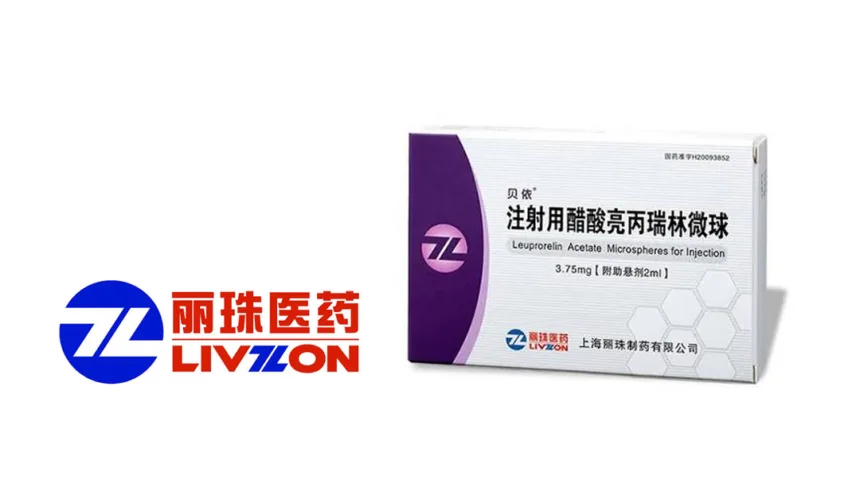
Livzon Pharmaceutical Group Inc. (SHE: 000513; HKG: 1513) announced that the National Medical Products Administration (NMPA) has granted marketing approval for its Leuprorelin Acetate Microspheres for Injection, 11.25 mg (3‑month formulation), covering three core indications – premenopausal breast cancer, prostate cancer, and central precocious puberty (CPP) – making it the first 3‑month long‑acting GnRH agonist microsphere approved in China and reducing annual injection frequency from 12 to 4 (approximately 70% reduction) for patients requiring years‑long endocrine therapy.
National Reimbursement Drug List (NRDL) Category B
Drug Profile & Mechanism of Action
Molecule:Leuprorelin acetate – a synthetic GnRH (LHRH) agonist analogue that, when administered continuously, downregulates pituitary GnRH receptors, suppressing gonadotropin (LH/FSH) secretion and thereby reducing sex hormone (estrogen/testosterone) production to castrate or prepubertal levels
Formulation Technology:Biodegradable microsphere sustained‑release system using Livzon’s proprietary poly‑DL‑lactide (PLA) excipient – the core rate‑controlling polymer that governs drug release kinetics over the 3‑month dosing interval
Pharmacokinetic Advantage: The self‑developed PLA excipient enables stable, sustained drug release over 3 months with minimal blood‑level fluctuation upon repeat dosing, improving tolerability and reducing the peak‑trough variability associated with shorter‑acting formulations
Manufacturing Innovation: Livzon is the only microsphere manufacturer in China to have achieved independent development of the core PLA excipient, enabling end‑to‑end quality control across raw materials, excipients, and finished product – a vertically integrated manufacturing capability that is exceptionally rare in the complex long‑acting injectable space
Full Product Line: With this approval, Livzon’s leuprorelin microsphere portfolio now spans three specifications:
1. Premenopausal Breast Cancer – Ovarian Function Suppression (OFS)
Parameter
Detail
Disease Burden
Breast cancer is China’s third most common female malignancy; >50% of patients are premenopausal
Standard of Care
GnRH agonist–based ovarian function suppression (OFS) combined with endocrine therapy is the guideline‑recommended standard for hormone receptor‑positive (HR+) premenopausal breast cancer
The Expert Consensus on Long‑Term GnRHa Use in Premenopausal HR+ Breast Cancer (2026 Edition) explicitly recommends 3‑month long‑acting formulations as the preferred initial treatment option based on convenience and adherence advantages
2. Prostate Cancer – Androgen Deprivation Therapy (ADT)
Parameter
Detail
Disease Burden
Prostate cancer is a leading malignancy in middle‑aged and elderly Chinese men; majority diagnosed at locally advanced or metastatic stage
Elderly patients face mobility limitations, high travel costs, and frequent hospital visits – monthly injections create substantial burden for patients and caregivers
3‑Month Advantage
Reduces hospital visits from 12 to 4 per year, dramatically improving treatment continuity and reducing caregiver burden
3. Central Precocious Puberty (CPP) – Pediatric Endocrinology
Parameter
Detail
Standard of Care
GnRH agonist is the only approved pharmacotherapy for CPP
Treatment Duration
Typically ≥2 years of continuous therapy
Adherence Challenge
Frequent injections cause psychological distress in children and impose sustained time and logistical costs on parents
2026 ENDO Guideline
The American Endocrine Society 2026 ENDO Guidelines recommend long‑acting GnRH agonists as the preferred starting therapy for CPP patients anticipated to require long‑term treatment
Market Impact & Outlook
First‑in‑China Long‑Acting GnRH Microsphere: The 11.25 mg 3‑month formulation is the first long‑acting GnRH agonist microsphere of its kind approved in China, filling a significant therapeutic gap in the domestic market for extended‑release endocrine therapies. No equivalent 3‑month GnRH microsphere was previously available to Chinese patients across any of the three indications.
Adherence‑Driven Value Proposition: The reduction from 12 to 4 annual injections (≈70% reduction) directly addresses the most significant barrier to long‑term endocrine therapy adherence – injection burden. Across breast cancer (2–5 years of OFS), prostate cancer (lifelong ADT), and CPP (≥2 years), the cumulative injection reduction translates to dozens of avoided injections per patient, with meaningful implications for treatment persistence, quality of life, and clinical outcomes.
Self‑Developed Excipient Competitive Moat: Livzon’s status as the only Chinese microsphere company with independently developed PLA excipient technology creates a substantial manufacturing and regulatory barrier to entry for potential competitors. The vertical integration from raw material to finished product ensures supply chain security and cost advantages that are difficult to replicate.
Global Regulatory Benchmark: Being the first GnRH product globally to complete bioequivalence studies per U.S. FDA individual drug guidance establishes a regulatory precedent that could facilitate future international registration pathways and positions Livzon as a global reference standard for GnRH microsphere quality.
Comprehensive GnRH Product Matrix: Livzon has now assembled what the company describes as China’s most complete GnRH drug portfolio, spanning:
Agonists + Antagonists
Injectable + Oral formulations
1‑month + 3‑month dosing intervals
Oncology, Endocrinology, and Reproductive Medicine Coverage: This multi‑dimensional product matrix enables Livzon to address treatment needs across oncology (breast, prostate), pediatric endocrinology (CPP), and reproductive medicine (IVF, endometriosis), creating cross‑specialty commercial synergies.
NRDL Reimbursement Status: Inclusion in the National Reimbursement Drug List (Category B) ensures patient affordability and hospital formulary access, supporting rapid market penetration upon commercial launch.
Revenue Trajectory: Specific sales projections, pricing, and market‑share targets Not disclosed. The addressable patient population across the three indications encompasses hundreds of thousands of Chinese patients requiring long‑term GnRH therapy.
Forward‑Looking Statements This brief contains forward‑looking statements regarding the commercialization, market adoption, and clinical impact of Leuprorelin Acetate Microspheres 11.25 mg in China. Marketing approval does not guarantee commercial success. Actual outcomes may differ due to risks including market competition, hospital formulary adoption timelines, prescriber switching behavior, reimbursement dynamics, competitive product launches, and the inherent uncertainties of pharmaceutical commercialization.-Fineline Info & Tech
Insight, China's Pharmaceutical Industry Fineline Info & Tech is a comprehensive global pharmaceutical database that spans the entire product lifecycle. Its mission is to equip professionals and executives across all sectors of the life sciences industry with a standardized data language, offering a holistic view of the Chinese pharmaceutical competitive landscape. Flcube.com furnishes critical data essential for informed decision-making, drawing on global industry news, policy insights, competitive intelligence, and advanced analytical tools.